
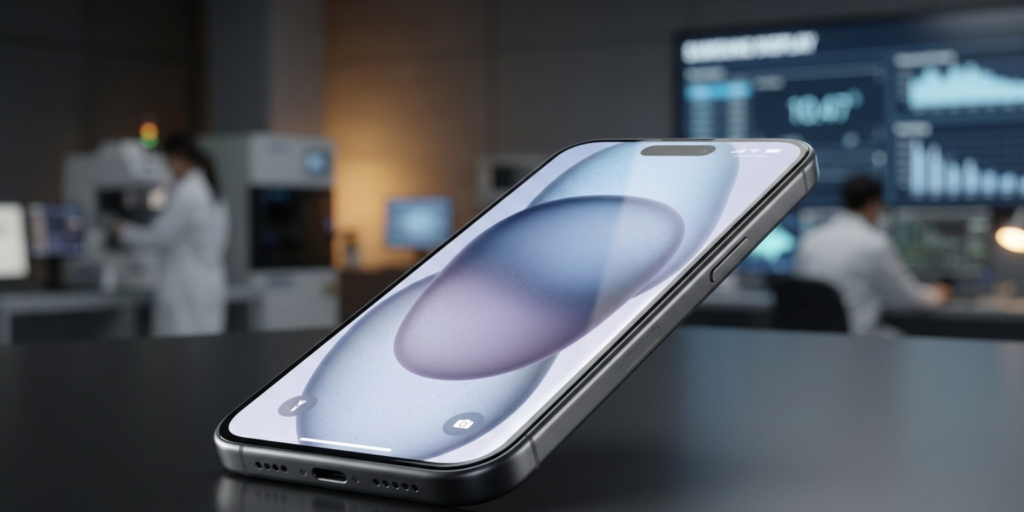
Leaked reports suggest Apple is developing a micro-curved OLED iPhone display for its 20th anniversary model in collaboration with Samsung.
Another leak is that Apple is secretly developing one of the biggest iPhone design shifts in years: a curved-edge display, which it is co-developing with Samsung. It is being reported that the company is testing a bespoke, micro-curved OLED panel, according to reports by Chinese leaker Digital Chat Station, which has the potential to change the look of future iPhones.
Although Apple has not officially confirmed this, the time frame of the rumor is what has created a lot of speculation that this new display may be released with the 20th anniversary iPhone, projected to be released in 2027. Should it be the case, it would be a symbolic redesign moment akin to the revolutionary change that was brought about with the iPhone X.
No Radical Bend, But a Subtle Curve
The most significant fact in the leak is the one that Apple is allegedly not doing. In contrast to previous displays of Android flagship phone models, where the screen is sharply curved around the edges of the phone, Apple is reportedly targeting a more conservative and elegant design.
The so-called micro-curved OLED would be tapped at the edges instead of curving radically around the edges. This implies a design philosophy that is in line with the previous tactics of Apple: it is not a design that is visually aggressive but one that is subtly refined.
Rather than making the curve a pronounced aesthetic element, Apple seems to be experimenting with the possibility of parsimonious curvature enhancing the ergonomics, screen immersion and visual continuity without affecting usability.
Why Apple Could Take an Interest in Curved Displays at this Time
Apple has always been conservative on radical display changes. It is important to note that Apple remained devoted to flat, precision-made displays when its competitors focused on curved screens, foldables, or extreme edges.
But there has been a transformation in the smartphone industry. Flat OLEDs are now considered the norm in flagship products, so it is more difficult to create design differentiation using resolution or brightness. Consequently, the manufacturers are trying form factors and visual presentation again.
A micro-curved display may have several benefits:
- A more interactive visual effect.
- A more comfortable, more ergonomic hand feel.
- Less bezel perception without antagonistic design modifications.
- A new stylish look to a product line that is already mature.
In the case of a company that is celebrating a significant anniversary and is compiling a book on the subject, the smallest of details can carry symbolic importance.
Samsung’s Role in the Future of Apple Displays
It is not surprising that Apple and Samsung have been collaborating. Samsung is also one of the suppliers of display technology in the Apple products and even though Samsung and Apple are both leading players in the smartphone market, Samsung is believed to be one of the most successful producers of OLED panels in the world.
Samsung Display has already produced high-quality OLED displays, as they are present in different models of the iPhones. The leak in this case suggests that Apple is working with Samsung on developing a special panel design rather than choosing off-the-shelf components.
This type of cooperation is typical in the Apple supply chain strategy. Apple usually outlines very stringent hardware specifications and leaves it to its manufacturing partners to make the parts that match its specifications. The micro-curved OLED would probably require major engineering readjustments in order to be durable, have accurate color and be touch responsive.
The 20th Anniversary iPhone: Why it Matters
The supposedly curved screen is linked to what could be one of the most important product launches in Apple history in the form of the 20th anniversary iPhone.
The most recent redesign by Apple was the iPhone X, released in 2017 on the 10th anniversary of the product. The following changes were some of the defining changes that were made with that model:
- Elimination of the home button.
- Edge-to-edge display
- Introduction of Face ID.
- OLED screen adoption
- The iconic notch design now.
The iPhone X has successfully redefined the language of smartphone design in Apple over the next ten years.
With this precedent, there is a high level of anticipation that the 20th anniversary model will also bring a big visual and functional revolution. A rounded-edge screen might be included in that change, which would be an indication of a design shift into the new generation of iPhones.
What a Micro-Curved Display Might Look Like in the Field
Should the leak be true, the design would have probably been much more conservative than most Android edge phones of yesteryear. Rather than enveloping the display in a dramatic way along the sides, the curvature would most likely have minor ergonomic and aesthetic functions.
Possible characteristics include:
- Minor rounding in the right and left sides.
- Less visual bezel without compromising structural rigidity.
- Better feel of gesture navigation.
- A more fluent frame to screen.
This would enable Apple to retain its focus on usability even though it would still provide a significant visual update. With a micro-curved panel, in contrast to heavily curved display types, there would be no accidental touch sensors or distorted image quality at the edges of the display.
The Reason Apple is so Sluggish in Design
Apple has a reputation for a conservative design approach. Competitors are regularly launching radical new hardware designs at a rather accelerated pace, but Apple usually takes the time needed to bring a technology to a sufficient level of maturity to match its criteria of functionality, durability, and user experience.
This is especially so in the case of display technology. The problem of the curved screens in the earlier versions of smartphones was usually:
- Less impact-resistance.
- Issues with touch sensitivity on the edges.
- Reflections and distortion of appearance.
- Problems with using screen protectors.
Apple can potentially escape these tradeoffs, although it still enjoys the benefits of better design capability, by waiting until display manufacturing technology has matured.
Trends in the Industry: Why Curved Displays are making a comeback
The smartphone market tends to revert to design trends. The curved displays were actively sold in the mid-to-late 2010s, but soon dropped out of favor as manufacturers shifted to more utilitarian flat designs.
However, currently, the industry is returning to curvature in a more advanced way. Instead of extreme edge wrapping, recent applications concentrate on minor curvature that adds beauty to the application without impairing usability.
By doing so, Apple may be indicating a wider industry move to more of the principles of soft design when it comes to devices being more natural and smooth without having to bring about usability trade-offs.
Possible Effect on User Interface
When done properly, a micro-curved display would impact various factors in the interaction of users on their iPhones.
1. Better Grip and Comfort
Minor curvature on the sides might render the phone more comfortable and natural to hold in the hand, particularly on bigger models.
2. Enhanced Visual Immersion
A smaller bezel effect and rounded corners can provide a more enveloping viewing experience when watching videos, playing games, and reading.
3. Gesture Navigation Refinement
The contemporary iOS navigation is based on edge gestures and swipes. These interactions might be more fluid and intuitive with the help of a curved edge.
4. Aesthetic Refresh
Even the slightest curve would be a visual refresh after a few generations of a fairly uniform flat-edge design.
Obstacles that Apple would have to overcome
Although this may have its advantages, curved displays pose technical difficulties:
- Under impact or drop durability.
- Screen manufacturing complexity.
- Possible distortion of curved sides.
- Fit with accessories and cases.
- Being consistent in touch accuracy through the display.
Apple would have to make sure that a new design is able to withstand its tough standards of durability and usability before its release. With the reputation that Apple has, it would not implement such a change without it being proven and perfected over time.
This is the Implication of this on the Future of the iPhones
In case the rumor turns out to be true, the curved display may be the start of a new design cycle at Apple. Instead of the annual radically different designs, Apple would prefer to make significant changes every few years, followed by successive refinements.
Future innovations could be based on a micro-curved display, which may have the following effects:
- Bendable or convertible gadgets.
- Improved AR/VR integration
- More realistic edge-to-edge interfaces.
- New gesture-based navigation systems
It can also be an indication that Apple is about to redefine the shape language of its products in the next decade.
Conclusion
Although the rumor is yet to be confirmed, the concept of a curved-edge iPhone that is associated with the 20th-anniversary model is already drawing a lot of attention. Should Apple launch a micro-curved OLED screen with Samsung technology, it would be one of the biggest design advancements since the iPhone X.
In contrast to flashy redesigns where the emphasis is on radical changes in form, this style implies something more sophisticated: a device that is familiar, but subtly hand- and eye-altered.
It is still unknown whether it will ever come to fruition or it will be a prototype-level experiment, but it signifies one of the major trends in smartphone development, namely that innovation is not about larger changes anymore, but smarter, more sophisticated.
About the Author