
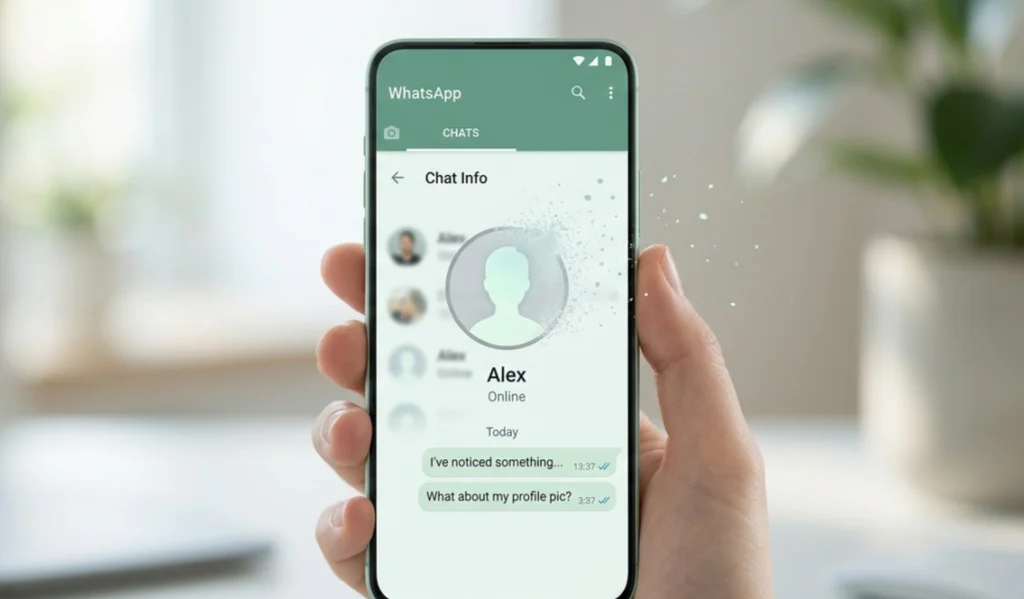
WhatsApp phases out its avatar feature as part of a shift toward streamlined communication.
Digital avatars are one of more experimental WhatsApp features that are officially being phased out. The company has already started the process of dropping the support of the creation, editing, and display of the avatars in both Android and iOS, signaling the conclusion of the feature that never really resonated with users. By contrast, unlike most feature removals which provoke some backlash or debate, this one is being received in large part with silence, a telling sign of how insignificant the impact of avatars on the massive global user base of the platform is.
To the majority of WhatsApp’s estimated three billion users, their interactions with avatars were only a single time of interest or never engaged with avatars at all. Although the feature appeared to be a step toward personalization and self-expression, it eventually did not become a part of everyday usage. Today, its silent deletion is indicative of a more widespread change in how the platform values features.
What Do You Exactly Mean by Removal
Avatars are not being removed in isolation, but on a massive scale, depreciating the feature throughout the app. Avatar creation tools in settings will cease to be available to users. The part itself is gradually disappearing, and when one tries to access it, they might receive a message that there is no longer any support of the feature.
Along with creation tools, Avatars will also disappear off profile displays and chat information screens. This was previously allowed to enable users to switch their profile photo to an animated avatar representation, however, this feature is being removed. It is also being dropped in the avatar integration in the keyboard, which enabled users to send personalized avatar stickers right in the chats.
But all is not becoming extinct. Stickers of Avatars that were already sent will appear in conversations. Users will be able to access these stickers in their recent sticker section but no new stickers can be created. This will ensure the past conversations are not interfered with but the company will still be at liberty to do away with the feature altogether.
A Character That Never flew away
It is not surprising that the decision to remove avatars can be considered through the prism of user behavior. Although Meta Platforms took time and resources to develop and refine the feature, it never attained mass adoption. The majority of users did not pay attention to it, or dropped it after first experimenting.
Avatars were highly customizable, with facial features, hairstyles, outfits, and animations all being customizable. It was supposed to provide a digital identity that users can use in a chat and profile. As time went on, new updates were made, which added more styles, and also improved visual quality, but none of these additions contributed to high engagement.
The essence of the matter was not the quality of the feature but rather its relevance. WhatsApp is essentially a means of communication. It is a quick and effective way of sending messages, making calls, and sharing any media. Creating a digital avatar and spending time on this is just an incompatible action that will not help most users interact with the app.
Why Avatars Worked of Elsewhere and Not Here
Digital avatars are not necessarily a bad idea. Indeed, it has been extremely successful in other channels. An example is Snapchat, which created a strong brand with its Bitmoji avatars, which are highly integrated into the social and visual experience of the app.
The distinction is based on the purpose of the platform. Snapchat focuses on visual communication, storytelling, and self-expression. Avatars are well integrated in that environment since users are anticipating interacting with fantasy and customized content.
WhatsApp, however, is created to provide efficient and direct communication. It is easy to use and this is one of its best assets. The introduction of a feature that takes time, creativity, and continuous interaction do not fit that fundamental philosophy. Consequently, the avatars were perceived as an extension and not a fundamental component of the experience.
What This Means to the Strategy of WhatsApp
Eradication of avatars is not merely the cleaning-up act, but it is the indication of the definite change of priorities. WhatsApp is now more concerned with the features that can directly improve communication as opposed to those that can expand to the neighboring areas, such as social expression.
This direction is reflected in the recent events in the app. Voice and video calling improvements, message editing features and privacy improvements are continuing to be addressed. Meanwhile, the platform is also considering AI-based tools that will be able to simplify the communication process and enhance user experience.
WhatsApp can use this to focus more on those aspects that are the most important to its users. This is a more stringent product strategy whereby every feature needs to be able to justify its existence by real-life application.
The Process of Data in the Products Decision
Each removal of features has its story behind, which is described by data. Although WhatsApp has not publicly posted usage statistics of avatars, the move to discontinue the feature is a strong indication of low usage levels. A small percentage of untapped functionality in large-scale platforms can symbolize a high level of inefficiency in development and maintenance.
The importance of data-driven decision-making is that at a certain point in time, the company can fine-tune its products to meet the preferences of the users, as opposed to what they theoretically would prefer. The data in this instance must have indicated that avatars were not adding any value to retaining users or keeping them active.
The trend is typical of the tech industry. The features are introduced as experiments and tested in the real world and either expanded or removed according to performance. It seems like the avatars on WhatsApp have been relegated to the latter category.
Impact on Users
To the overwhelming majority of the users, the abolition of the avatars will not be noticed. Users who have not used the feature will not find any difference in their daily interactions. In the case of the small group of users that actually did interact with avatars, the effect is insignificant.
The avatar stickers sent previously will be stored in the chats, so the old conversations were saved. But since it is not possible to generate new avatars or update the existing ones, the feature will slowly lose its relevance.
This removal of the low impact shows how marginal the feature was to the overall experience in WhatsApp. Avatars were never necessary, unlike such basic functions as messaging or calling.
A Wider Trend in Technology Platforms
Eliminating avatars in WhatsApp is just another instance of the overall trend of technology companies striving to simplify things while staying relevant at the same time. The more features apps acquire, the more important it becomes for tech giants to simplify the user experience and stay true to simplicity and usability.
Feature redundancy can lead to decreased functionality and user experience of applications by making them more complex than needed. Therefore, eliminating redundant features is crucial for improving user experience and allowing developers to focus on more important innovations. In the case of WhatsApp, eliminating avatars is one way of sticking to the brand values and the main purpose of the app.
Conclusion
The discreet disappearance of avatars from WhatsApp is a perfect illustration of the implementation of the feature that did not become integral. Regardless of initial potential and continuous updates, it never integrated into the communication process. The deletion will hardly lead to disruptions because the avatar was not essential for interaction within the platform.
Most significantly, WhatsApp has demonstrated its commitment to core functionality by killing one of the non-essential features. Concentrating resources on improvements that can promote messaging and calling efficiency, WhatsApp is positioning itself as the primary channel of communication.
The rapid pace of technological development does not allow companies to explore all their ideas. However, it is crucial to know how to identify the need to kill certain solutions. Therefore, WhatsApp killed the avatar feature as it could have been an obstacle to user satisfaction.
About the Author