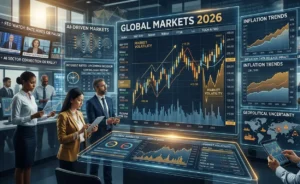
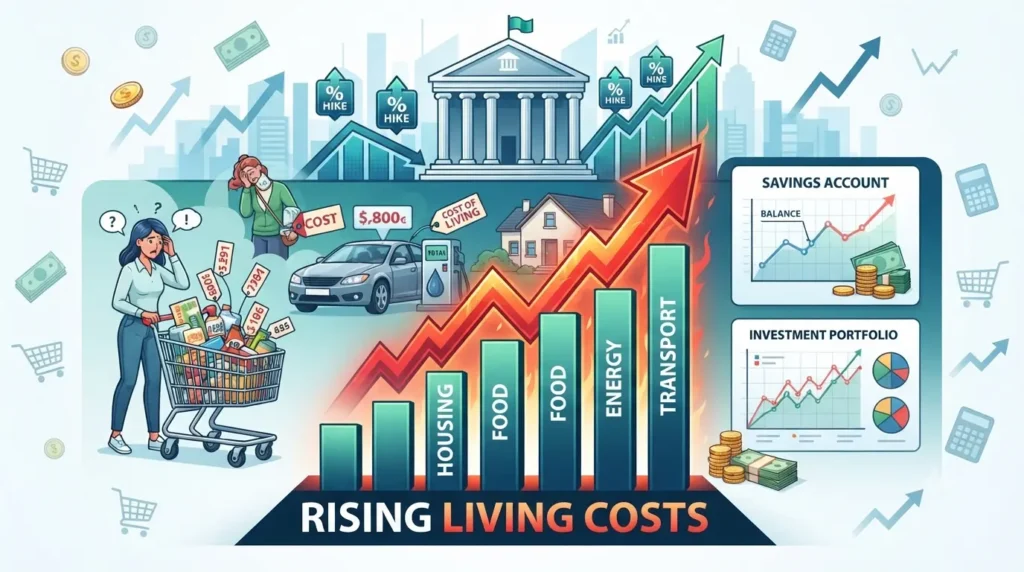
Inflation influences purchasing power, savings, investments, and everyday household expenses across the global economy.
Inflation is an increase in the prices of goods and services over a period of time. Higher prices mean the value of money decreases. This means that the same amount of money now can buy fewer products than previously. One can expect inflation to impact the lives of individuals, business entities, government, and the world economy every day.
And every year, prices in most economies rise a little. A modest, stable rate of inflation is usually a good thing with consumer prices as it promotes spending and investment not cash hoarding. But if inflation moves too fast, it may cut standards of living and damage the balance sheets.
Almost every financial decision people make is influenced by inflation. It influences grocery prices, transportation and housing needs, healthcare, education, and entertainment. Higher production costs eventually translate to higher prices for consumers as well. Talking about inflation helps people make better financial decisions.
Inflation has close links to the health of an economy, which is why it occupies such a big space on the radar screens of governments and central banks. Policy-makers manipulate interest rates, or use other monetary instruments, to rein in inflation. Most inflation will help keep a balance in employment, enhance the courage and confidence of consumers to strengthen economic development sustainably.
What Causes Inflation?
Several reasons can cause inflation. A typical contributing factor is demand-pull inflation, or a circumstance where consumers are spending more than businesses can provide with the goods and services of their choice. The more in high demand an item is, the higher the prices are because these products are not easy to obtain.
Cost-push inflation takes place when business costs for production processes rise. Higher wages, more expensive fuel prices, higher input costs for raw materials or even difficulties in the supply chains all increase the production costs. These extra costs are usually passed on to customers in the form of increased prices.
The second major factor is monetary expansion. The value of a currency can only fall if too much money is flowing into the economy and production is not growing accordingly. More money in competition for a finite pool of goods usually means inflation across many sectors.
Global events also influence inflation. Natural calamities, geopolitical unrest, transportation issues and disruption of global trade can limit the supply of these critical goods. The limited supply together with the consistent level of demand often exerts upward pressure on prices across the economy.
How Inflation Affects Everyday Spending
Inflation directly impacts our day-to-day household expenditure. Food, fuel, electricity, rent, clothing and transportation tend to get more expensive at times of advanced inflation. Households will find their monthly budgets do not stretch as far even if income remains the same.
The grocery store is one of the clear case studies of inflation. Things that used to cost a specified amount may just get more and more expensive for months. Consumers sometimes change the way they shop by simply approaching loftier products or moving to lower-cost alternatives.
Housing costs are also even more susceptible to inflation. As we mentioned earlier, it is long established that rent payments, home repairs and upkeep, insurance costs and utilities all increase over time. Increases in construction costs can also be passed on to property prices, making home ownership more expensive for first-time buyers.
So, when the fuel prices increase, transportation costs also go up. The increase in fuel prices not only affects drivers but also companies that ship products across the country. The transportation costs also drive up prices in many other sectors of the economy, adding to the financial burden on families.
Effects of Inflation on Savings
Money held in traditional savings accounts is eroded by inflation over time. Account balances may stay the same or earn small interest but overall inflation diminishes one’s purchasing power if inflation exceeds the interest received. This is the secret damage that erodes savings over long years.
Say you have someone who has $10,000 saved in an account that pays 2% interest every year while inflation is averaging 5%. Even though the account balance comes closer to increase collection, by fast increasing prices getting real is getting less. The purchasing power of the cash declines annually.
But even the best-laid plans of inflation have made emergency savings important. But why do financial experts continue to recommend an emergency fund, like it can save financially from specific situations that we cannot afford? Nevertheless, savers need to be aware that having too much cash in the long term could erode wealth in real terms.
Secondly, you must select high-interest rate savings accounts. During a rising interest rate environment, some banks adjust rates more quickly. Higher interest does not completely counter inflation but mitigates it much better.
Inflation and Investment Performance
Depending on the kind of investment, inflation impacts asset prices differently. Some investments lead to better performance (during inflation) and others may not. By understanding these differences, investors can create more balanced portfolios that will perform well regardless of changing economic conditions.
Over the medium term, stocks often furnish modest downside protection against inflation. Sometimes, successful companies can raise their prices and remain profitable while keeping revenue growing even in front of higher costs. Stock markets, on the whole, provide returns in excess of or substantially in excess of average inflation over long periods.
During Inflation, real estate also does quite well. High prices are often accompanied by increases in property values as well as rental income. Owning residential or commercial real estate can provide investors with higher asset values and stronger revenue from rentals through the years.
Bonds generally diverge by interest rate, and rising inflation so often leads central banks to hike interest rates, consequently slashing the market value of existing debt in terms of bonds. But when new bonds are issued, they typically have higher yields that more closely mirror the current state of the economy.
How Inflation Influences Interest Rates
Interest rates are one of the primary tools that central banks use to tame inflation. If inflation rises too high, central banks tend to raise rates to cool the economy. This is because high interest rates curtail consumption in favour of saving — thus lowering inflation over time.
Higher interest rates on loans increased the cost of borrowing for consumers and businesses. Mortgages, car loans, business- and credit card-related interest payments are typically more expensive. Diminished interest in borrowing would reduce demand overall, which should relieve some of the pressure on prices.
Higher interest rates may benefit savings accounts and fixed-income investments. When central banks change their policies, banks often pass the information along by increasing savings rates. Higher returns on deposits mean savers are able to earn better returns and this makes up somewhat for the ability of inflation to erode purchasing power.
This all leads to central banks being able to lower interest rates due to the inflationary pressure. Lower borrowing costs stimulate consumer spending, business investment and economic growth. From the Anscombe project, policymakers are Adam Smith on steroids, constantly walking a fine line between knocking down inflation and maintaining employment or financial system stability.
Protecting Your Finances During Inflation
There is still no way around inflation risk management in the construction of a diversified investment portfolio as ideally. Diversification allows investments to span various asset classes, ensuring no single type of investment becomes too dominant. Usually, balanced portfolios yield better results as market conditions change.
More income also compensates for inflation. Workers can apply for promotions, learn new skills, request pay raises or look for side hustles. In addition, if living costs increase with a flow of income because you have higher earnings at the start, you are in a better position.
These days, it is important that you prepare a careful budget for times of inflation. Recording monthly expenses helps avoid frivolous purchases and focus on what you need most. Even minor tweaks across multiple spending categories can create long-term financial security.
Another thing that can really help build financial resilience is reducing your high-interest debt. Interest rates are increased and credit card balances and variable-rate loans get more costly. Paying off debt relieves future financial stress and increases advantageous health.
Common Myths About Inflation
It is one of the common beliefs that inflation adversely affects the entire economy. Moderate inflation, in fact, is often a sign of healthy economic growth, as it promotes investment and business expansion, which are all signs of robust consumer demand. The problems come when inflation is either too high or unpredictable.
The other always-mentioned belief is that the banknotes secured at home, preserve wealth when there is inflation. If interest earns no cash at all, it will continue to lose value at an even faster pace than money sitting in many savings accounts. Idle cash quietly fades away any time by inflation
Not every investment beats inflation, so some people take it for granted. Investment performance differs significantly based on market environment, economic movement, and asset selection. Yes, some investments do consistently outperform inflation and others may lose value when the going gets tough.
Some think that inflation hits all people alike. Inflation actually affects households differently depending on various factors such as income situation, spending habits, debt, savings and investment portfolio. It all depends on your financial situation as to the role inflation plays in diminishing or accelerating purchasing power.
Inflation Around the World
Different nations have different levels of inflation. Some countries have been able to anchor their inflation through sound monetary policy and economic management. Still others see even higher inflation due to political instability, supply shortages, currency weakness or fiscal crises.
Domestic inflation is ever more affected by global events. International supply chains bind manufacturers together, and act as networks for transporting goods and energy across international boundaries, and as sources of food production. Major disruptions in one part of the world can trigger rapid price changes around the globe.
Exchange rates are a vital factor here as well. A declining domestic currency increases the value of imports, thus leading to inflation. A strong currency usually lowers import costs, which helps moderate prices for companies and consumers.
During stress periods in the global economy, international coordination exercised by governments and central banks mitigates market volatility somewhat. The case for coordinated policies to reduce volatility while promoting the recovery process based on comprehensive growth after significant shocks.
The Future of Inflation
Inflation is going to be a more prominent economic problem for many years. Global price trends will continue to be shaped by technological innovation and demographic changes, energy transitions, climate events and geopolitical developments. These factors are also under the scrutiny of economists for forecasting future inflation.
AI and automation can lead to productivity across various sectors. More efficiency could help reduce production costs and ease inflationary pressures in the long run. On the other hand, economic implications of new technology in action are also often opposed and are a matter of concern policymakers face.
Consumer resources to help for inflation in the future —Continue to be smart and do all things well. The exercise of prudent saving, strategic investing, manageable borrowing and ongoing financial learning is your best defense against uncertain economic times. Well, holding the long perspective is still proven to be one of the most powerful options for finance.
We cannot avoid inflation completely but we can manage it by making educated choices in finance. With the knowledge gained from this, people will be better equipped to know how inflation affects their savings, investments and everyday spending so that they can adapt sooner rather than later as economic conditions shift. Financial literacy is still one of the best defenses against long-term wealth destruction and for securing financial independence.
About the Author