
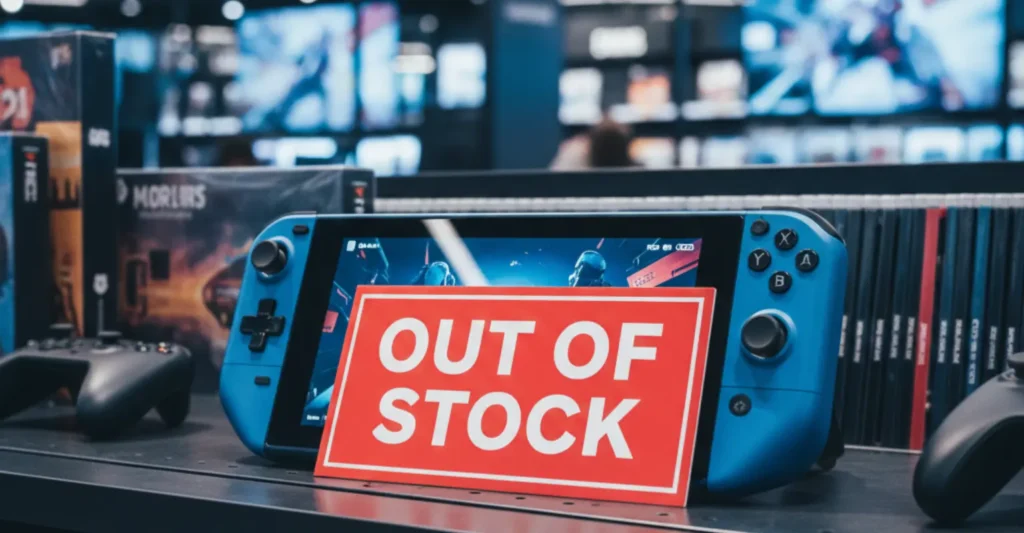
Valve warns of ongoing Steam Deck OLED shortages as global memory supply struggles to keep up with rising demand from AI data centers.
Valve has confirmed that its popular handheld gaming device, the Steam Deck OLED, will face ongoing stock shortages in several regions. The warning comes as a global memory shortage continues to disrupt the electronics industry, largely due to the rapid expansion of AI data centers around the world.
Earlier this week, Valve quietly updated the official Steam store page with a new notice. The message explains that the Steam Deck OLED may be unavailable at times in certain markets because of limited access to memory and storage components. For many customers, this update simply confirmed what they had already noticed when trying to buy the device.
Steam Deck OLED Goes Out of Stock in Key Markets
In recent days, all Steam Deck models have disappeared from sale in major regions, including the United States, Canada, and parts of Asia. This includes both OLED versions as well as the older 256GB LCD model, which has already been discontinued.
The updated store message now clearly states that supply will be inconsistent. Valve says these shortages are not permanent but may happen repeatedly as component availability fluctuates. For buyers hoping to purchase the device soon, this means long waits or limited buying windows, depending on where they live.
AI Boom Drives Memory Shortages
The root cause of the problem lies far beyond gaming. A massive global push to build AI-focused data centers has created unprecedented demand for memory chips. These facilities require huge amounts of DRAM, NAND, and high-bandwidth memory to train and operate advanced AI models.
As a result, memory prices have risen sharply. Industry data shows that prices increased by roughly 80 to 90 percent in the first quarter of 2026 compared to the previous quarter. This sudden surge has squeezed manufacturers of consumer electronics, who now struggle to secure enough components at reasonable costs.
Other Valve Products Also Affected
The Steam Deck OLED is not the only Valve product feeling the impact. Earlier this month, Valve announced delays to its upcoming Steam Machine-style PC and its Steam Frame VR headset. Both devices were originally expected to launch in early 2026.
In a blog post, Valve explained that rising component prices and limited supply forced the company to reconsider shipping timelines and pricing. The firm said it needs more time to finalize details before making firm announcements, suggesting that the memory crisis has disrupted long-term planning.
Resellers Raise Prices as Supply Tightens
While Valve continues to sell the Steam Deck at its official prices, shortages have created opportunities for resellers. On Newegg, listings have appeared showing the 1TB Steam Deck OLED priced as high as $1,099. This is a significant jump from Valve’s official $649 price.
Such price increases are becoming common whenever supply tightens. Buyers who do not want to wait often turn to third-party sellers, only to find heavily inflated prices.
Handheld PC Makers Feel the Pressure
Valve is far from alone in dealing with these challenges. Other handheld PC manufacturers are facing similar issues. Ayaneo recently stated that memory shortages forced it to raise prices on its latest models.
For smaller companies, the situation can be even more difficult. They often lack the purchasing power to secure large quantities of components, making them more vulnerable to market swings and supplier priorities that favor larger AI-focused clients.
Regional Differences in Availability
Interestingly, Steam Deck availability is not equally affected everywhere. While North America is currently seeing complete stockouts, some European regions still have units available. Reports show that customers connecting from Poland can still purchase both 512GB and 1TB OLED models through Valve’s regional partner, Komodo.
The UK and Australia also appear to maintain some stock for now. These differences highlight how supply chains can vary by region, depending on distribution agreements and local inventory levels.
Discontinued Models Add to Confusion
Valve officially ended production of the 256GB LCD Steam Deck late last year. However, its store page has not been updated to clearly reflect that the model will not return. This has confused buyers who may think it is temporarily out of stock rather than permanently discontinued.
Refurbished units sold through official channels are also currently unavailable across all configurations, further limiting options for budget-conscious buyers.
Industry-Wide Impact Beyond Valve
The memory shortage is affecting the entire gaming hardware industry. Sony is reportedly considering delaying the launch of the PlayStation 6 until as late as 2029 due to component constraints. Meanwhile, Nintendo faces pressure to raise prices on its upcoming Switch successor, despite earlier promises to avoid immediate increases.
These challenges show that the issue is not short-term or isolated. As long as AI infrastructure continues to dominate memory supply, consumer electronics companies will have to compete for limited resources.
What Comes Next for Valve
Valve says it is still aiming to release its delayed Steam Machine hardware in the first half of 2026. However, the company admits it needs more time to determine pricing and availability that it can confidently stand behind.
For now, Steam Deck OLED buyers should expect inconsistent availability and remain cautious of overpriced reseller listings. Valve has made it clear that it is working to stabilize supply, but the wider memory crisis means patience may be required.
About the Author