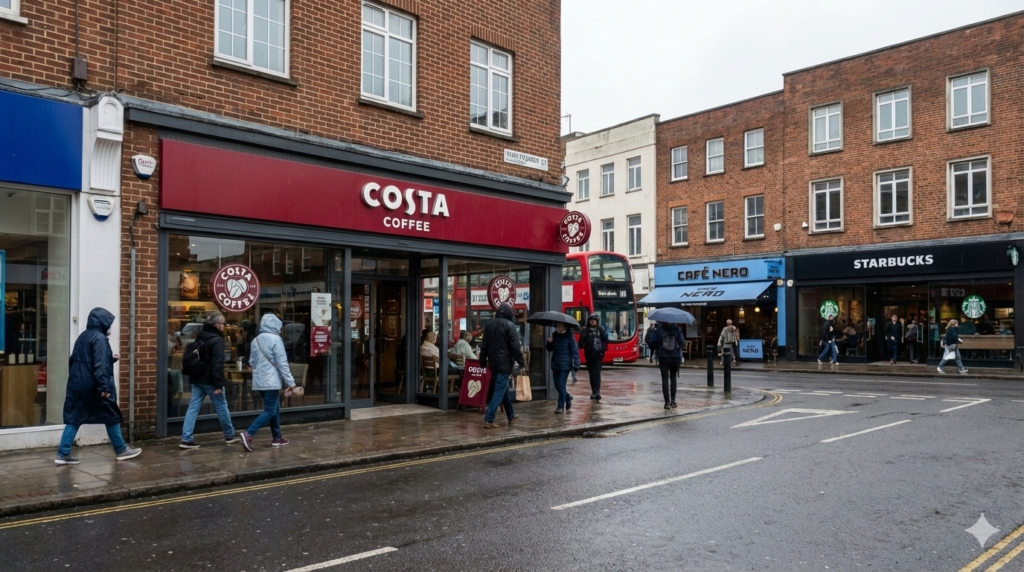
Costa Coffee, one of Britain’s most familiar café brands, is facing serious financial trouble. The company has reported a sharp rise in losses, showing how difficult the current coffee market has become. Once seen as a stable and reliable business, Costa is now under pressure from rising costs, changing customer habits, and tough competition on the high street.
According to recent company records filed at Companies House, Costa’s operating losses jumped from £5.8 million in 2023 to £13.5 million in the year ending December 2024. This is the worst result the chain has recorded since 2021, when many businesses struggled during the COVID pandemic. For a brand of Costa’s size, the figures have raised concerns about its future direction.
A Crowded and Competitive Costa Coffee Market
One of the main reasons behind Costa’s problems is the growing competition in the UK coffee market. Coffee is no longer just the domain of specialist cafés. Many well-known food chains have expanded their coffee offerings, often at lower prices.
Greggs and McDonald’s are two major examples. Both have invested heavily in improving their coffee quality while keeping prices low. These brands appeal strongly to customers who want a quick and affordable drink without sitting down in a café. As living costs rise, many people are choosing value over atmosphere.
At the same time, established café chains such as Pret A Manger have introduced meal deals that include coffee. These offers attract office workers and commuters who want a full meal at a reasonable price. Costa, which often charges more for similar drinks, has struggled to compete with these bundles.
Newer coffee brands are also changing the market. Chains like Blank Street and Black Sheep Coffee have become popular with younger customers. They focus on modern branding, social media-friendly drinks, and trendy flavours such as matcha and flavoured iced lattes. These brands offer a different experience that feels fresh and exciting to a younger audience.
Even premium bakeries and cafés such as Gail’s are expanding across the UK. These shops attract customers looking for high-quality coffee and baked goods in stylish settings. This has pulled some customers away from traditional coffee chains like Costa.
Price Sensitivity Among Customers
Price has become a key factor for many coffee drinkers. Research has shown that Costa’s drinks are often more expensive than those sold by Caffe Nero or Pret A Manger, although they are usually cheaper than Starbucks. While the difference may seem small, it matters more now than it did a few years ago.
With inflation affecting household budgets, many people are cutting back on small daily treats. A takeaway coffee is no longer an automatic purchase for everyone. Some customers are switching to cheaper options, while others are choosing to make coffee at home instead.
Costa’s total sales rose slightly to £1.2 billion, an increase of just 1 percent. However, this growth was not enough to cover rising expenses. Footfall in many high street locations has also declined, especially as more people work from home and commute less frequently.
Rising Costs Put Pressure on Profits
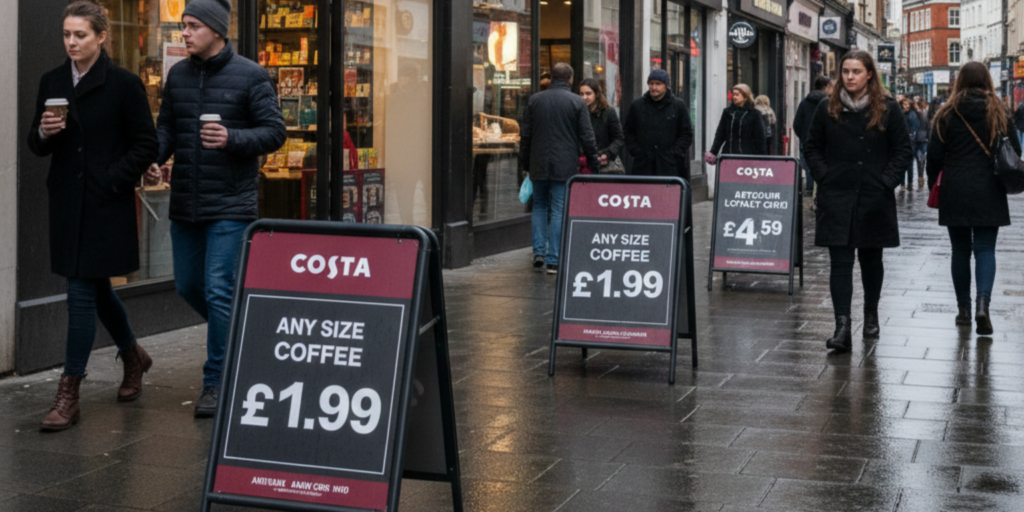
Competition is not the only challenge Costa faces. The cost of running a business in the UK has increased significantly. Higher wages, increased National Insurance contributions, and rising energy bills have all added to the burden.
Coffee bean prices have also remained high due to global supply issues. Climate conditions, transport costs, and demand from growing markets have all affected prices. For a company that relies heavily on coffee as its main product, these costs have had a major impact on profit margins.
Rent and property costs continue to be a problem as well. Many Costa locations are in busy city centres or travel hubs, where rents remain high even as customer numbers fluctuate. This makes it difficult to reduce expenses quickly.
Coca-Cola Feels the Pressure
Costa is owned by Coca-Cola, which bought the chain in 2018 for £3.9 billion. The deal was meant to help Coca-Cola expand beyond soft drinks and enter the global coffee market. At the time, the purchase was seen as a bold and forward-thinking move.
Today, Costa’s value is estimated to be closer to £2 billion. This drop has disappointed investors and raised questions about whether the acquisition was the right decision. Coca-Cola has explored selling the business, but progress has been slow.
Reports suggest that talks with private equity firm TDR Capital did not succeed because the two sides could not agree on a price. This has left Costa in a state of uncertainty, with no clear plan announced for its future ownership.
Coca-Cola’s chief executive, James Quincey, has admitted that Costa has not delivered the results the company expected. While Coca-Cola still believes in the long-term potential of coffee, the challenges of running a large retail chain have proven greater than anticipated.
A Changing Coffee Culture
Costa’s struggles also reflect wider changes in British coffee culture. When the brand was founded in 1971 by brothers Bruno and Sergio Costa, café culture in the UK was very different. Over the years, Costa helped popularise the idea of coffee shops as everyday meeting places.
Today, the market is far more diverse. Customers have many more choices, from independent cafés to supermarket coffee machines. Home coffee equipment has also improved, making it easier for people to brew high-quality drinks themselves.
Convenience has become a major factor. Many people prefer to grab a coffee while shopping for groceries or travelling, rather than making a special trip to a café. This shift has reduced the importance of traditional coffee shop visits.
Questions About the Future
As losses continue to mount, questions remain about what comes next for Costa. Some analysts believe the chain needs to rethink its pricing strategy to compete more effectively with lower-cost rivals. Others suggest updating store designs and menus to appeal to younger customers.
Investment in digital ordering, loyalty programmes, and delivery options could also help Costa stay relevant. However, these changes require funding at a time when profits are under pressure.
Another option is closing underperforming stores to reduce costs. While this could improve short-term results, it risks weakening Costa’s presence on the high street.
Conclusion
Costa Coffee’s current difficulties show how quickly the retail landscape can change. A brand that once dominated the UK coffee scene now finds itself fighting for relevance in a crowded and competitive market. Rising costs, shifting consumer habits, and strong rivals have all contributed to its recent losses.
The coming year will be critical for Costa and its owner Coca-Cola. Decisions made now about pricing, investment, and strategy will shape the brand’s future. Whether Costa can adapt and regain momentum remains to be seen. What is clear is that past success alone is no longer enough in a fast-changing coffee market.
About the Author