
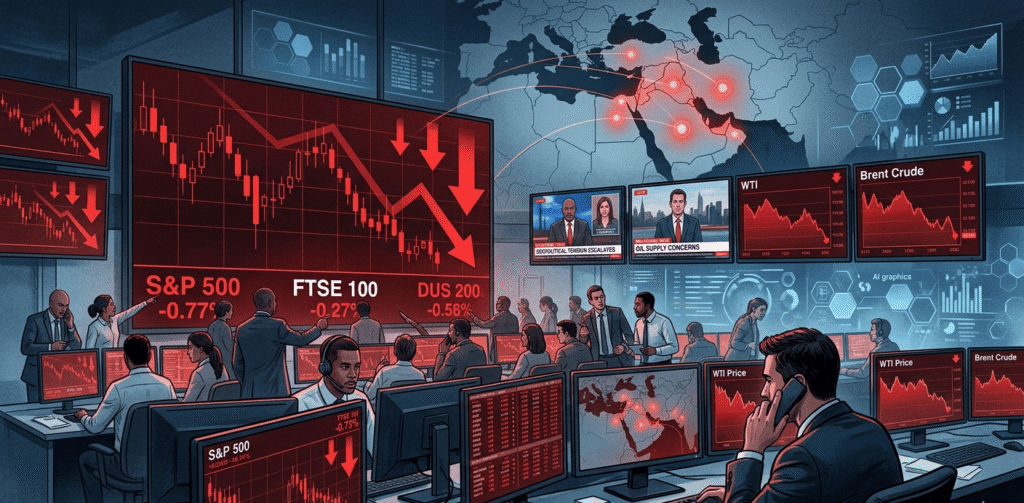
Asian markets decline as AI momentum slows and geopolitical concerns weigh on investor sentiment.
Investors pulled back from riskier assets on Asian stock markets on Friday, causing a sharp drop. Several sessions of solid gains have prompted many traders to take profits. The rally in the Stocks fizzles as the US-Iran peace talks stall story takes center stage in financial markets.
Geopolitical fears resurfaced to dampen market sentiment. Investors reacted to a lack of clarity in the Middle East by taking defensive moves. That was a factor that drove down regional stocks.
The tech sector also took a hit after recent AI optimism gains. Investors became more discerning given the unusually high expectations. Consequently, overall market activity declined in Asia.
Middle East Tensions Increase Market Uncertainty
The peace efforts in the Middle East hit a new snag, prompting a rise in concerns about the region. On Thursday, Hezbollah turned down an offer for a ceasefire in Lebanon. The Stocks continue to decline as the rally on AI technology is losing momentum and US-Iran peace talks are stalled.
Israel also stated that it would not withdraw its troops from Lebanon. These developments made it more difficult to try to ease tensions in the area. Investors took a step back from risky investments.
The situation created further uncertainty over the stability of the region in the future. Geopolitical risks tend to have a negative impact when they rise sharply in financial markets in general. This environment brought about the inclination of traders to look for safer investment options.
AI-Driven Market Rally Loses Momentum
The AI surge which propelled stock rallies earlier in the week took a breather. New information from key technology firms led investors to revisit their expectations. As sentiment shifts, the Stocks fall while the AI rally slows down, US-Iran talks stall trend.
Several market participants were anticipating further solid growth in the major AI-related businesses. But recently, the earnings reports were not able to meet raised expectations. This led some investors to doubt the near-term valuations.
AI is still a huge growth opportunity for global markets. However, investors have become more sophisticated and are seeking better guidance and stellar results. Even good results might not be enough to please the market.
Broadcom Results Trigger Semiconductor Selling
Broadcom’s earnings report was one of the reasons for the market’s drop. The company’s results were less than expected by investors. As the rally slows in AI, US-Iran peace talks run into trouble, the Stocks fall.Rally slows in AI as US-Iran peace talks stall narrative extended.
Demand for AI technologies is high, but expectations are high, too. Investors had been hoping for more positive forecasts to justify share price gains that have been made recently. However, when those expectations were not fully realized, selling pressure ratcheted up.
The reaction demonstrates the heightened sensitivity of markets to developments related to AI. When expectations shift, there can be dramatic changes in technology stocks. Broadcom’s report sparked a selloff in the industry.
South Korean Markets Experience Sharp Declines
Some of the biggest declines in Asia were seen in the South Korean stock market. The Kospi index was down over six percent on trading. Investors have been impacted heavily by the Stocks decline, which coincided with the pause in the rally on the AI sector amid stalled peace talks between the US and Iran.
The rise of AI has been particularly advantageous for South Korea businesses. Numerous companies provide the critical parts that go into high-tech computers and data centers. The sentiment around semiconductors turned negative, and these stocks were hit.
Buyers rapidly cut through the entire semiconductor supply chain. Selling was wide-spread driven by concerns over future growth projections. This led to a significant drop across the whole market.
Japanese Stocks Also Move Lower
Investors took a conservative approach, with Japanese stocks following the trend downward. The daily trading of the Nikkei index saw a drop of almost 1.3 percent. Sentiment was weighed by the Stocks dropping over the slowdown in the rally on AI, as well as the lack of any progress on the US-Iran peace talks.
Technology firms were subject to pressure to sell, as were the companies in the region. Recent strength in semiconductors moved investors to reassess their growth outlook. This led to decline in a number of market segments.
Though it’s down, analysts still see Japan as a key technology market. The nation’s semiconductor and manufacturing sectors continue to be important strategic sectors. But volatility on the short-term horizon is working its way into investor’s actions.
Global Futures Signal Broader Weakness
The conservative outlook was not limited to Asian trading markets, but also global futures trading. Wall Street trading was mixed as Nasdaq futures fell about 1 percent. A halt in the development of the AI rally and the ongoing slowdown in US-Iran peace talks weighs on the Stocks.
S&P 500 futures were also lower as investors assessed geopolitical risks. Concerns about global economic stability also took root in European futures markets. The overall drop indicated investors’ general wariness.
A lot of traders were keen to limit their risk prior to the weekend. International developments were uncertain, and so positioning was done defensively. This was a factor in the weakness in various asset classes.
Oil Prices Remain Elevated Despite Limited Movement
The oil price has shown no significant change at the Friday trading even with the market fluctuating throughout the day. traders kept an eye on the on-going developments in the U.S.-Iran deal talks and regional conflicts. Energy prices were supported by the Stocks as the rally in the AI sector fades and talks for peace between the US and Iran stall.
Brent crude was heading toward the $95 a barrel level, and its weekly price increase was not materially different from what it has done in recent weeks. U.S. crude oil was also somewhat higher than previous readings. Tensions between nations were a factor in the concerns about future supply conditions.
But weekly increases were substantial and daily fluctuations were relatively small. Investors were concerned that extended instability could wreak additional disruptions on energy markets. These worries persisted in their impact on commodity prices.
Strait of Hormuz Remains a Key Focus
The Strait of Hormuz was a closely monitored area by market participants. This is an important shipping corridor for global energy transportation. The Stocks falter after the AI rally fizzled, US-Iran peace talks stumble in the narrative and add supply worries.
Restoring shipping activity is likely to be more difficult than expected, analysts said. If diplomatic agreements do come through, there may be logistical hurdles. Issues like these could persist and continue to hinder energy market normalization.
Investors know the importance of this area to the world’s supply chain. Disruptions have a great impact on energy prices and economic conditions. Thus, the developments are given significant publicity by the market.
Supply Challenges May Persist
The initial increase in oil supply is expected to be from the existing inventories, according to experts. Crude and previous stranded volumes may be first to market. These concerns are highlighted by the Stocks’ declines following the end of the AI rally and the failure of the US-Iran peace negotiations.
It will take a much longer time to get a sustained increase in production. There is potential for delay due to infrastructure, logistics and political factors. All of these lead to doubt about energy supplies in the future.
Market participants continue evaluating the potential impact of these challenges. Expectations regarding supply recovery influence commodity and equity markets alike. Investors remain attentive to any developments that could alter forecasts.
Risk-Off Sentiment Dominates Trading
The overall market environment reflected a classic risk-off mood among investors. Participants reduced exposure to higher-risk assets while seeking safer alternatives. The Stocks drop as AI rally pauses, US-Iran peace talks stall trend illustrates this shift.
Geopolitical concerns combined with slowing AI enthusiasm created a challenging backdrop. Investors preferred preserving capital rather than pursuing aggressive growth opportunities. This behavior contributed to widespread market weakness.
Risk-off periods often emerge when uncertainty rises across multiple areas simultaneously. Current conditions fit that pattern as economic, political, and corporate factors intersect. As a result, caution became the dominant market theme.
Outlook Depends on AI and Diplomacy
Future market direction will likely depend on both technology developments and geopolitical progress. Investors continue monitoring artificial intelligence demand and corporate earnings closely. The Stocks drop as AI rally pauses, US-Iran peace talks stall headline remains relevant.
Strong AI growth could restore confidence if companies continue delivering impressive results. However, investors may require stronger guidance than before to justify valuations. Expectations remain elevated throughout the technology sector.
At the same time, progress in diplomatic negotiations could improve market sentiment significantly. Reduced tensions would ease concerns regarding energy supplies and economic stability. Until greater clarity emerges, volatility may remain a key feature of global financial markets.
Conclusion
The Stocks drop as AI rally pauses, US-Iran peace talks stall development reflects the challenges currently facing global investors. Geopolitical uncertainty, slowing momentum in AI-related stocks, and concerns about energy markets combined to create a cautious trading environment. Asian markets, particularly South Korea and Japan, experienced notable declines as investors reduced risk exposure. While artificial intelligence remains a powerful long-term growth driver, markets now demand stronger results to sustain recent rallies. Future performance will depend heavily on both diplomatic progress in the Middle East and continued strength within the technology sector.
About the Author