
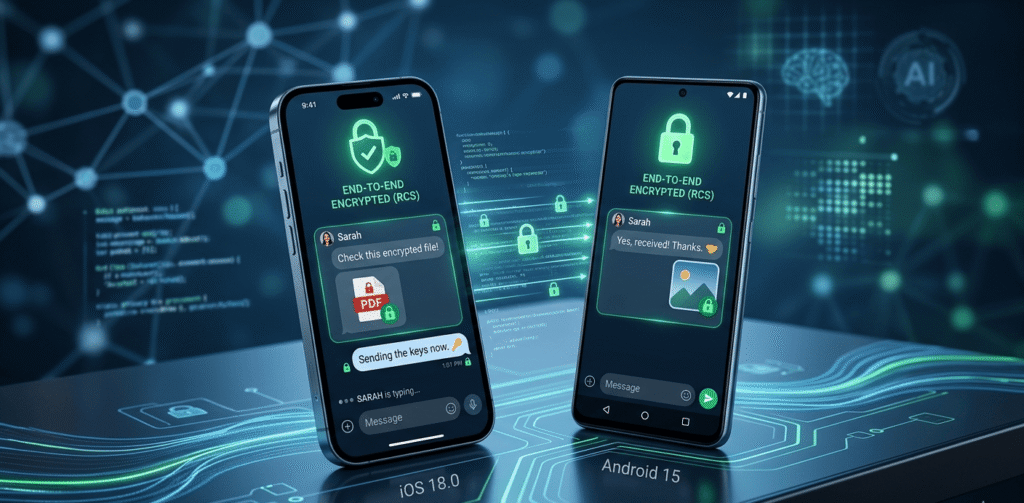
Apple and Google are rolling out encrypted RCS messaging to improve secure texting between iPhone and Android users.
It is an exciting development for mobile communication security as Apple and Google have officially begun to roll out end-to-end encrypted Rich Communication Services (RCS) messaging on both iPhone and Android devices. The update aims to enhance user privacy when using messaging between different mobile ecosystems and to make texting more modern.
The implementation starts with beta support for iPhone users with iOS 26.5 and Android users with the latest version of Google Messages. The deployment is also underway with supported carriers, with the expectation that it will grow over time.
The move is one of the largest cross-platform messaging changes in years as it gives some much-needed improved encryption standards to conversations with iPhones and Androids. Secure messaging is mainly restricted to messaging apps like WhatsApp, Signal, Apple’s iMessage, and other such platforms and has been so for a good long while. By contrast, the traditional SMS message was a lot less secure.
What is RCS Messaging?
Rich Communication Services (RCS) is regarded as the modern alternative to SMS/MMS texting. RCS is different from the usual text messaging with features more often seen in online messaging applications. They feature typing indicators, read receipts, high-quality image and video sharing, message reactions, enhanced group chats, and bigger file transfers. RCS strives to deliver a more modern messaging experience without the need to download third-party apps.
The past few years Google has been strongly pushing RCS, particularly with Google Messages on Android devices. One drawback, however, was the fact that there was no universal support for encryption across platforms.
This update brings encrypted RCS chat functionality to various other devices, including iOS, Nokta, and Swedish MESA (MMS Extras).Prior to this update, the ability for encrypted RCS chat was limited to Android users who use Google Messages. People who used Android and iPhone devices often defaulted to using SMS/MMS just like they did before the days of encryption, security, and privacy. Now that gap is starting to fill.
End-to-End Encryption Explained
The key to the new rollout is end-to-end encryption. Only the sender and recipient can access the contents of a message with this security technology. End-to-end encryption scrambles the contents of a message as it gets transmitted between devices. Even the companies that own the messaging systems can’t see the contents of the messages while the message is being sent.
This differs from the older SMS systems which had the risk of carriers seeing or intercepting the messages during transmission. Once users turn on encrypted RCS messaging, they will see a lock symbol in the conversations they use, indicating that the conversation is encrypted. It will be expected that encryption be automatically enabled for compatible conversations over time, for both new conversations and old chats within RCS threads.
Why This Matters for iPhone and Android Users
Secure cross-platform messaging has been a longstanding problem for users. In Apple’s ecosystem, end-to-end encryption is already in place for iMessage by default. In recent years, Android users were also offered encryption support, as was Google Messages. But there was some lack of communication between the two ecosystems.
iPhone users tended to text with older SMS technology when using iPhone/Android messaging. This resulted in a lesser experience in both features and security. The new encrypted RCS deployment alters that. No longer needing to use old SMS standards, an iPhone or an Android device can now send richer, more secure messages via RCS. This proves to be a more consistent messaging experience and solidifies privacy measures for millions of users across the globe.
Apple’s Privacy Strategy
The release will dovetail nicely with Apple’s overall privacy initiative. Apple has always been a company that cares about privacy, particularly when it comes to advertising-based technology companies. The company has said it has always been designed with privacy protections in mind and iMessage is end-to-end encrypted.
Encrypted RCS messages will allow for greater interoperability between providers while maintaining the privileges of Apple’s ecosystem. Meanwhile, Apple is also touting that iMessage is the better way to communicate between Apple products with features and integration that are absent with other messaging apps, plus the connectivity of the Apple ecosystem. However, if you include secure RCS, then there’s less grumbling about an iPhone-to-Android communication divide.
Google’s Push for RCS Adoption
Google has been working on RCS for years to make it the world’s messaging standard. The company said SMS technology was obsolete and didn’t have the latest messaging features that users had come to expect. Google also accused Apple of failing to support RCS relatively, particularly due to its inability to facilitate cross-platform messaging between Android and iOS users, which often led to poor quality media, missing features, and so forth.
With Apple now supporting RCS and encryption being rolled out more widely, Google’s foray into the long-term looks like it’s working. The update for Android makes it easier to feel like you’re having a modern and safe conversation with an iPhone user as opposed to a non-modern and less secure conversation with a legacy messaging system.
Carrier and Industry Cooperation
To achieve the rollout of encrypted RCS messaging, cooperation among the wider mobile sector was needed. RCS standards are overseen by the GSM Association (GSMA) organization, which oversees the standards of messaging between carriers, device makers and technology partners.
An adoption obstacle for RCS in the past was the lack of consistency in how carriers implemented it. There were some carriers that were able to offer RCS capabilities, and some that were behind the curve, resulting in a fragmented user experience. The new deployment indicates a greater synergy between platform vendors and service providers in the efforts to find a common message standard. The cooperation is crucial as messaging infrastructure relies heavily on network compatibility, Operating System compatibility, and hardware device compatibility.
Privacy and Security in the Modern Messaging Era
Growth in consumer demand for more robust digital privacy protection is reflected in the deployment. As people become more cognizant about the threats of surveillance, data collection, and cybersecurity, encrypted messaging has become more significant in the past decade.
With apps such as WhatsApp, Signal and so on, the concept of private conversations being encrypted by default became normalized. Consequently many of the users started to demand the same level of security for all communication. Receiving news through traditional SMS was now becoming rather outdated. Apple and Google are taking the first steps to bring mainstream mobile communication closer to today’s privacy standards by introducing encryption to RCS messages, even on non-Android platforms.
There are however some current discussions over encryption that are not uncontroversial. In other countries, governments and police forces have said that robust encryption makes it harder to conduct criminal investigations because the platform is unable to read the content of the messages. But technology firms are still pressing the case for user privacy and security in a digital age through encryption.
What Happens Next?
Rollout is ongoing and availability might depend on device compatibility, software versions, carrier support, etc. Users using supported iPhones running iOS 26.5 and users with the latest version of Google Messages on Android devices are expected to be the first to access, via beta deployments. Encrypted RCS support will eventually be rolled out worldwide as carriers and manufacturers finish implementation.
The general trend is evident, as SMS is being replaced by richer messaging platforms that are internet-based and offer better privacy. Consumer benefit includes more secure communication between mobile ecosystems, better media sharing and enhanced messaging functionality.
Conclusion
The launch of encrypted RCS messaging on both iPhone and Android devices is a significant development that brings a new level of security to the future of mobile messaging. Together, Apple and Google are helping the world of cross-platform messaging become more modern and enhancing user privacy and security. The end-to-end encryption feature puts RCS a step closer to the messaging services of WhatsApp, Signal, and iMessage.
The update also helps to eliminate one of the largest ongoing issues in smartphone communications: messaging between iPhones and Androids. While still in the process of rolling out, the direction seems to be becoming clearer. While SMS remains a fundamental mode of communication, newer more sophisticated messaging systems are taking its place that emphasize functionality and privacy. For consumers, this translates to a future where texting will be more secure, richer and more convenient, irrespective of the platform.
About the Author