
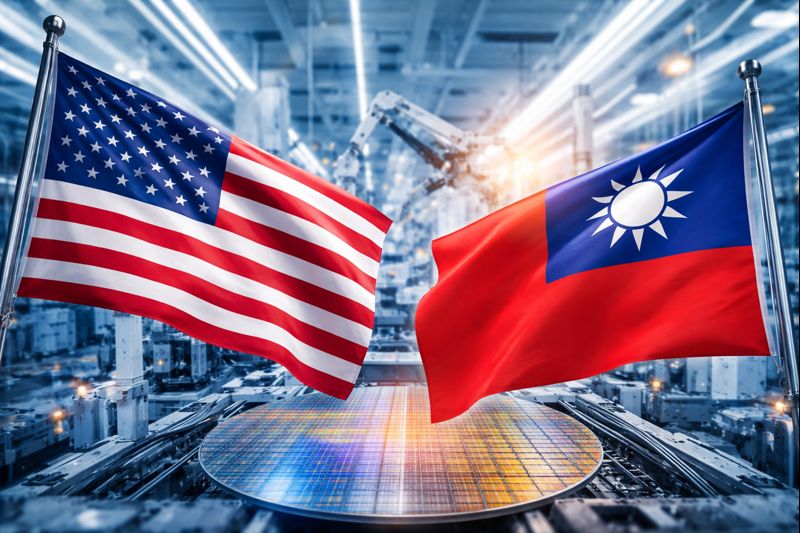
US and Taiwan strengthen semiconductor manufacturing ties as Taiwanese companies commit billions to US chip production.
The United States is set to receive a major boost in US semiconductor manufacturing investment after a new agreement with Taiwan that commits $250 billion toward expanding domestic chip production. The deal, announced by the US Department of Commerce, is part of a broader effort to strengthen supply chains and reduce reliance on foreign semiconductor manufacturing.
Taiwanese semiconductor and technology companies will lead the investment, focusing on advanced chip production, energy infrastructure, and artificial intelligence manufacturing within the United States. Taiwan currently produces more than half of the world’s semiconductors, making the agreement a strategic shift in global chip supply.
Taiwan Semiconductor Investment Targets Chips, Energy, and AI
Under the agreement, the Taiwan semiconductor investment will support large-scale manufacturing projects tied to semiconductors, AI hardware, and energy systems needed to power data centers and chip facilities. While the timeline for deployment has not been fully outlined, officials expect the investment to be phased in over several years.
In addition to direct funding, Taiwan will provide $250 billion in credit guarantees to support further investments from its semiconductor and technology firms operating in the US. These guarantees are designed to lower financial risk and accelerate construction of new facilities.
US Taiwan Chip Deal Expands Strategic Cooperation
In return, the United States has pledged to increase investment in Taiwan across key sectors. These include semiconductors, defense technology, artificial intelligence, telecommunications, and biotechnology. While no specific dollar figure was disclosed, the move reinforces long-term cooperation between the two economies. Officials described the US Taiwan chip deal as a strategic partnership focused on innovation, security, and economic resilience.
Trump Administration Pushes to Rebuild Domestic Chip Production
The announcement follows a recent policy statement from the Trump administration emphasizing the need to expand US semiconductor manufacturing. Currently, only about 10 percent of global chip production takes place in the United States. Government officials have repeatedly warned that dependence on overseas semiconductor supply chains poses economic and national security risks. Semiconductors are critical to modern technology, defense systems, and artificial intelligence development.
Semiconductor Tariffs Remain Part of the Strategy
As part of the broader trade approach, the administration has already imposed 25 percent tariffs on certain advanced AI chips. Officials said additional semiconductor tariffs could be introduced once trade negotiations with other countries are finalized. The combination of tariffs and investment agreements aims to encourage domestic production while securing supply chains against future disruptions.
Long-Term Impact on the Global Semiconductor Market
Analysts say the $250 billion commitment could reshape the global semiconductor landscape. Increased US semiconductor manufacturing investment is expected to improve supply stability, support AI growth, and reduce exposure to geopolitical risks. As demand for advanced chips continues to rise, partnerships like this one between the US and Taiwan are likely to play a central role in shaping the future of the semiconductor industry.
About The Author