LinkedIn faces scrutiny in Europe over restricting access to profile viewer data behind its premium subscription.
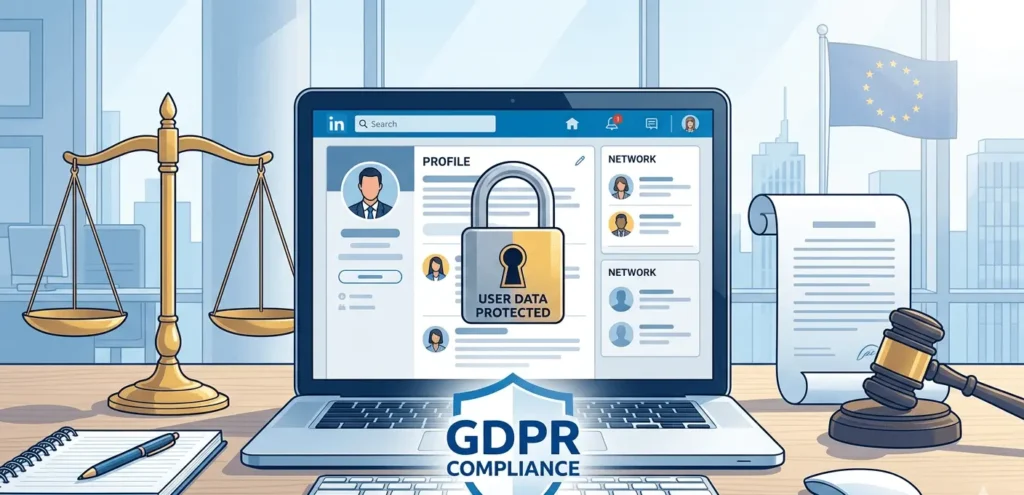
Another highly visible service available on LinkedIn, the professional networking giant, is coming under a new legal challenge in Europe. The complaint, lodged in Austria, claims that such a restriction on this information to paying subscribers could be in contravention of the European data protection laws.
The most basic issue in the dispute is a fundamental question of digital rights: Should users have to pay to access data that directly refers to them? The response to this question under European law in this case is no, and the case has the potential to have far-reaching implications on how platforms monetize personal data.
The Role of NOYB in the Case
NOYB (None of Your Business), a prominent privacy rights advocacy group, supports the complaint and was founded by privacy activist Max Schrems. NOYB has earned a reputation for confronting large tech firms over their data collection and processing, and through the courts to test and enforce the European rules on privacy.
In this case, NOYB is supporting an anonymous Austrian user who demanded to see the information regarding the people who had seen his LinkedIn profile. The group claimed LinkedIn refused this request unless the user was subscribing to its premium service, which is typically priced around €30 per month. NOYB claims that this rejection goes against the rights provided under European law, specifically, the right of access to personal data.
The Right of Access and GDPR
The case will be based on the meaning of the General Data Protection Regulation, also referred to as GDPR. Article 15 of its provisions indicates that a person has the right to be given confirmation of whether their personal data are being processed and to have access to such data on request.
In the view of NOYB, details of the people who have visited a user’s profile are considered personal information. As such, it contends, LinkedIn ought to make this information freely available on request as opposed to charging them with a paywall.
This interpretation questions a business model familiar to the tech industry, where higher data insights are commonly offered as a higher feature. In case regulators concur with the position of NOYB, companies might be compelled to re-evaluate their approach to the differentiation between free and paid services.
The Premium Model of LinkedIn is Under Investigation
The premium subscription model at LinkedIn has been a major source of revenue. Such features as profile viewer insights, advanced search filters, and messaging tools are intended to attract professionals in need of a competitive advantage in networking and job hunting.
The complaint, however, questions whether in monetizing access to some types of data, a line has been crossed. Critics believe that, should the information be directly related to the user, the ability to access the information would be considered a restriction of a primary right.
Martin Baumann, a data protection lawyer at NOYB, criticized the practice, saying it is contradictory when companies insist on the importance of data protection, only to realize that it fits their business interests. His remarks are indicative of a more general skepticism of privacy advocates concerning how technology corporations balance compliance with monetization.
Possible Legal and Financial Implications
In case the Austrian authorities conclude that LinkedIn has breached GDPR, potential impacts may be severe. The regulation imposes fines up to 4% of the global annual turnover of a company and thus, it is considered one of the most restrictive data protection systems across the world.
Austria’s data protection authority will handle the case and may request detailed explanations on the actions of LinkedIn to determine whether the practices of LinkedIn comply with the law. Besides possible penalties, the regulators may impose on the company the obligation to alter its approach to data access requests.
This kind of decision would not only affect LinkedIn but also act as a precedent to other platforms that are operating within the European Union.
A Trend of Regulatory Problems
This is not the first instance in which LinkedIn has been questioned in terms of GDPR. In October 2024, the data protection authority in Ireland fined the company in relation to violations of its use of personal data in targeted advertising.
The case mentioned above raised some issues regarding transparency and user consent, and they continue to dominate the discussion on data protection in Europe. The new complaint introduces another dimension where the emphasis is placed on the access rights and the commercialization of the data related to users.
Combined, these cases demonstrate a growing readiness of European regulators and advocacy groups to take on big tech companies and hold them accountable to privacy laws.
Greater Applications to Tech Platforms
The resolution of this complaint might have far-reaching implications not just for LinkedIn. Several online applications have a tiered service, with a basic level of functionality being free, but more detailed insights or analytics being locked to a subscription.
Should the regulators decide that some forms of data should be offered free of charge under GDPR, it may trigger a reconsideration of such business models. Businesses might have to make a clear cut between those features of the product that can be considered as value-added and those data that users have a legal right to access.
It may also result in increased openness in how platforms are categorising and processing personal data, potentially benefiting users but making monetisation strategies more challenging.
The Tension Between Privacy and Profit
In its essence, the case reveals one of the persisting conflicts in the digital economy: the ratio between the rights of the user and the income of the company. Platforms such as LinkedIn are based on subscription models to generate revenue, although they also operate within a legal framework that puts user control over personal data first.
To users, it is not only about the ability to access information but also about fairness and transparency. If data is being gathered and utilized, many feel that they ought to be allowed to view it free of charge. In the case of the companies, the issue is to be innovative and monetize their services without exceeding the limits of what are becoming more strict regulations.
What Happens Next?
The Austrian data protection authority will now consider the complaint and decide whether to continue the investigation. In case it finds any credence in the arguments of NOYB, it might force LinkedIn to release the data requested and might even impose fines.
How LinkedIn will address the complaint is yet to be publicly announced, but the case will most likely receive a lot of attention due to the global coverage of the platform and the overall implications of the case to the tech industry.
In cases like this, where regulators are still trying to push the boundaries of GDPR, these cases will likely play a vital role in determining how digital rights are interpreted and applied in practice.
Conclusion
The privacy concern against LinkedIn highlights a growing controversy on the ownership and access to data in the digital era. Through its challenge of the paywall surrounding profile viewer data, NOYB is pushing towards an even stricter interpretation of GDPR that puts the rights of the user above the needs of the business.
It is yet to be determined whether regulators will agree, but the case has already raised important questions regarding the manner in which personal data is handled and who is supposed to be in control. The result of this evolution would not only impact the practices of LinkedIn but also the future of data-based business models in the entire tech industry.
About the Author