
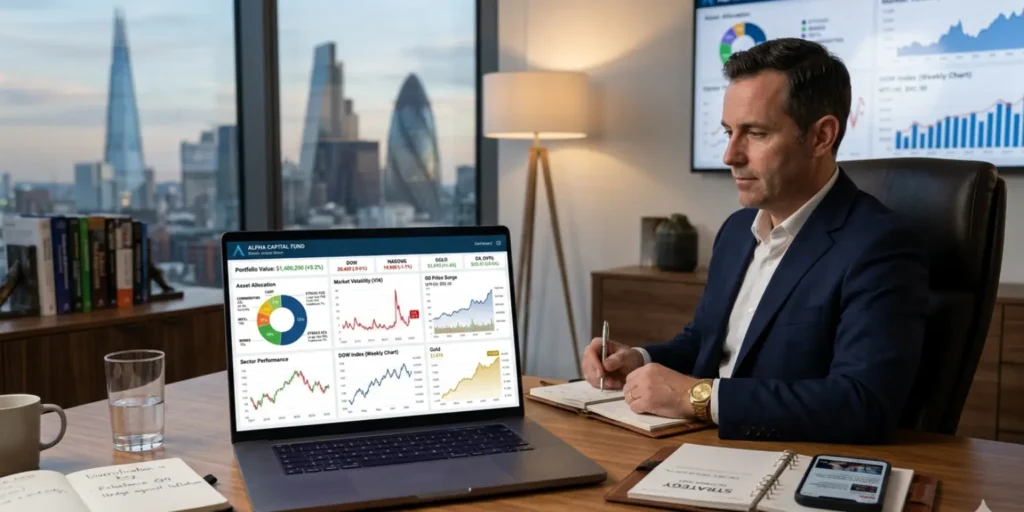
An investor reviews a diversified $100K portfolio with charts showing energy, gold, and tech allocations amid market uncertainty.
Right now, I’m managing a stock portfolio worth about $100,000, mostly invested in U.S. equities. Over the past five weeks, that portfolio has dropped by roughly $7,000. That kind of decline forces you to pay attention.
With recession risks rising, oil prices climbing above $110, and growing geopolitical tension involving Donald Trump and Iran, I decided to completely rethink my strategy. This isn’t a time to sit still and hope things improve. It’s a time to act carefully and deliberately. Here’s exactly what I’m doing before April 6 and what you should think about if you’re in a similar position.
Step 1: Understanding the Problem with Most Portfolios
Most investors believe they are diversified. In reality, many portfolios are heavily concentrated in a small group of tech giants known as the Magnificent Seven:
- Apple
- Microsoft
- Nvidia
- Amazon
- Alphabet
- Meta
- Tesla
Together, these seven stocks make up about 28% of the S&P 500. That means if you own a typical index fund, a large portion of your money is tied to just a few companies. The problem is that in 2026, all of these stocks are down. So instead of protecting your portfolio, this concentration is dragging it lower.
At the same time, bonds are not providing safety either. Rising interest rates are pushing bond prices down. This creates a situation where both stocks and bonds are falling together, something we haven’t seen often since the 1970s.
Step 2: What I’m Selling
I am not selling everything. Panic selling is one of the biggest mistakes investors make. But I am making targeted changes.
Reducing Exposure to Big Tech
I am cutting my exposure to the Magnificent Seven from around 17% of my portfolio to about 10%. This means selling roughly $7,000 worth of these stocks.
Specifically:
- I am reducing my position in Tesla. The valuation is still very high, and uncertainty around leadership and market conditions adds risk.
- I am also trimming Meta due to regulatory pressure and long-term uncertainty.
Selling Risky Growth Stocks
Any company that is not profitable and trading at extremely high valuations will be removed completely. These stocks depend on perfect economic conditions to succeed, and this is far from a perfect environment.
What I Am Keeping
- NVIDIA stays because demand for AI infrastructure remains strong.
- Alphabet stays because it is relatively cheaper and has stable revenue.
Step 3: My New $100,000 Allocation
Instead of guessing what will happen, I am building a portfolio that can handle multiple outcomes.
Here’s how I am allocating my $100,000:
- Energy: 18%
- Short-term Treasuries: 15%
- Quality tech: 15%
- Gold: 12%
- Healthcare and utilities: 12%
- Cash: 12%
- Defense: 8%
- International and commodities: 8%
Why Energy Is My Largest Position
Energy stocks benefit in most scenarios right now. If tensions rise, oil prices go up. If nothing changes, prices remain high.
Only a major diplomatic breakthrough would hurt energy stocks, and I see that as less likely.
Why I’m Holding Gold
Gold acts as protection during uncertainty. With global tensions rising and inflation still a concern, gold helps balance the risk in the portfolio.
Short-Term Treasuries for Stability
Short-term Treasury funds provide steady returns with minimal risk. They also keep my money liquid so I can react quickly if needed.
Focused Tech Exposure
Instead of spreading money across many tech stocks, I am concentrating on strong companies like Nvidia and Alphabet.
These companies have real earnings and long-term demand.
Defensive Sectors
Healthcare, utilities, and defense companies tend to perform better during uncertain times. They provide stability and a consistent income.
Keeping Cash Ready
Holding 12% in cash is intentional. This gives me flexibility to act quickly when markets move.
Step 4: Preparing for the April 6 Risk Window
This week is unusual because of the timing.
Markets close on Thursday and stay closed through Friday. During that time:
- A major jobs report will be released
- Geopolitical developments may unfold
- The Iran deadline tied to Donald Trump will arrive
This means markets could react strongly when they reopen on Monday.
You could see a 3% to 5% move before you even have a chance to trade.
My Plan for the Week
- Early in the week: Complete all selling and rebalancing
- Midweek: Reduce any remaining risk
- Thursday: Final portfolio check
By the time markets close, I want everything in place.
Step 5: Planning for Three Possible Scenarios
Instead of reacting emotionally, I’ve prepared for three outcomes.
Scenario 1: A Deal Happens
If tensions ease and a deal is reached, markets will likely rise quickly.
What I will do:
- Use my cash to buy more tech stocks
- Reduce exposure to energy and gold
Scenario 2: Deadline Gets Extended
This is the most likely outcome. Uncertainty continues, and markets move slowly.
What I will do:
- Keep my portfolio unchanged
- Let defensive positions and energy continue performing
Scenario 3: Conflict Escalates
If the situation worsens, markets could drop sharply while energy and gold rise.
What I will do:
- Hold energy and gold positions
- Use cash to buy strong tech stocks at lower prices
The Bigger Lesson: It’s About Preparation
The key idea here is not predicting the future. Nobody can do that consistently. Instead, the goal is to build a portfolio that works in different situations. Right now, many investors are relying on hope. They are heavily invested in a few declining stocks and assuming things will improve. That is not a strategy.
Final Thoughts
This is one of the most uncertain periods we’ve seen in recent years. Rising interest rates, geopolitical risks, and market concentration are all creating pressure. Doing nothing is risky.
You don’t need to copy my exact allocations, but you should take action:
- Review your portfolio
- Reduce unnecessary risk
- Keep some cash available
- Think through possible outcomes
A well-prepared portfolio should allow you to sleep at night, even during uncertain times. That’s the real measure of success.
About the Author