Rising petrol prices in the US amid Trump’s Iran conflict are affecting households, industries, and the upcoming midterm elections.
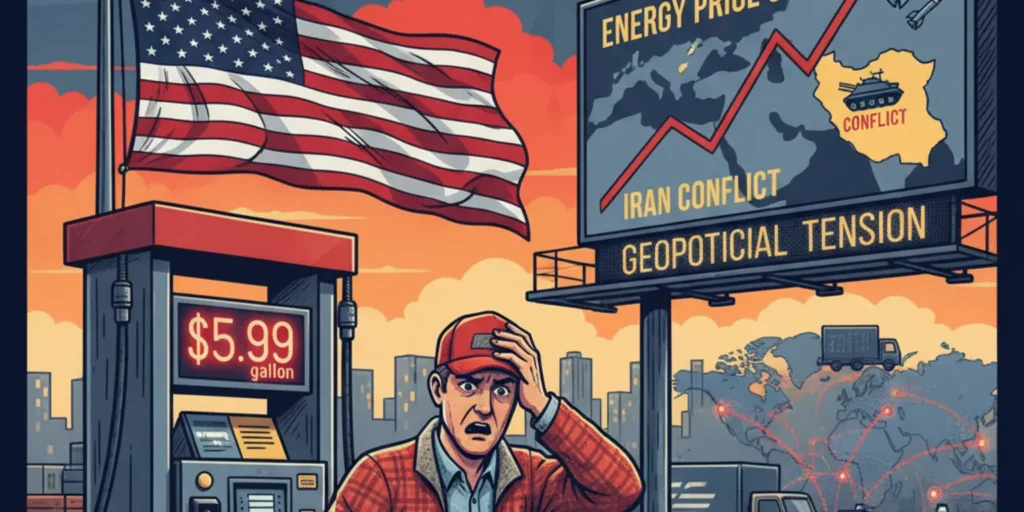
Donald Trump’s military engagement in Iran has caused a sharp rise in US petrol prices, challenging his campaign promise to keep energy costs low for Americans. Petrol prices reached $3.58 per gallon on Wednesday, according to motoring group AAA, marking a 20 percent increase since the onset of the conflict and hitting record levels for Trump’s two terms.
The surge in petrol prices has become a political concern, particularly as the Republican Party looks to retain control of Congress in the upcoming midterm elections. With voters sensitive to household energy costs, the rising prices could impact public sentiment and make it difficult for Trump to claim credit for economic stability at the pump.
Experts warn that higher petrol costs affect not just motorists but the broader economy. Increased energy prices feed into higher transportation and consumer goods costs, compounding inflationary pressures. Analysts suggest the US government must balance foreign policy ambitions with domestic economic stability to prevent political and economic fallout.
Public Response to Rising Fuel Costs
Americans are feeling the impact of climbing petrol prices. “I don’t understand why we’re in Iran,” said Alexa Reese at a Shell station in Nashville, noting her frustration at both petrol costs and rising airfare. Consumers like Reese are paying more in daily expenses, making energy policy a focal point of public debate ahead of elections.
Some voters, however, place responsibility elsewhere. Retiree Jesse Brown blamed energy companies rather than politicians for price rises, highlighting a perception that market forces, not government policies, dictate costs. This underscores the complexity for political leaders attempting to frame accountability in a volatile energy market.
Kevin Book, head of research at ClearView Energy Partners, points out that Americans fill up their cars around 50 times a year, providing multiple opportunities to notice price changes. Each visit to the pump offers voters a tangible reminder of energy policy consequences, affecting both personal finances and political opinions.
Trump’s Messaging and Public Statements
While petrol prices climb, Trump continues to promote his administration’s economic achievements. In Kentucky, he emphasized efforts to maintain oil supply, stating, “We’re working to keep the oil flowing,” and signaling that the conflict in Iran may continue until objectives are achieved.
Trump also attempted to reassure the public by projecting that oil prices would eventually decrease. He told supporters that rising prices are temporary and framed the conflict as necessary for broader strategic goals. However, the persistence of high petrol costs makes messaging a challenging exercise in public confidence.
Political observers note that Trump’s approach reflects a balancing act: defending foreign policy choices while trying to maintain domestic political support. With voters increasingly sensitive to energy costs, the administration faces scrutiny over both international and economic decision-making.
Economic Implications for Airlines and Industry
The Iran conflict’s impact on energy prices extends beyond consumer petrol costs. Four of the largest US airlines face potential additional $11 billion in jet fuel costs this year due to unhedged purchases, underscoring the broad ripple effects on transportation and commerce. Rising energy costs threaten profitability and may influence ticket prices for travelers.
The surge in energy prices also complicates Federal Reserve policy. As inflation pressures rise due to higher fuel costs, monetary authorities must weigh the risk of curbing inflation against slowing economic growth. Market participants are now predicting fewer interest rate cuts in 2026 as the Fed responds cautiously to energy-driven shocks.
Manufacturing, logistics, and other energy-intensive sectors are similarly affected. Higher operational costs reduce margins and may lead companies to pass expenses onto consumers. This cascade effect highlights the intricate link between geopolitics, energy markets, and domestic economic stability.
Federal Reserve and Monetary Policy
Investors have begun adjusting expectations for Federal Reserve action, trimming predictions for interest rate cuts. Originally, the market anticipated multiple reductions before midterm elections, but the energy shock and softening labor data suggest the Fed may only implement one or two rate cuts this year, with the first potentially delayed until September.
Analysts warn of potential stagflation—rising prices combined with slowing growth—if energy costs remain elevated. Joe Brusuelas, chief economist at RSM US, emphasized that policymakers are facing a “real stress test,” balancing inflation containment with growth support amid global energy uncertainty and domestic policy pressures.
Trump’s ongoing criticisms of Federal Reserve chair Jay Powell further complicate the scenario. The president has repeatedly urged cuts in short-term borrowing costs, reflecting tension between political aims and central bank independence, even as economic shocks demand careful monetary management.
Domestic Political Ramifications
Rising petrol prices pose significant political risks for Trump and the Republican Party. Voter sensitivity to household costs could influence outcomes in the upcoming midterm elections, especially as the party seeks to retain control of both Congress chambers. Economic concerns are likely to feature prominently in campaign narratives.
Republican strategists are relying on messaging that shifts blame for higher costs to market forces or energy companies, rather than policy decisions. While this may mitigate some electoral risk, analysts note that sustained price increases could erode voter confidence, particularly among swing voters in key battleground states.
Energy prices are now intertwined with broader political debates about US foreign policy. Trump’s Iran actions are under scrutiny not only for their geopolitical consequences but also for their domestic economic impact. This underscores the complexity of managing foreign interventions while navigating electoral considerations.
Trump’s Energy Policy Initiatives
In response to rising prices, Trump announced plans for a major new oil refinery in Brownsville, Texas, backed by India’s Reliance Industries. This facility would be the first large-scale refinery built in the US in nearly 50 years, aiming to bolster domestic energy supply and reduce reliance on imports.
Trump also continues to pursue investigations into trade partners, including the EU, Japan, and South Korea, to reinforce tariff measures and domestic energy strategy. These actions are part of a broader economic policy that ties foreign relations, energy security, and market stability together.
Such initiatives are intended to demonstrate proactive steps to address energy challenges. However, the short-term impact of rising petrol prices and geopolitical uncertainty continues to dominate public perception and political discourse, highlighting the lag between policy measures and measurable outcomes.
Geopolitical Perspectives and Global Implications
Experts warn that the US’s actions in Iran are creating volatility in international energy markets. Emma Ashford from the Stimson Center notes that American foreign policy decisions have made the US an agent of disruption, with broader consequences for global oil supply and market stability.
China and Russia are also seeking to capitalize on geopolitical uncertainty. According to Jana Robinson of the Prague Security Studies Institute, these countries are leveraging gaps left by less predictable American policies to expand influence in critical sectors, including energy and space.
Stanford University’s Jacquelyn Schneider emphasizes that Iran serves as a test of US military strategy and international credibility. Sustained conflict may erode trust among allies, complicate diplomacy, and further exacerbate volatility in global markets, affecting both energy prices and geopolitical dynamics.
Public Sentiment and Voter Opinions
Many Americans are expressing frustration with the rising cost of living tied to energy prices. Voters in areas like Nashville report noticing higher petrol costs and associated expenses, including airfare, which directly influence daily life and household budgets.
While some blame policy decisions for the price increases, others attribute the surge to market dynamics or corporate behavior. This division in public opinion illustrates the challenges political leaders face in framing responsibility for economic pressures while maintaining voter support.
Experts highlight that energy costs are highly visible and tangible indicators for voters. Every trip to the pump serves as a reminder of broader economic conditions, potentially influencing perceptions of leadership, foreign policy decisions, and election outcomes.
Long-Term Economic Considerations
Sustained high petrol prices could have long-term implications for the US economy. Energy costs affect transportation, logistics, and production, creating inflationary pressures that influence a wide range of goods and services. Consumer spending may decline if fuel expenses continue to rise, slowing economic growth.
The Fed’s ability to balance inflation control and economic stimulus will be crucial. Limited interest rate cuts may constrain growth, while excessive easing could exacerbate inflation. Policymakers must carefully monitor energy markets, employment trends, and consumer sentiment to navigate potential stagflation.
Trump’s ongoing interventions, trade policies, and foreign engagements intersect with these economic challenges. The combination of high energy prices, geopolitical uncertainty, and monetary policy constraints creates a complex environment for both government leaders and the private sector.
Conclusion: Balancing Policy and Public Sentiment
The Iran conflict illustrates how international decisions can ripple into domestic economic pressures. Rising petrol prices are more than just a financial inconvenience—they carry political consequences, shape voter sentiment, and influence macroeconomic policy.
Trump’s administration faces a dual challenge: managing foreign policy objectives while addressing immediate economic concerns for Americans. The ability to communicate policy intentions, implement domestic energy solutions, and maintain public confidence will be critical in the months leading to the midterm elections.
Analysts suggest that energy policy, trade strategy, and central bank coordination must work in tandem. Failure to balance these factors could exacerbate economic stress, further destabilize global markets, and influence electoral outcomes, demonstrating the intricate link between foreign policy and domestic economic realities.
About the Author