AI-powered search summaries are reducing clicks while forcing brands to rethink SEO and visibility strategies.
Search marketing is entering a new phase, and brands are starting to feel the pressure. What was once a predictable system built around rankings and clicks is now shifting toward a zero-click reality. In this environment, users often get their answers directly from AI-generated summaries without ever visiting a website.
This shift is no longer just a topic for marketing teams. It has reached the boardroom. Executives at major travel brands such as Airbnb and Expedia have faced direct questions from analysts about how generative AI tools and new search features are affecting their businesses. The concern is clear. If fewer people are clicking on search results, what does that mean for traffic, leads, and revenue?
Organic Traffic Is Falling Across Industries
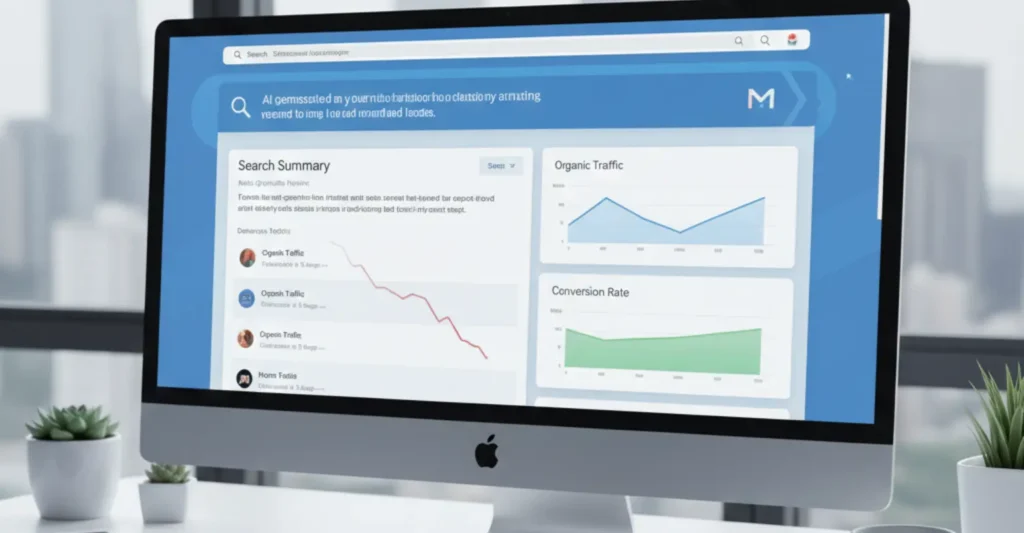
Data from media agency Wpromote’s Polaris IQ platform shows that organic search traffic dropped by an average of 12 percent between the third and fourth quarters of 2025. The biggest declines were seen in publishing, telecom, and healthcare. E-commerce brands experienced smaller drops. The pattern aligns with the growing presence of AI-powered features in search engines.
As Google expands its AI Overviews and AI Mode features, more users are finding what they need directly on the search results page. Instead of clicking through to a website, they read a summary generated by artificial intelligence. For brands that depend on traffic from search, this change is significant. SEO professionals say the drop is widespread. Many report that nearly every search console they review shows declines in clicks and impressions.
The Silver Lining: Conversions Are Holding Steady
Despite falling traffic, many brands are not seeing the same drop in sales or conversions. That is an important detail. Charlie Marchant, CEO of SEO firm ExposureNinja, noted that while search traffic is declining, sales often remain stable. In some cases, referral traffic from AI chatbots such as OpenAI’s ChatGPT converts at a higher rate than traditional Google traffic.
Airbnb CEO Brian Chesky confirmed this trend during a recent earnings call. He said that traffic coming from chatbots converts at a higher rate than traffic from Google. Similarly, Expedia CEO Ariane Gorin told analysts that AI-driven search opens new ways to reach travelers. With more context in user queries, brands can better target potential customers and convert them once they enter their ecosystem. In short, while the top of the funnel may be shrinking, the bottom of the funnel remains healthy.
Why Conversions Are Not Falling
The explanation lies in user behavior. Casual users who are in the early discovery phase of their journey are more likely to be satisfied with AI summaries. They may be researching general information, comparing options, or learning about a topic. In contrast, users who are ready to make a purchase still visit websites to complete transactions. AI summaries may answer questions, but they cannot replace the checkout process.
Edward Cowell, global vice president of SEO at WPP Media, explained that much of the discovery and evaluation process is now happening within AI summaries. However, when it comes time to buy, users still go to the brand’s website. This means that the traffic being lost is often less valuable traffic. The more serious buyers are staying engaged.
A New Search Playbook Emerges
Even with stable conversions, brands cannot ignore the shift. The rules of search are changing, and marketing strategies must adapt. In the past, many companies treated SEO as a background activity. It was important, but not always a top priority. Now, brands are being forced to rethink their approach.
The new playbook starts with stronger optimization efforts. Marketers are focusing on structured content, clearer answers, and authority signals that increase the chances of being cited in AI summaries. At the same time, user search behavior is evolving. People are typing longer and more conversational queries into search engines. Instead of short keyword phrases, they are asking full questions.
To respond, brands are adjusting their paid search strategies. Rather than increasing overall budgets, they are reallocating spending toward longer keywords and conversational phrases. The goal is to appear alongside or within AI-driven search experiences. Agencies describe this as fighting for prime real estate on the search results page.
Paid Search in the Age of AI
The next big shift may come from advertising within AI Overviews and AI Mode. Currently, ad placements in these features are limited and still being tested. Brands cannot directly buy specific placements inside AI summaries. Instead, Google pulls ads from campaigns that use broad match keywords or AI Max for Search settings.
Google representatives have suggested that AI Max for Search may become the primary channel for advertising in AI-powered search environments. However, there is no guarantee that a brand’s ad will appear in an AI Overview.
Because of that uncertainty, many buyers are cautious. Some describe the current situation as paying for the whole package just to get access to one small opportunity. Until brands can guarantee placement within AI summaries, most are unwilling to shift budgets aggressively.
Zero-Click Does Not Mean Zero Opportunity
The phrase zero-click can sound alarming. It suggests that brands are losing control over customer journeys. But the reality is more nuanced. AI search features are changing how people gather information. Instead of clicking multiple links, users can receive summarized answers instantly. That changes traffic patterns, but it does not eliminate demand.
People still want to book travel, buy products, and sign up for services. The challenge for brands is ensuring they remain visible and relevant within AI-driven ecosystems. Some marketers see this as a shift from click optimization to influence optimization. Being referenced in an AI summary, even without a direct click, can still build brand awareness and trust. Over time, visibility within AI results may become just as important as traditional rankings.
Boardrooms Take Notice
The fact that executives at companies like Airbnb and Expedia are addressing these issues publicly shows how serious the shift has become. Search marketing used to be a topic mostly discussed by digital teams. Now it is part of earnings calls and investor conversations.
Revenue models are not collapsing, but leaders understand that platform changes can reshape competitive dynamics quickly. Brands that adapt early may gain an advantage. Those who cling to outdated strategies may fall behind.
The Future of Search for Brands
Looking ahead, several trends are likely to define the next phase of search marketing:
- Greater focus on high-intent users rather than raw traffic numbers.
- Increased investment in content that answers complex, conversational queries.
- Closer integration between SEO and paid search teams.
- Growing importance of structured data and authoritative content.
- New advertising formats inside AI-driven search experiences.
When Google expands access to ad units in AI Overviews and AI Mode, competition will intensify. Brands will likely compete aggressively for guaranteed placements. At that point, the rules may shift again.
Conclusion
Zero-click search is not a temporary trend. It represents a structural change in how people interact with search engines. Organic traffic is declining across industries, and AI summaries are absorbing more user attention. Yet conversions remain steady, and in some cases, referral traffic from AI platforms converts better than traditional search traffic.
For brands, the challenge is not simply to drive clicks. It is to stay visible and relevant in an AI-driven search landscape. The companies that understand this shift and adjust their strategies will be better positioned for the future. The ones that ignore it may find that the rules of search have changed without them. Zero-click reality is rewriting the playbook. And for brands, adaptation is no longer optional.
About The Author