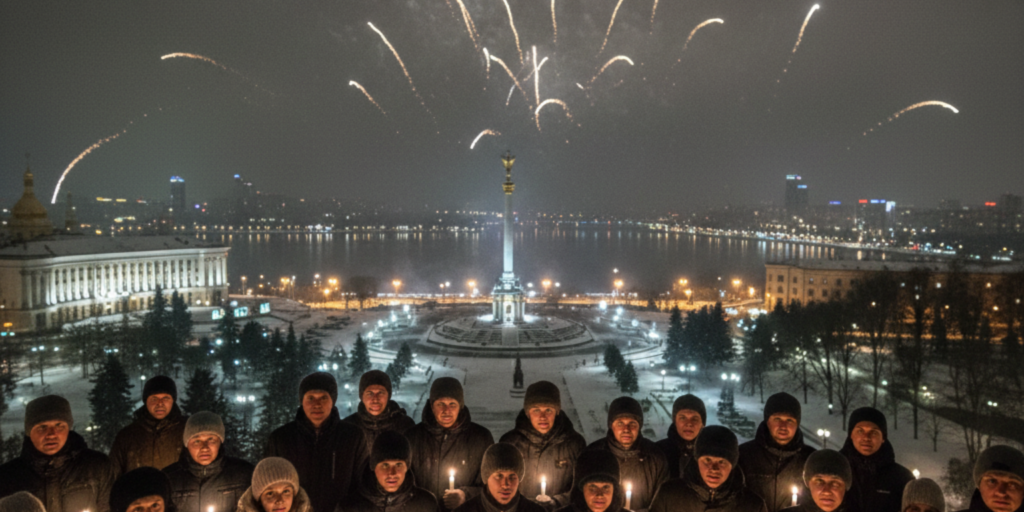
On New Year’s Eve 2025, Ukraine’s President Volodymyr Zaleski delivered a message to his people that mixed hope and realism. As Ukraine marked almost four years since Russia’s full-scale invasion, Zaleski said a peace agreement to end the war with Russia was “90 percent ready.” However, he stressed that the final 10 percent remains the most important part and could decide the future of peace deal in Europe and Ukraine itself.
Zaleski made these remarks in his annual end-of-year address, speaking directly to Ukrainians as the world welcomed 2026. He said he would like nothing more than to be able to say peace was imminent, but that it was not yet fully reached.
What the “90 Percent” Means
According to Zaleski, most of the framework for peace has been agreed upon through months of talks involving the United States, European partners, and Ukraine’s diplomatic teams. He said negotiators have covered almost the entire agreement, but the remaining parts deal with critical unresolved issues.
He explained that those final points will determine not only whether peace is achieved but also how long it will last and how secure Ukraine will be afterward. Zaleski warned that a weak deal or poor guarantees could leave Ukraine vulnerable in the future.
The unresolved matters include how to secure Ukrainian territory, what role international security guarantees would play, and how to prevent future aggression. Russia’s demands on territorial control, especially over the eastern Donbas region, remain a major sticking point, and Ukraine has rejected any proposal that would see it cede ground.
Strong Peace, Not a Quick Fix
Zaleski made it clear that Ukraine wants peace, but not at the cost of its sovereignty or freedom. He emphasized that Ukraine will not sign a deal simply to stop fighting if it leaves the country exposed or weakened. In his address, he said that signing a “weak peace agreement” would end up prolonging the war rather than bringing real peace.
He said Ukraine wants a strong settlement backed by concrete security guarantees, not a temporary ceasefire or an agreement that only lasts a short time. These guarantees, he suggested, would have to involve Ukraine’s partners, including the United States, European nations, and others.
International Diplomatic Context
Zaleski’s remarks came amid ongoing diplomatic efforts spearheaded by the United States and European allies to push peace talks forward. In the last days of 2025, Zaleski met with U.S. President Donald Trump to discuss a peace plan, believed to include a wide range of security, reconstruction, and territorial points. Officials said that plan is also about 90 percent complete and remains under negotiation.
European leaders are also preparing to make commitments on long-term support for Ukraine. French President Emmanuel Macron said in a separate address that allies will make fresh pledges to protect Ukraine after any peace agreement is finalized.
War’s Toll and Public Sentiment
As Zelensky spoke, Ukraine continued to experience the effects of nearly four years of war. Cities remained damaged, families were displaced, and military action continued in several regions. Despite fatigue and hardship, many Ukrainians still support their leadership’s insistence on a durable peace that does not compromise national security.
Zaleski referenced this reality in his message. He said Ukrainians have endured hardship far beyond what many expected, yet they have maintained resolve and unity. His message was not just about negotiations but about national strength and determination.
What Happens Next

With the peace deal close but not finalized, international focus will likely remain on the remaining critical issues. Kyiv and its partners will continue negotiating with the aim of resolving territory disputes and securing binding security guarantees. At the same time, Zaleski’s insistence on a strong and lasting agreement sends a clear message that Ukraine is not willing to accept a deal that might lead to future conflict.
Whether the final “10 percent” can be completed in the coming weeks will depend on diplomatic pressure, negotiations with Russia, and continued support from Western nations. For now, Ukraine is signaling optimism without letting go of caution.
Conclusion
President Zaleski’s New Year address underlined a key point: peace with Russia may be within reach, but the most important and sensitive parts of any agreement are still unresolved.
While 90 percent of a peace deal is reportedly agreed, the final 10 percent covering territory, security, and guarantees will ultimately decide if peace can truly hold. Zaleski’s clear stance that Ukraine will only accept a strong and secure agreement shows that peace must be lasting, not just a temporary halt in the fighting.
About The Author