Toyota tests electric vehicles as backup power sources for homes during grid outages
Toyota is rethinking how electric cars can support households during power outages by testing their ability to supply electricity directly to homes. The company is exploring how electric vehicles can act as mobile energy storage systems that provide backup power when the grid fails. At Toyota’s headquarters in Plano, Texas, a Japanese-market Toyota bZ4X electric SUV is being tested using vehicle-to-home and vehicle-to-grid technology. The goal is to show how electric vehicles can help homeowners stay powered during blackouts while also supporting a strained electricity network.
Growing Need for Backup Power Solutions
Power interruptions are becoming more common as electricity demand continues to rise across the United States. According to the U.S. Department of Energy, the number of plug-in electric vehicles on American roads could reach between 30 million and 42 million by 2030. At the same time, zero-emission vehicle sales for medium and heavy-duty trucks are expected to grow rapidly. This growth creates a major opportunity. Electric cars already carry large batteries, and Toyota believes those batteries can do more than just move vehicles. They can also supply energy to homes when electricity is unavailable.
Real-World Vehicle-to-Home Testing
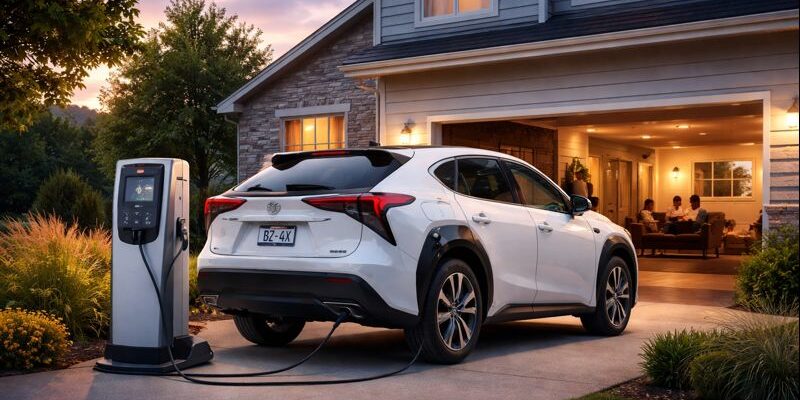
Toyota’s bZ4X in Texas is connected to a bidirectional charger developed by Fermata Energy. The system works in coordination with local utility provider Oncor. Smart software monitors electricity demand and pricing in real time. During off-peak hours, the vehicle charges when electricity is cheaper and demand is lower. During peak periods or outages, the system can send stored energy back to the home or disconnect from the grid entirely. This setup allows electric vehicles to function as backup power sources while also reducing stress on aging grid infrastructure.
Rising Grid Pressure Across the U.S.
The U.S. Energy Information Administration recently reported that electricity consumption is expected to rise by 1 percent this year and by 3 percent in 2027. If these projections hold, it would mark the strongest four-year growth in electricity demand since 2000. Toyota estimates that if four million electric vehicles in the U.S. were equipped with vehicle-to-grid capabilities, they could collectively store up to 40,000 megawatts of energy. For comparison, nuclear power currently accounts for about 18 percent of total U.S. electricity generation.
Toyota’s Vision for Energy Independence
Toyota leadership sees vehicle-to-grid technology as a major step toward improving everyday life for customers. Christopher Yang, Senior Vice President of Enterprise Strategy and Solutions at Toyota Motor North America, said the company is focused on delivering practical technologies that reduce energy costs and support sustainability. By allowing electric cars to supply power during outages, Toyota believes drivers can gain more control over their energy use while contributing to a cleaner and more resilient energy system.
Addressing Battery Concerns
Some critics worry that using electric vehicles as backup power could increase battery wear. Toyota’s testing data suggests otherwise. The company reports that battery degradation from vehicle-to-home use is minimal and occurs far less frequently than many assume.
A New Role for Electric Vehicles
As data centers and digital infrastructure increase electricity demand, electric vehicles may soon serve as personal energy insurance. Toyota’s testing highlights how electric cars can move beyond transportation and play a vital role in home energy security and grid stability.
About The Author