
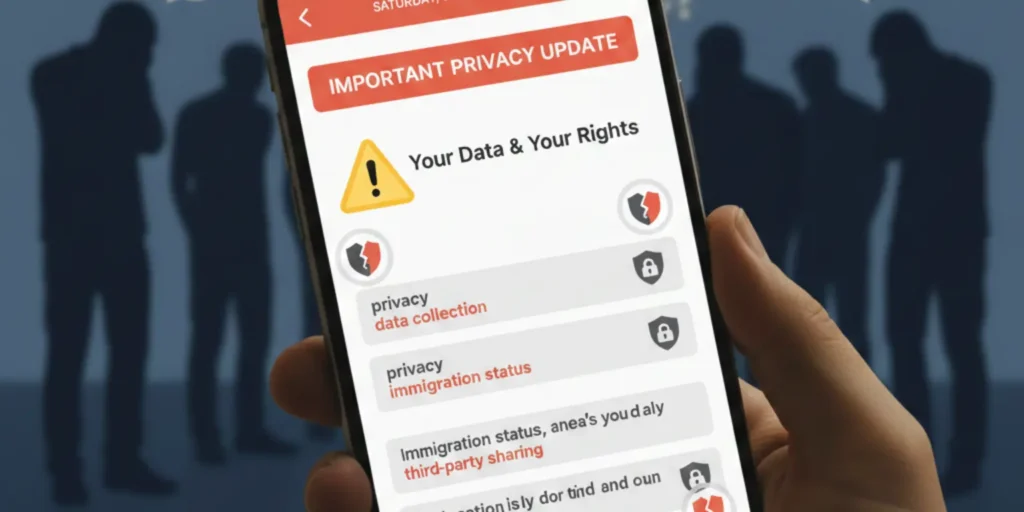
TikTok users expressed alarm after a privacy policy update mentioned immigration status, despite the wording being unchanged from earlier versions.
TikTok users across the United States are raising alarms after receiving an in-app message about updates to the platform’s privacy policy. Many users began sharing screenshots and reactions on social media, claiming TikTok is now collecting highly sensitive personal data, including immigration status. The concern has led some people to threaten to delete their accounts. However, the reality behind the policy update is far less dramatic than it appears at first glance.
What Sparked the Confusion
The panic started after TikTok notified U.S. users about changes tied to the app’s new ownership structure. As part of that update, users were encouraged to review the revised privacy policy. Once people began reading it, attention quickly focused on language stating that TikTok may process sensitive information such as sexual orientation, gender identity, citizenship, and immigration status.
For many users, especially given the current political climate, seeing those words in black and white felt alarming. Some assumed TikTok had begun actively tracking immigration status or sharing it with authorities. That is not what the policy means.
This Language Is Not New
Despite how it feels, TikTok did not suddenly add this wording. The same language appeared in earlier versions of the company’s privacy policy, including one updated in August 2024. The reason people are noticing it now is simply that the app pushed an alert reminding users to review the terms due to the creation of a new U.S. legal entity. In short, the policy did not change in substance. Awareness of it did.
Why TikTok Uses This Wording
The policy language exists mainly to comply with U.S. state privacy laws, especially in California. Laws like the California Consumer Privacy Act and the California Privacy Rights Act require companies to clearly disclose what types of sensitive personal information they may collect or process.
Under these laws, “sensitive personal information” is a legally defined category. It includes things such as precise location data, financial information, health data, biometric data, and yes, citizenship or immigration status. California expanded this definition further in October 2023 when a new law specifically added immigration and citizenship status to the list. Once that change took effect, companies operating nationwide had to update their disclosures accordingly.
What “Collect” Really Means Here
One major source of confusion is how the word “collect” is used in privacy policies. In legal terms, collecting information does not always mean actively asking for it or building profiles around it. If a user uploads a video talking about their immigration experience, health condition, or identity, the platform technically processes that information because it hosts and distributes the content.
That alone qualifies as “collection” under privacy law definitions. The policy is essentially saying that TikTok may process sensitive information if users voluntarily share it through videos, comments, messages, or surveys.
Legal Protection, Not Surveillance
Privacy lawyers say companies include this level of detail to protect themselves from legal risk. Failing to disclose these categories could open TikTok up to lawsuits claiming it secretly collected sensitive data.
Jennifer Daniels, a partner at law firm Blank Rome, explains that companies are required to tell users what kinds of data might be processed, how it is used, and who it may be shared with. Another attorney at the firm noted that lawsuits increasingly accuse platforms of collecting racial, ethnic, or immigration data without proper disclosure. By spelling everything out, TikTok is attempting to follow the law, not expand data collection.
Why Users Are Especially Nervous Now
The strong reaction also reflects current events. Immigration enforcement has intensified under the Trump administration, leading to protests, arrests, and heightened fear in many communities. In that context, any mention of immigration status triggers anxiety.
Recent clashes involving Immigration and Customs Enforcement, including protests in Minnesota and reports of deaths tied to enforcement actions, have made people more sensitive to how their data might be used. Even though the policy language predates these developments, the timing makes it feel more threatening.
How Other Platforms Handle It
TikTok is not alone in this approach. Other social media companies disclose similar categories of sensitive information in their privacy policies. Some keep the language broad, while others list categories in detail, just as TikTok does.
Meta’s privacy policy, for example, also discusses sensitive information but uses slightly less specific wording. Legal experts say TikTok’s approach may be more precise, but precision can sometimes make policies feel scarier to everyday users.
What TikTok Is Actually Promising
The policy states that any sensitive information is processed “in accordance with applicable law.” It even references the California Consumer Privacy Act by name. This means TikTok is committing to follow legal limits on how such data is handled, stored, and shared. There is no indication that TikTok is building databases of users’ immigration status or handing that information to the government.
The Bigger Picture
Social media platforms collect vast amounts of data, and there are real risks involved, especially under governments that seek greater control. Ironically, TikTok’s move to shift U.S. operations away from Chinese ownership was driven by fears of foreign surveillance.
Now, many Americans are more worried about domestic surveillance than foreign influence. That concern is understandable. But in this case, TikTok’s privacy policy is more about legal compliance than a new threat. The language may be unsettling, but it does not signal a sudden change in how the app treats its users.
About The Author