
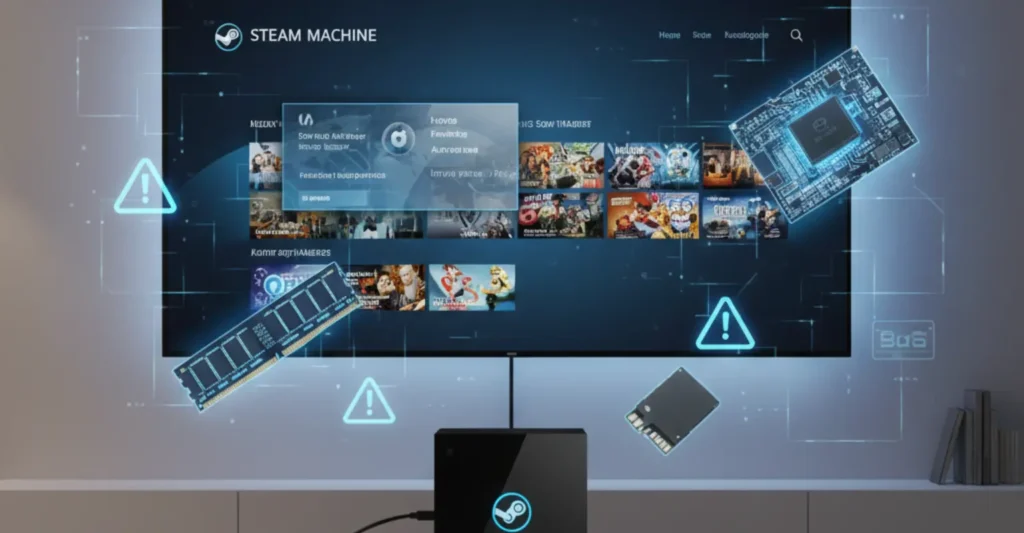
Valve delays pricing and launch details for the Steam Machine as global hardware shortages and rising component costs continue to disrupt the PC market.
Valve has confirmed that it is delaying the release of full pricing and launch details for the upcoming Steam Machine. The company says the delay is due to ongoing problems in the global computer hardware market, which have caused shortages and rising costs for key components.
Many gamers have been eagerly waiting for official information about when the Steam Machine will be available and how much it will cost. While Valve understands this excitement, it says the current market conditions make it difficult to lock in final details.
Valve Explains the Delay
In a recent blog post, Valve explained that it had originally planned to share clear pricing and release dates by now. However, shortages in memory and storage components across the industry have become more severe than expected.
According to Valve, limited supply and higher prices for these essential parts mean the company needs more time to finalize its plans. As costs continue to fluctuate, Valve wants to avoid announcing figures that may change quickly or lead to confusion later. Despite the delay, the company reassured fans that its overall timeline remains the same.
Still Targeting a First-Half 2026 Release
Valve confirmed that it is still aiming to ship all three Steam Machine models in the first half of 2026. This goal has not changed, even though pricing and exact launch dates are still being reviewed.
The company said it needs to do more work to settle on numbers it can confidently announce. Valve also noted that market conditions are changing rapidly, and any decision must account for that uncertainty. Valve promised to keep users informed and share updates as soon as plans become more concrete.
Performance Testing and Game Compatibility
While Valve could not share release details, it did offer insight into how the Steam Machine is performing in internal testing. The company said that most Steam games run very well at 4K resolution and 60 frames per second using AMD FidelityFX Super Resolution, commonly known as FSR. This upscaling technology helps boost performance by rendering games at lower resolutions and scaling them up.
However, Valve acknowledged that some newer and more demanding games still require heavier upscaling. In those cases, the company suggests that players may prefer using a lower frame rate combined with variable refresh rate support to maintain a 1080p internal resolution.
Ongoing Technical Improvements
Valve said it is continuing to improve performance across several areas. Work is underway to enhance HDMI variable refresh rate support, explore better upscaling techniques, and optimize ray tracing performance at the driver level.
By tackling performance from multiple angles, Valve hopes to ensure a smoother gaming experience across a wide range of titles when the Steam Machine launches. These ongoing efforts suggest that the company is focused not just on meeting release targets, but also on delivering solid performance out of the box.
Growing Interest Despite Uncertainty
Interest in the Steam Machine has continued to grow since its announcement last November. Ironically, the same hardware shortages causing the delay have also increased demand for alternatives to traditional gaming PCs. With memory and RAM prices climbing, many gamers are looking for more affordable and compact options.
This has fueled curiosity about whether the Steam Machine could offer good value compared to building or buying a full gaming PC. However, Valve faces the same supply issues affecting consoles and custom PC builders, which limit how much it can reduce costs in the current market.
Why Hardware Shortages Are Getting Worse
The global hardware shortage has several causes. Trade policies, including tariffs imposed by the United States, have disrupted supply chains and raised costs for manufacturers. At the same time, the rapid expansion of AI data centers has increased demand for high-end memory, storage, and processors.
These facilities often secure large volumes of components directly from manufacturers, leaving fewer parts available for consumer products. As a result, companies like Valve are competing for the same limited resources as much larger enterprise buyers.
Price Rumors Spread Online
In the absence of official pricing, speculation about the Steam Machine’s cost has spread quickly online. One of the most talked-about rumors came from Czech electronics retailer Smarty.cz. In January, users discovered listings in the site’s source code showing two Steam Machine models priced at the equivalent of around $800 and $900 before tax for 512GB and 2TB versions. These listings sparked widespread discussion, but Valve was quick to clarify the situation.
Valve Responds to Retail Listings
Valve stated that in Europe, the Steam Machine will only be sold officially through Steam. While Smarty.cz does sell Valve products like the Steam Deck, the company said the listings were not official.
It appears the prices were placeholder estimates used by the retailer to prepare its internal systems ahead of the product’s release. Valve emphasized that these figures should not be treated as final or accurate.
Pressure Builds Ahead of Launch
As the launch window approaches, expectations are rising. Many gamers are hoping the Steam Machine will offer a practical and affordable way to play modern PC games without the complexity of building a system.
For now, Valve is asking for patience while it navigates a challenging market. Whether the Steam Machine can live up to its promise will depend not only on performance, but also on how well Valve manages pricing in an unpredictable hardware landscape.
About The Author