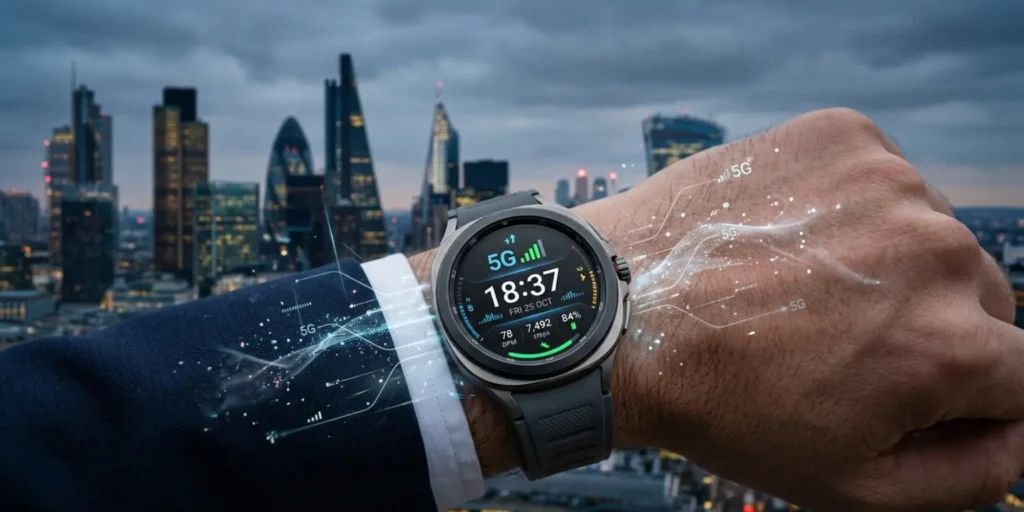
Samsung Galaxy Watch Ultra 2 could redefine wearables with advanced 5G and 4G connectivity options.
Rumors surrounding Samsung’s next flagship smartwatch are beginning to reveal a clear direction, and it points toward a major leap in connectivity. The upcoming Samsung Galaxy Watch Ultra 2 is expected to launch with multiple connectivity options, including both 5G and 4G cellular variants. If this information proves accurate, Samsung could redefine the capabilities of premium smartwatches while positioning itself more aggressively against competitors in the high-end wearable segment.
A Strategic Shift in Connectivity
The possibility of multiple network variants signals a broader strategic move by Samsung. Instead of offering a one-size-fits-all device, the company appears to be tailoring the Galaxy Watch Ultra 2 for different markets based on network infrastructure and user needs.
Reports suggest that Samsung’s internal systems have revealed model numbers pointing to Wi-Fi-only, 4G LTE, and 5G-enabled versions. While Wi-Fi models will likely cater to users who prefer a more affordable option, the cellular variants are where the real innovation lies. The 5G edition, in particular, could become a defining feature of the Ultra lineup.
However, availability may vary by region. Markets like the United States and South Korea, where 5G infrastructure is well established, are expected to receive the 5G model. Other regions may primarily get the 4G version, which remains more practical due to broader network coverage. This approach allows Samsung to balance innovation with real-world usability.
Competing With Apple at the Top Tier
Introducing a 5G smartwatch would place Samsung in direct competition with the Apple Watch Ultra 3, which has already set a high benchmark in the premium wearable space. Apple’s Ultra series has focused heavily on durability, performance, and independence from the iPhone, and Samsung appears ready to challenge that position.
A 5G-enabled Galaxy Watch Ultra 2 could narrow the gap or even surpass expectations in certain areas. Faster connectivity would enhance standalone usage, allowing users to rely less on their smartphones. This is particularly important for fitness enthusiasts, travelers, and professionals who prefer lightweight, always-connected devices.
The rivalry between Samsung and Apple has historically driven innovation across smartphones, and the same dynamic is now unfolding in the wearable category. By matching or exceeding Apple’s connectivity features, Samsung signals its intent to lead rather than follow.
The Real Impact of 5G on Wearables
The addition of 5G is not just a technical upgrade; it represents a shift in how smartwatches are used. Traditionally, smartwatches have functioned as extensions of smartphones, relying on Bluetooth or LTE connections for most tasks. With 5G, the Galaxy Watch Ultra 2 could operate more independently.
Faster data speeds and lower latency would enable smoother streaming, quicker app loading, and more responsive cloud-based services. Voice calls could become clearer, and real-time features like navigation and health monitoring could see noticeable improvements.
For example, athletes using GPS tracking during workouts would benefit from more accurate and real-time updates. Emergency features, such as SOS alerts, could also become more reliable with stronger network connectivity. These improvements collectively enhance the value of the smartwatch as a standalone device.
However, the transition to 5G is not without challenges. Power consumption remains a critical concern. 5G connectivity typically requires more energy than 4G, which could impact battery life. Samsung will need to optimize both hardware and software to ensure that users do not experience a significant drop in battery performance.
Design and Hardware Expectations
While connectivity is the headline feature, the Galaxy Watch Ultra 2 is expected to build upon the design language of its predecessor. The original Ultra model introduced a rugged aesthetic with a larger case size, appealing to users who prefer durability and a bold look.
The new model will likely retain a similar design philosophy while incorporating refinements. Improvements in display brightness, durability, and materials are expected. Samsung may also enhance the AMOLED display to deliver better visibility in outdoor conditions, a crucial factor for users who rely on their watch during physical activities.
Internally, the device is expected to feature a more powerful processor, improved sensors, and possibly expanded health-tracking capabilities. Samsung has been investing heavily in health technology, and the Ultra 2 could include more advanced monitoring features for heart rate, sleep, and overall wellness.
Regional Availability and Market Dynamics
The decision to release different connectivity versions based on region highlights the complexities of global technology markets. While 5G is rapidly expanding, it is not yet universally accessible. By offering both 4G and 5G models, Samsung ensures that the Galaxy Watch Ultra 2 remains relevant across diverse markets.
In regions where 5G is still developing, a 4G smartwatch provides a reliable and cost-effective solution. Meanwhile, in advanced markets, the 5G variant can showcase Samsung’s latest technological capabilities. This dual approach allows the company to maximize its reach without compromising on innovation.
It also reflects a broader trend in the tech industry, where manufacturers adapt products to suit regional infrastructure. This flexibility is essential for maintaining competitiveness in a global market.
Expected Launch Timeline and Ecosystem Integration
Samsung typically unveils its new wearables during its summer launch events, often alongside foldable smartphones. Based on this pattern, the Galaxy Watch Ultra 2 is likely to be introduced at a mid-year event, possibly alongside the next generation of Galaxy Z Fold and Galaxy Z Flip devices.
Integration within Samsung’s ecosystem will play a key role in the watch’s success. Features such as seamless connectivity with Galaxy smartphones, compatibility with Samsung Health, and integration with other devices like tablets and earbuds will enhance the overall user experience.
The addition of 5G could further strengthen this ecosystem by enabling faster data sharing and more responsive cross-device interactions. Users may find it easier to transition between devices without interruptions, reinforcing Samsung’s ecosystem strategy.
The Future of Standalone Smartwatches
The Galaxy Watch Ultra 2 represents a step toward a future where smartwatches function independently rather than as accessories. As connectivity improves and hardware becomes more powerful, the need for constant smartphone pairing diminishes.
This evolution aligns with changing consumer preferences. Many users now seek devices that offer convenience, portability, and independence. A 5G-enabled smartwatch fits perfectly into this trend, providing essential functionality without the bulk of a smartphone.
At the same time, this shift raises questions about how wearables will evolve in the coming years. Will they eventually replace smartphones for certain tasks, or will they remain complementary devices? Samsung’s approach with the Ultra 2 suggests a move toward greater independence, but the transition will likely be gradual.
Final Thoughts
The Samsung Galaxy Watch Ultra 2 is shaping up to be one of the most significant smartwatch releases of 2026. With the potential introduction of both 5G and 4G models, Samsung is taking a bold step toward redefining what a wearable device can achieve.
By focusing on connectivity, performance, and regional adaptability, the company is addressing both technological and market realities. The competition with the Apple Watch Ultra 3 adds further urgency, pushing Samsung to innovate at a faster pace.
While challenges such as battery efficiency and network availability remain, the direction is clear. Smartwatches are evolving into powerful, standalone devices capable of handling a wide range of tasks independently.
If the rumors hold true, the Galaxy Watch Ultra 2 could mark a turning point in the wearable industry, setting new expectations for connectivity and functionality in the years ahead.
About The Author