
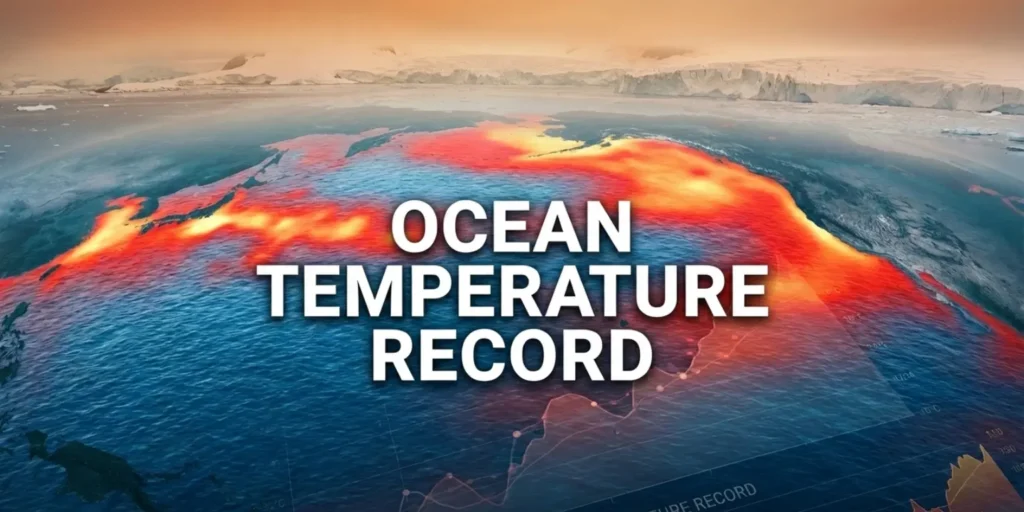
Rising ocean heat visualized as global temperatures reach dangerous new highs, increasing climate-related disasters.
The world’s oceans have reached their highest recorded temperatures, according to new scientific data. In 2025, oceans absorbed more heat than ever before, setting another troubling record. Scientists warn that this rise in ocean heat is making climate-related disasters stronger and more frequent across the globe.
Oceans play a major role in regulating Earth’s climate. They absorb more than 90 percent of the excess heat caused by human-produced carbon pollution. As a result, ocean temperatures provide one of the clearest indicators of how rapidly the planet is warming. While air temperatures can fluctuate from year to year, ocean heat continues to accumulate steadily over time.
Why Ocean Heat Matters So Much
The increase in ocean heat has wide-reaching effects on both people and nature. Warmer oceans provide more energy to storms, making hurricanes and typhoons stronger when they hit coastal regions. These storms can bring heavier rainfall, stronger winds, and more flooding than before.
Higher ocean temperatures also lead to longer and more intense marine heatwaves. These heatwaves damage coral reefs, kill fish, and disrupt entire marine ecosystems. Many species struggle to survive when water temperatures rise beyond their tolerance levels.
In addition, warm water expands. This process, known as thermal expansion, is a major cause of rising sea levels. As oceans warm and expand, coastal cities and low-lying areas face an increasing risk of flooding. Billions of people living near coastlines are already feeling the effects.
Oceans Are Heating Faster Than Ever
Scientists have been measuring ocean temperatures reliably since the mid-twentieth century. Based on this data, researchers believe today’s oceans are likely the warmest they have been in at least 1,000 years. They are also warming faster than at any time in the last 2,000 years.
Nearly every year since 2000 has broken the previous record for ocean heat. This pattern shows no sign of slowing down. Experts say this trend will continue until global carbon emissions are reduced to zero.
Professor John Abraham from the University of St Thomas in the United States described the situation clearly. He said that each year brings another warming record, making the trend feel repetitive but no less serious. According to him, understanding global warming means understanding ocean warming.
Oceans Tell the Full Climate Story
The atmosphere holds far less heat than the oceans and is more affected by natural climate cycles such as El Niño and La Niña. Because of this, air temperature records can vary from year to year.
In 2025, average global air temperatures are expected to be close to those recorded in 2023, which was the second hottest year since records began in 1850. The year 2024 remains the hottest on record. The shift to the cooler La Niña phase last year helped slow the rise in air temperatures, but it did not stop the oceans from warming.
Scientists say this difference proves why oceans are the most reliable measure of long-term global heating. While air temperatures can pause briefly, ocean temperatures continue to rise as heat builds up beneath the surface.
How Scientists Measure Ocean Heat
The latest findings were published in the journal Advances in Atmospheric Sciences. Researchers used temperature data collected from a wide range of tools placed across the world’s oceans. These include ships, floating sensors, and underwater devices.
Three independent research teams combined and reviewed this data to ensure accuracy. They focused on the upper 2,000 meters of the ocean, where most of the excess heat is stored.
The amount of heat absorbed by the oceans is massive. Scientists estimate it is equal to more than 200 times the total amount of electricity used by humans worldwide. This comparison helps explain the scale of energy involved and why the impacts are so severe.
Uneven Warming Across the Globe
Ocean warming does not happen evenly everywhere. Some regions are heating much faster than others. In 2025, the warmest areas included parts of the tropical Atlantic, the South Atlantic, the North Pacific, and the Southern Ocean.
The Southern Ocean, which surrounds Antarctica, is a major concern for scientists. In recent years, winter sea ice in this region has dropped sharply. Sea ice plays an important role in reflecting sunlight into space. When ice disappears, darker ocean water absorbs more heat, speeding up warming even further.
The loss of sea ice also affects ocean currents and weather patterns far beyond Antarctica. Changes in this region can influence climate systems around the world.
Growing Risks for the Future
Scientists warn that continued ocean warming will bring more damage in the years ahead. Coastal flooding will become more common. Fisheries may decline as marine life struggles to adapt. Stronger storms will put more lives and infrastructure at risk.
The data leaves little room for doubt. Ocean warming is not a future threat. It is already happening, and its effects are already being felt.
Experts stress that the only way to slow this trend is by cutting greenhouse gas emissions quickly and deeply. Until that happens, oceans will continue to absorb heat, setting new records and driving more extreme climate events.
The rising temperature of the seas stands as a clear signal of the planet’s condition. It shows how much warming has already occurred and how urgent the need for action has become.
About The Author