
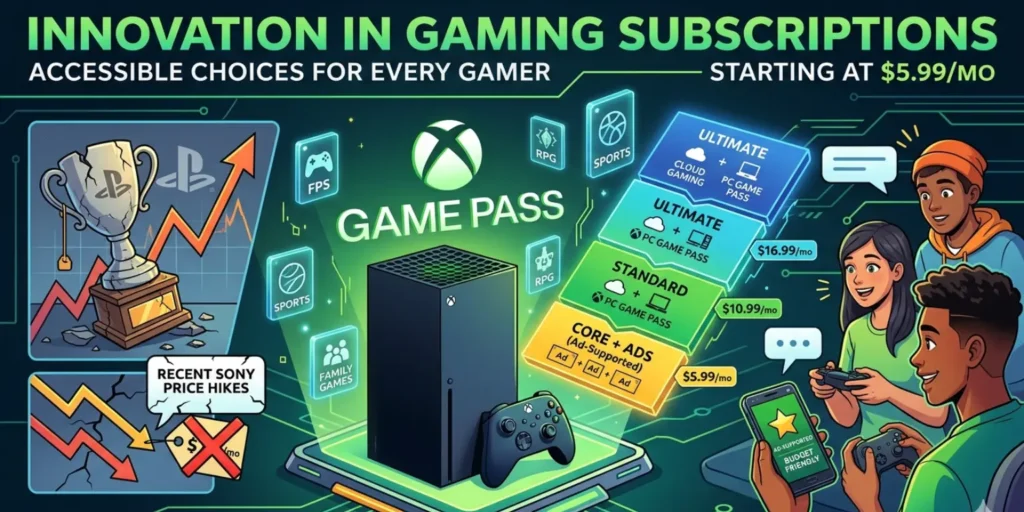
Xbox console and controller with Game Pass logo, tiered subscription icons, and ad-supported options, symbolizing Microsoft’s strategy to make gaming more affordable.
Gaming is entering a period of rising costs, and players are feeling the pinch. From hardware price hikes to subscription fatigue, the landscape is shifting. Against this backdrop, Microsoft appears poised to make bold moves that could redefine its position in the gaming ecosystem.
Rising Costs in Gaming
Recent moves by Sony highlight the growing expense of gaming. Starting April 2, the company will increase U.S. prices for its PlayStation 5 lineup:
- Standard PS5: $649.99
- PS5 Digital Edition: $599.99
- PS5 Pro: $899.99
The price increases come at a time when monthly subscription services are becoming a significant expense for gamers. Microsoft, by comparison, charges $29.99 per month for Xbox Game Pass Ultimate, a service that provides access to a broad library of games across console, PC, and cloud platforms.
The combination of higher console prices and rising subscription fees has left many players reconsidering how they allocate their gaming budgets.
Microsoft’s Game Pass Strategy
According to GameSpot, citing The Information, Microsoft’s new Gaming CEO Asha Sharma is exploring ways to make Xbox products, including Game Pass, more appealing to a wider audience. One major idea under consideration is cheaper Game Pass tiers, which would provide lower-cost access to the service with some limitations.
This move could signal a shift in Microsoft’s strategy, emphasizing value and accessibility over premium pricing. It also aligns with broader consumer behavior trends, where users are seeking more flexible, budget-conscious ways to enjoy entertainment.
Why a Cheaper Tier Matters
For gamers, subscription costs are accumulating. Many players juggle multiple subscriptions, from streaming services to gaming libraries. A lower-priced Game Pass tier would give budget-conscious consumers an entry point into the Xbox ecosystem without paying the full $29.99 per month.
For investors, the logic is equally clear. Bringing more users into the ecosystem—even at a lower price—could eventually drive growth in higher-tier subscriptions, in-game purchases, or console sales. In short, Microsoft could expand its audience first and monetize later, strengthening the overall Xbox business.
Potential Features of a Lower-Cost Tier
While no official announcement has been made, reports suggest several potential structures for a cheaper Game Pass option:
- Lower Monthly Price: Reduced subscription fees compared to Game Pass Ultimate.
- Fewer Perks: Some games might not be available on day one, limiting immediate access.
- Limited Cloud Gaming: Access to Xbox Cloud Gaming may be restricted or tiered.
- Ad-Supported Option: Users might view advertisements in exchange for a lower price.
- Bundled Subscriptions: Game Pass could be packaged with other services, such as Netflix, providing added value.
It’s important to note that the ad-supported angle is speculative. Microsoft has not confirmed that ads will appear in any specific tier, and the company is still exploring multiple options.
Ad-Supported Gaming: A Big Shift
The potential introduction of ads is generating significant attention in the gaming community. Console gamers are accustomed to high-quality, largely ad-free experiences. Introducing ads—even in a lower-priced tier—would represent a substantial shift in the Xbox model.
Early discussions reportedly involve Netflix co-CEO Greg Peters, hinting at possible bundle opportunities that extend beyond a simple pricing adjustment. Bundling Game Pass with other subscriptions could further increase value for cost-conscious consumers while diversifying Microsoft’s revenue streams.
Microsoft’s Strategic Objective
The central idea behind these changes is value. Asha Sharma’s experience in building global platforms and aligning business models with long-term value is particularly relevant in this context.
Game Pass is no longer the unquestioned bargain it once seemed to be. As monthly subscription costs rise and competitors increase console prices, Microsoft must offer options that feel affordable without undermining the perceived quality of the service.
A flexible pricing model, including lower-cost tiers and potential bundles, aligns with this strategy. For consumers, it’s about making gaming more accessible; for investors, it’s about expanding the ecosystem’s reach.
Competitive Implications: Sony vs. Microsoft
Sony’s price hikes create a strategic opening for Microsoft. As PlayStation hardware becomes more expensive, Xbox can position itself as a more consumer-friendly alternative. A cheaper Game Pass tier would allow Microsoft to attract gamers who are sensitive to upfront costs but still want access to a broad library of titles.
Even if Xbox cannot dramatically lower console prices, a more affordable subscription could shift perception. Microsoft could emphasize that players do not need to make large upfront investments to join the ecosystem, making the platform more appealing in the current economic climate.
Investor Considerations
For investors, several factors will be crucial to watch in the coming months:
- Official Confirmation: Any statement by Microsoft regarding lower-priced Game Pass tiers will be a key signal.
- Ad Integration: Confirmation of an ad-supported tier could indicate potential new revenue streams and user acquisition strategies.
- Subscription Bundles: Partnerships, such as with Netflix, could enhance Game Pass value and appeal.
- Competitive Response: Sony’s price adjustments may influence how consumers perceive value in the gaming market.
- User Growth Metrics: Expansion of Game Pass subscriptions under Sharma’s leadership will reflect the effectiveness of any pricing changes.
The Broader Gaming Landscape
The gaming market is increasingly characterized by subscription fatigue and rising costs. Players often maintain multiple subscriptions across platforms, games, and media services. For many, affordability and value are becoming primary decision drivers.
Microsoft’s potential changes to Game Pass reflect this reality. By experimenting with lower-cost tiers or bundled options, the company is attempting to capture both budget-conscious gamers and long-term ecosystem users.
This strategy mirrors broader trends in digital entertainment. Streaming services, for instance, are increasingly offering tiered plans, ad-supported models, and bundles to attract diverse audiences. Gaming, traditionally dominated by upfront hardware sales and premium pricing, is moving in a similar direction.
Risks and Challenges
Introducing lower-priced or ad-supported Game Pass tiers is not without risks:
- Brand Perception: Console gamers may resist ads in a traditionally premium environment.
- Revenue Cannibalization: There is a potential risk that users downgrade from higher tiers, affecting immediate revenue.
- Operational Complexity: Managing multiple tiers with differing perks, cloud access, and ad support could increase operational overhead.
- Competitive Reaction: Sony or other competitors may respond with counteroffers or additional incentives, complicating Microsoft’s positioning.
Nonetheless, the potential upside—growing the user base and strengthening the Xbox ecosystem—is significant. Microsoft appears willing to test new approaches to maintain long-term competitiveness.
Microsoft’s Vision Under Asha Sharma
Asha Sharma’s leadership signals a shift toward platform growth and flexible monetization. Her experience in global platforms positions her to rethink Xbox offerings beyond traditional pricing.
Game Pass, once a “no-brainer bargain,” now faces market pressures from rising hardware costs and subscription fatigue. Microsoft’s potential moves—including cheaper tiers, ad-supported options, and subscription bundles—demonstrate a willingness to innovate in response to market realities.
For gamers, the message is simple: Microsoft is exploring ways to make gaming more affordable. For investors, the takeaway is equally clear: expanding the Game Pass user base strengthens the ecosystem and positions Xbox for long-term growth.
The Consumer Case
From a consumer perspective, the logic is straightforward:
- Gaming is becoming expensive, from consoles to monthly subscriptions.
- Lower-priced Game Pass tiers or bundles offer a chance to enjoy a wide range of games without overspending.
- Ad-supported tiers could provide access for those who are extremely budget-conscious.
Ultimately, Microsoft is responding to the financial realities of everyday players, positioning itself as a flexible and value-oriented platform.
The Investor Case
For shareholders and market observers:
- A lower-cost Game Pass tier could accelerate adoption and user growth.
- Increased engagement may drive future upselling to premium tiers or other Xbox offerings.
- Strategic bundles with services like Netflix could enhance revenue potential and ecosystem stickiness.
- A well-executed pricing strategy may position Xbox to capitalize on Sony’s higher console prices, attracting new users.
Microsoft’s approach reflects a balance between short-term revenue and long-term platform value.
Looking Ahead
Key developments to monitor include:
- Official Announcements: Confirmation of lower-priced tiers or ad-supported Game Pass models.
- Partnership Deals: Bundles with other subscription services, such as Netflix, could significantly enhance value.
- User Metrics: Growth in subscriptions and engagement under the new pricing strategy.
- Market Response: How competitors like Sony respond to Microsoft’s flexible pricing strategy.
- Consumer Adoption: Whether players embrace the new options and whether ad-supported tiers gain traction.
Microsoft’s potential Game Pass changes illustrate a strategic pivot that could reshape subscription gaming. In an era where gaming is becoming increasingly costly, flexible pricing, bundled options, and value-oriented strategies could become critical differentiators.
Conclusion
Microsoft’s Game Pass strategy under Asha Sharma highlights the intersection of consumer affordability, market competition, and ecosystem growth. By considering lower-priced tiers, ad-supported models, and subscription bundles, the company is exploring innovative ways to make gaming more accessible while expanding its user base. This approach is especially timely, given Sony’s price increases for PlayStation hardware and rising costs across the gaming industry.
Gamers may benefit from more flexible and affordable options, while investors could see the Xbox ecosystem strengthen through increased subscriptions and platform engagement. While no official announcements have been made, the potential changes signal that Microsoft is willing to experiment with new business models, emphasizing value, accessibility, and long-term growth. For players and shareholders alike, the next moves in Game Pass pricing could set the stage for a new era in console gaming.
About The Author