
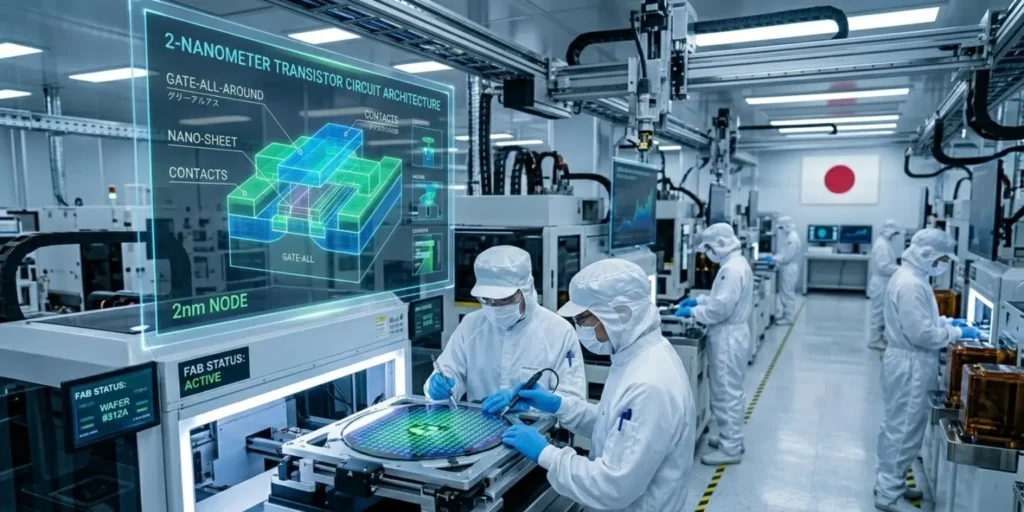
Rapidus moves closer to 2-nanometer chip production with strong backing from the Japanese government and major corporations.
Japan is taking a major step to rebuild its semiconductor industry. The country’s rising chipmaker, Rapidus Corporation, has secured about $1.7 billion in new funding from the Japanese government and a group of major domestic companies. This investment is part of a national effort to compete with global semiconductor leaders and strengthen Japan’s technology independence.
The funding was officially announced on February 27, 2026. It gives Rapidus the financial support needed to move closer to its goal of mass-producing advanced 2-nanometer chips by March 2028. This level of chip technology is among the most advanced in the world and is essential for artificial intelligence, high-performance computing, and next-generation electronics.
Major Japanese Companies Join the Investment
The new funding round includes strong support from some of Japan’s largest and most influential companies. Investors include Sony, Toyota, and SoftBank. These companies rely heavily on advanced semiconductors for their products, ranging from cars and robotics to smartphones and AI systems.
Other important investors include NTT, Canon, Fujitsu, Kioxia, Kyocera, and Denso. These companies represent key industries such as automotive, telecommunications, and electronics, all of which depend on a reliable supply of chips.
Private investors contributed a large share of the funding, showing strong confidence in Rapidus and its plans. Reports suggest that the private investment round attracted more interest than expected, exceeding its original funding target.
Government Support Strengthens Japan’s Semiconductor Strategy
The Japanese government is playing a central role in supporting Rapidus. This investment is part of a broader national plan worth about 3 trillion yen to rebuild Japan’s semiconductor manufacturing capacity. The government has taken a strategic stake in Rapidus and secured special voting rights. This gives officials the ability to protect the company’s future if financial problems arise. The goal is to ensure long-term stability and protect Japan’s access to advanced chip technology.
Japan once dominated the global semiconductor market in the 1980s. However, over time, manufacturing leadership shifted to companies in Taiwan and South Korea. Today, firms such as TSMC and Samsung Electronics lead in the production of advanced chips. By supporting Rapidus, Japan hopes to regain a meaningful position in this critical industry.
Focus on 2-Nanometer Chip Production
Rapidus is aiming to produce 2-nanometer chips by 2028. These chips are extremely small and powerful. Smaller chip sizes allow more transistors to fit into a tiny space, improving speed and reducing energy consumption. This level of chip technology is essential for modern AI systems, advanced robotics, and cloud computing. It is also important for autonomous vehicles, defense systems, and next-generation smartphones.
Rapidus CEO Atsuyoshi Koike said the company is already in discussions with more than 60 potential customers. Many of these companies want advanced chips for artificial intelligence and high-performance computing. The company is also planning for the future. Rapidus may eventually develop even smaller chips, including 1.4-nanometer and 1-nanometer technology, depending on demand and technical progress.
AI Boom Is Driving Global Chip Demand
The rapid growth of artificial intelligence is one of the main reasons countries are investing heavily in semiconductor production. AI systems require powerful chips to process large amounts of data quickly. Global spending on AI chips reached tens of billions of dollars in recent years and is expected to grow sharply in the coming years. Companies building AI models, data centers, and robotics systems need faster and more efficient processors.
This surge in demand has created opportunities for new chip manufacturers like Rapidus. It has also increased competition among countries trying to secure reliable semiconductor supply chains. Japan sees semiconductors as essential to its economic and national security. By producing chips domestically, the country can reduce its reliance on foreign suppliers.
Japan Has Strong Advantages in Chip Materials
Even though Japan no longer leads in chip manufacturing, it remains a global leader in semiconductor materials and equipment. Japanese companies produce about 40 percent of the world’s advanced semiconductor materials, including photoresists and silicon wafers.
These materials are essential for making advanced chips. This gives Japan a strong foundation to rebuild its manufacturing capabilities. By combining its materials expertise with new manufacturing facilities, Japan hopes to create a complete semiconductor ecosystem. This approach could help Rapidus compete with established chipmakers.
Competition From Global Leaders Remains Intense
Rapidus faces major challenges as it tries to enter the advanced chip manufacturing market. Companies like TSMC and Samsung have years of experience and operate massive production facilities. These companies benefit from economies of scale, advanced manufacturing processes, and long-standing relationships with major customers.
Building advanced semiconductor factories is extremely expensive. It can cost tens of billions of dollars and requires highly specialized equipment. Rapidus will need to prove it can produce chips reliably and at competitive prices. Industry analysts say the company’s success will depend on its ability to meet production deadlines and secure long-term customer contracts.
Strategic Importance Beyond Business
The Rapidus project is not just about business profits. It is also about national security and economic independence. Recent geopolitical tensions and supply chain disruptions have shown how vulnerable countries can be when they rely on foreign chip suppliers.
By producing its own advanced semiconductors, Japan can protect its technology sector and reduce supply risks. This strategy also helps support Japanese industries such as automotive manufacturing, robotics, and consumer electronics.
Potential Market Impact by 2030
If Rapidus succeeds in launching 2-nanometer chip production by 2028, it could capture a meaningful share of the advanced semiconductor market. Some forecasts suggest the advanced chip manufacturing market could reach around $200 billion within the next few years.
Rapidus could potentially gain between 5 and 10 percent of this market by 2030 if its plans succeed. Even a small share of this market would represent billions of dollars in annual revenue. Success would also strengthen Japan’s position in the global technology supply chain.
Risks and Uncertainty Remain
Despite strong support, Rapidus still faces risks. Semiconductor manufacturing is complex, expensive, and highly competitive. Delays in production, technical challenges, or a lack of customers could affect the company’s future.
The large investments involved also carry financial risk. If the project fails, it could result in significant losses for investors and the government. However, the strong backing from major companies and the Japanese government improves the chances of success. Industry observers will closely watch Rapidus’s progress over the next two years, especially its ability to build factories and secure customers.
Conclusion
Japan’s $1.7 billion investment in Rapidus marks a major step in rebuilding its semiconductor industry. With support from leading companies like Sony, Toyota, and SoftBank, Rapidus is working toward producing advanced 2-nanometer chips by 2028.
The rapid growth of artificial intelligence and global chip demand has created a unique opportunity for new manufacturers. Japan’s strength in semiconductor materials and strong government backing provide a solid foundation for Rapidus.
However, competition from established leaders like TSMC and Samsung remains strong. Rapidus will need to deliver on its promises to become a serious global competitor. If successful, the project could restore Japan’s role as a key player in advanced semiconductor manufacturing and help secure its technological future.
About The Author