
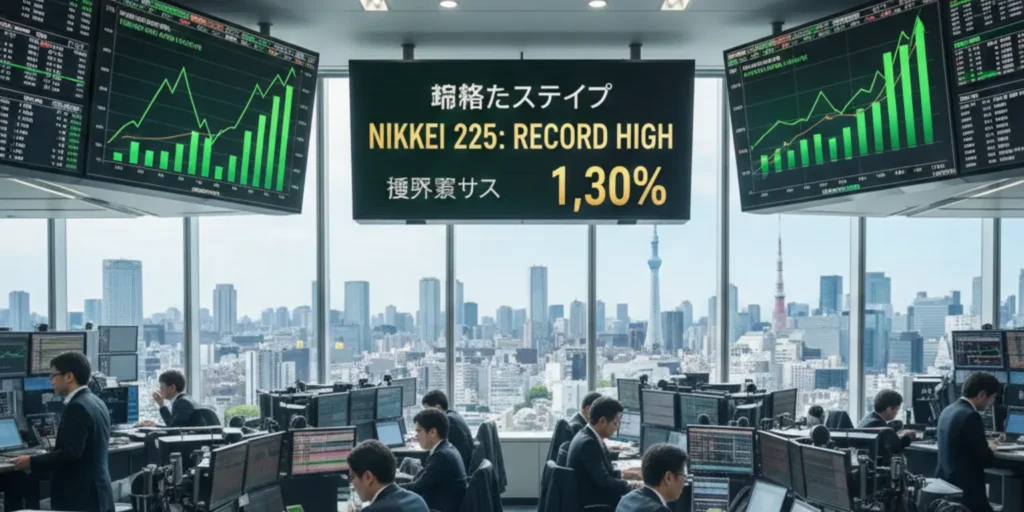
Traders monitor screens on the Tokyo Stock Exchange as Japanese shares hit record levels, driven by political and economic optimism.
Japanese shares climbed to a new record on Wednesday as investors reacted to growing talk of a possible early election and fresh government spending. At the same time, Japan’s government bonds and the yen continued to fall as markets adjusted to the chance of larger stimulus plans.
The strong performance in stocks came as traders focused on political signals and currency moves. Many believe a snap election could open the door to increased public spending, which often supports company earnings and share prices.
Nikkei Breaks the 54,000 Level
The Nikkei index rose 1.5 percent to reach 54,364.54 by early trading hours, crossing the 54,000 mark for the first time in history. This milestone reflects growing confidence in Japan’s equity market, especially among foreign investors.
The broader Topix index also climbed to a record high. It gained 0.88 percent to close at 3,630.53. The rise showed that buying interest was not limited to a few large firms but spread across many sectors.
Election Talk Lifts Investor Mood
Markets reacted strongly after reports suggested Prime Minister Sanae Takaichi may dissolve parliament later this month. The move could lead to a general election in February. Investors see this as a possible path toward higher government spending to support the economy.
On Tuesday, the Nikkei surged 3 percent after the election news first appeared. Wednesday’s gains built on that momentum, though some investors chose to take profits after the sharp rise.
A market analyst at Tokai Tokyo Intelligence Laboratory said expectations for an early election continued to support local stocks. He also noted that the weaker yen added to demand for Japanese shares.
Weak Yen Boosts Exporters
The falling yen has played a major role in lifting stock prices. A weaker currency makes Japanese exports cheaper overseas and increases the value of foreign earnings when converted back into yen.
Large exporters benefited the most from this trend. Companies in technology, manufacturing, and consumer goods saw strong demand from investors expecting higher profits.
The yen dropped sharply last week and continued to struggle this week. On Tuesday, it fell to its weakest level against the US dollar since July 2024.
Yen Near Intervention Level
On Wednesday, the yen was trading near 159.35 per dollar, slightly lower on the day. This level is closely watched by traders, as it is near the point where authorities have stepped in before to support the currency.
While the government has not confirmed any plans to intervene, the market remains cautious. A sudden move by officials could lead to sharp swings in currency trading.
For now, the weak yen continues to favor stocks, even as it raises concerns about rising import costs and inflation.
Bond Market Faces Heavy Selling
Japan’s bond market saw another day of heavy selling as investors worried about increased borrowing to fund stimulus spending. Yields rose as prices fell, reflecting growing concern over government debt.
The yield on five-year Japanese government bonds reached a record high ahead of a bond auction scheduled later in the day. Traders appeared cautious about demand for new debt.
The ten-year bond yield climbed to 2.180 percent, its highest level since February 1999. Rising yields suggest investors are asking for higher returns to hold government bonds.
Mixed Performance Among Major Stocks
Technology-related stocks led the gains in the market. Advantest, a company that makes chip testing equipment, jumped more than 5 percent. Tokyo Electron, another chip equipment maker, rose over 2 percent.
Fast Retailing, the owner of the Uniqlo brand, gained 4 percent as investors welcomed the weaker yen, which supports overseas sales.
Not all companies moved higher. Toyota Motor slipped slightly after a strong rally the day before. Shares of SoftBank Group dropped nearly 5 percent and weighed heavily on the Nikkei index.
Investors Balance Optimism and Caution
While stocks continue to climb, investors remain aware of the risks. Political uncertainty, rising bond yields, and possible currency intervention could all affect market direction.
For now, optimism around stimulus, a weak yen, and strong exporter earnings is driving the market higher. Whether this momentum continues may depend on political decisions and how authorities respond to the falling currency.
Japan’s markets are entering a critical period, with record highs on one side and growing financial pressures on the other.
About The Author