
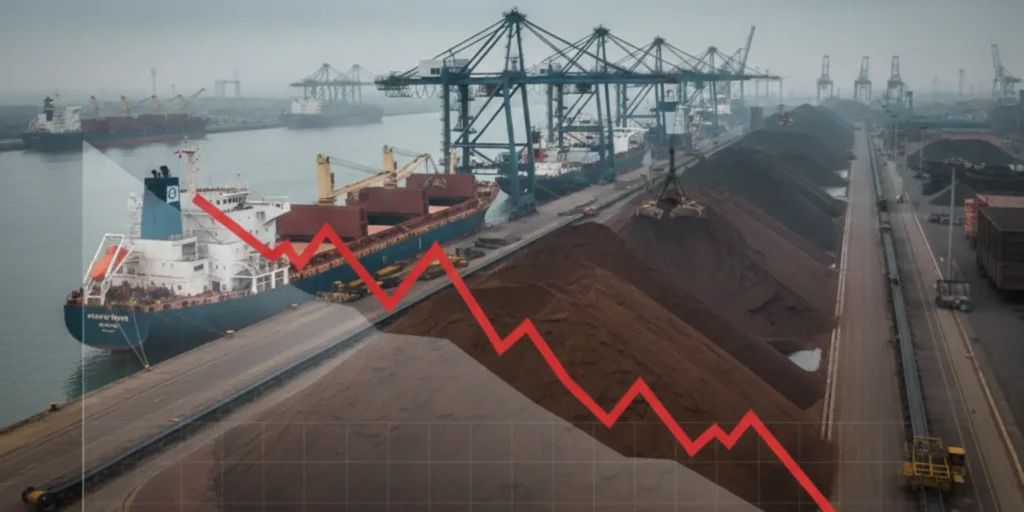
Iron ore stockpiles at Chinese ports continue to rise, adding downward pressure on global prices.
Iron ore prices continued to fall for a fifth straight session as concerns about oversupply weighed on the market. Fresh data from China showed a sharp drop in steel production, while new supply entered the market from a major mining project in Africa. At the same time, iron ore stockpiles at Chinese ports continued to rise, adding pressure to prices. Together, these factors have raised doubts about demand strength and increased worries that the global market may be heading toward a surplus.
Prices Hit a Multi-Month Low
Iron ore futures dropped below $104 a ton, marking the longest losing streak since November. The decline reflects growing uncertainty about how much iron ore China will need in the coming months. China is the world’s largest buyer of iron ore, and any shift in its steel industry has a major impact on global prices.
Official figures released on Monday showed that China’s steel output fell by more than 4 percent in 2025, dropping to around 961 million tons. This was the lowest annual production level since 2018. Lower steel output means weaker demand for iron ore, especially at a time when supply is increasing.
New African Mine Adds to Supply
On the supply side, China received its first shipment from Guinea’s massive Simandou iron ore mine over the weekend. According to China’s Baowu Steel Group, a second shipment is already on its way. Simandou is one of the largest untapped iron ore deposits in the world. Once fully operational, it is expected to produce up to 120 million tons per year.
This new source of supply is set to give steelmakers more options, even as China cuts back on steel production. Rio Tinto, which holds a stake in the project, has previously said the mine will gradually ramp up output over 30 months. As production increases, more iron ore will enter the global market, adding to supply at a time when demand growth looks uncertain.
Rising Stockpiles at Chinese Ports
Another major concern for the market is the steady rise in iron ore inventories at Chinese ports. Port stockpiles have grown for seven consecutive weeks, reaching 155.4 million tons. This is the highest level recorded since April 2022, according to data from Shanghai SteelHome E Commerce. The build-up in inventories followed record iron ore imports last month, even as steel output slowed.
This imbalance suggests that supply is arriving faster than it is being used, which typically puts downward pressure on prices. Analysts warn that inventories could continue to climb in the coming weeks. Robert Rennie, head of commodity research at Westpac Banking Corp, said Chinese port inventories are likely to grow further. Combined with record imports, he described the situation as negative for iron ore prices.
Market Balance Begins to Shift
Iron ore prices held up relatively well earlier in 2025, supported by seasonal restocking and a pricing dispute between China Mineral Resources Group and major miner BHP. These factors helped keep prices elevated despite softer demand. However, signs are now emerging that market conditions are loosening. Rising stockpiles, slowing steel production, and new supply sources all point to a shift in the balance between supply and demand. If these trends continue, prices could face further pressure in the coming quarters.
Economic Signals from China Add to Concerns
New economic data from China added another layer of uncertainty for iron ore markets. While the country met its official GDP growth target for 2025, momentum weakened toward the end of the year. One of the most worrying signs for iron ore demand came from fixed asset investment.
Investment excluding rural areas fell by 3.8 percent in 2025, a sharper decline than seen during the first eleven months of the year. This category includes spending on buildings, machinery, and infrastructure, all of which rely heavily on steel. A slowdown in these areas could further reduce demand for iron ore.
Global Supply Outlook Remains Strong
Globally, iron ore supply is expected to remain strong. Total seaborne trade is projected to reach 1.77 billion tons this year, according to estimates from the Australian government. With Simandou coming online and major producers maintaining high output levels, the market may struggle to absorb all available supply unless demand rebounds more strongly. Steelmakers may benefit from having more sourcing options, but miners could face lower prices if the surplus grows.
Futures and Steel Prices Decline
In Singapore, iron ore futures fell as much as 2.3 percent to $103.95 a ton before recovering slightly. By early afternoon, they were trading around $104.65 a ton. In China, futures contracts in Dalian also dropped 2.3 percent to 793 yuan a ton. Steel prices in Shanghai moved lower as well, reflecting weaker sentiment across the sector. The price declines show that traders are increasingly cautious about near term demand prospects.
Producer Updates May Offer Clarity
More insight into market conditions is expected in the coming days as major iron ore producers release their quarterly operational updates. Companies such as BHP, Rio Tinto, and Fortescue are due to report this week.
Brazil’s Vale, another key supplier, is scheduled to publish its output update next week. These reports will give investors a clearer picture of supply trends and whether producers are adjusting output in response to softer prices.
Outlook Remains Uncertain
For now, iron ore markets are being pulled in opposite directions. While demand from China is weakening, supply continues to grow. Rising port inventories and new mining projects are adding to oversupply fears.
Unless steel production or construction activity in China shows signs of recovery, iron ore prices may remain under pressure. Traders and producers alike will be watching closely to see how supply, demand, and economic signals evolve in the months ahead.
About The Author