
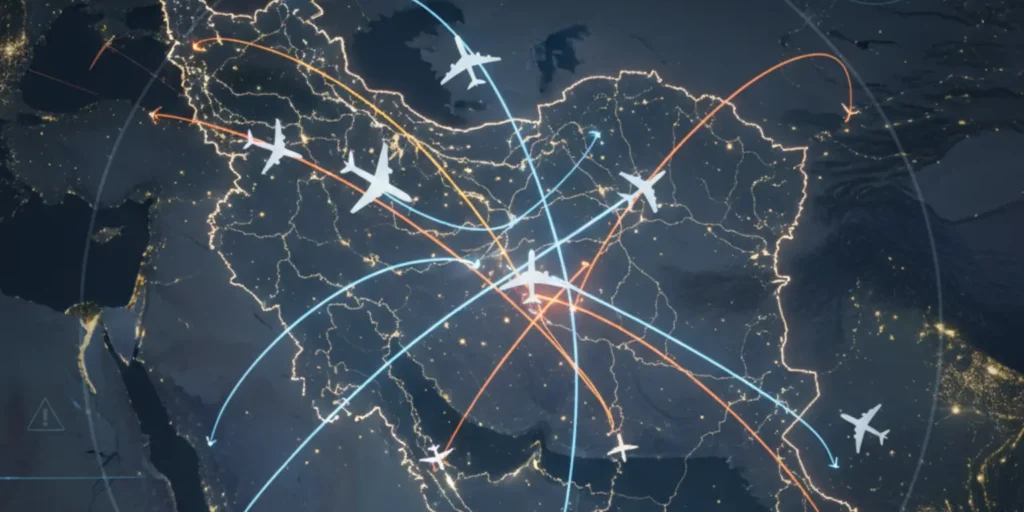
Aircraft begin flying over Iran again after authorities lifted a short-term airspace restriction that disrupted regional travel.
Iran has reopened its airspace after a temporary closure that lasted nearly five hours and disrupted air travel across the region. The shutdown raised concerns among airlines and passengers, as flights were forced to cancel, reroute, or face long delays. The move came at a tense time, with fears growing about possible military action involving Iran and the United States.
According to information published on the website of the United States Federal Aviation Administration, Iran closed its airspace on Wednesday at 5:15 p.m. Eastern Time. During the closure, only international flights traveling to or from Iran were allowed, and even those required special permission from authorities.
Flights Begin to Resume Late at Night
The airspace restriction was lifted shortly before 10 p.m. Eastern Time, according to flight tracking service Flightradar24. Once the notice was removed, several flights operated by Iranian airlines were among the first to cross the country again. These included aircraft from Mahan Air, Yazd Airways, and AVA Airlines.
Flight data showed that at the same time on the previous week, dozens of planes were flying over Iran. This highlighted how sudden and unusual the closure was, as Iran normally sits beneath busy international air routes linking Europe, Asia, and the Middle East.
Rising Political Tensions Behind the Decision
The temporary closure came as United States President Donald Trump was considering how to respond to unrest in Iran. The country has seen some of the largest anti-government protests in years, increasing political pressure on Iranian leaders.
At the same time, a United States official confirmed that Washington was withdrawing some personnel from military bases in the Middle East. This followed comments from a senior Iranian official who said Iran had warned neighboring countries that American bases could be targeted if the United States launched strikes against Tehran. These developments added to fears of possible conflict, making airspace safety a major concern for airlines operating in the region.
Airlines Forced to Change Plans
Several airlines quickly reacted to the closure. India’s largest airline, IndiGo, said that some of its international flights would be affected. Air India also confirmed that it was using alternative routes, warning passengers that delays or cancellations were possible.
A flight operated by Russia’s Aeroflot that was heading toward Tehran was forced to turn back and return to Moscow after Iran closed its airspace. This decision was based on safety concerns and followed guidance from aviation authorities.
Earlier in the day, Germany issued a new warning advising its airlines to avoid Iranian airspace. This came shortly after Lufthansa adjusted its flight operations across the Middle East due to rising regional tensions.
Existing Restrictions Add to Concerns
The United States already bans all American commercial flights from flying over Iran, and there are no direct passenger flights between the two countries. This long-standing restriction reflects ongoing political tensions and safety worries.
Other airlines have also taken precautionary steps. Carriers such as flydubai and Turkish Airlines have canceled multiple flights to Iran over the past week. Many airlines are now choosing longer routes to avoid Iranian skies altogether.
Safe Airspace, a website run by OPSGROUP that shares aviation risk information, said most airlines are steering clear of Iran. The group warned that the situation could point to further security or military activity, including missile launches or increased air defense operations. These conditions raise the risk of civilian aircraft being misidentified.
Past Incidents Still Fresh in Memory
Concerns about flying over Iran are shaped by past tragedies. In 2020, Iran’s military shot down a Ukraine International Airlines passenger jet shortly after takeoff from Tehran. All 176 passengers and crew members on board were killed. The incident remains a powerful reminder of the risks civil aviation can face during times of military tension. Because of this history, airlines tend to act quickly when warning signs appear, even if closures are brief.
European Airlines Take Extra Precautions
Lufthansa announced on Wednesday that it would avoid both Iranian and Iraqi airspace until further notice. The airline also said it would operate only daytime flights to Tel Aviv and Amman for the coming days. This change was made so flight crews would not have to stay overnight in areas seen as higher risk.
The airline warned that some flights could still be canceled as a result of these measures. Italian carrier ITA Airways, in which Lufthansa Group is now a major shareholder, said it would also suspend night flights to Tel Aviv until early next week.
Ongoing Uncertainty for Air Travel
Although Iran has reopened its airspace, the situation remains uncertain. Missile and drone attacks in several conflict zones continue to pose serious risks to airline traffic. As a result, many carriers are expected to remain cautious in the coming days.
For now, flights are moving again over Iran, but airlines, passengers, and aviation authorities are closely watching developments. Any further rise in tension could lead to new closures and fresh disruption across international air travel.
About The Author