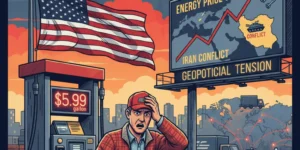
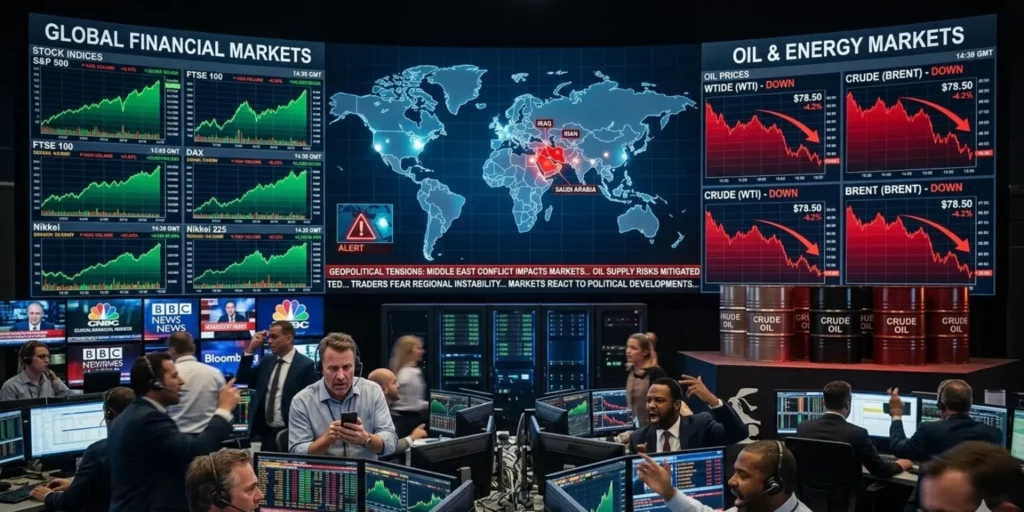
Global markets rebound as easing geopolitical tensions reduce oil prices and boost investor confidence.
Global financial markets showed mixed but improving sentiment as stocks climbed and oil prices fell following remarks from Donald Trump suggesting the conflict involving Iran could end soon. The comments helped calm investors after a sharp selloff earlier in the week that had shaken risk assets worldwide.
Markets remain highly sensitive to geopolitical developments in the Middle East. Even small changes in the outlook for the conflict are creating significant price swings across equities, commodities, and currencies.
Asian Stocks Rebound After Monday’s Market Selloff
Equity markets across Asia rose as investors responded to signs that tensions might ease. The MSCI Asia Pacific Index rose 2.4%, recovering part of the losses from the previous trading session. Technology stocks led the gains, reflecting renewed investor risk appetite.
Several major regional indices also posted solid advances:
- Topix in Japan climbed 2%
- Hang Seng Index in Hong Kong gained 1.6%
- Shanghai Composite rose 0.4%
- S&P/ASX 200 in Australia increased 0.9%
Meanwhile, futures for the Euro Stoxx 50 pointed to a higher opening for European markets. However, sentiment remained fragile. Futures tied to the S&P 500 slipped around 0.3%–0.4%, indicating that the rebound seen on Wall Street may already be losing momentum.
Oil Prices Fall After Sharp Spike
Energy markets also reacted quickly to the shifting geopolitical outlook. The price of Brent Crude dropped 4.6% to about $94.36 per barrel after earlier falling as much as 11% during the session. Similarly, West Texas Intermediate crude declined 5.1% to around $89.96 per barrel.
Despite the pullback, oil prices remain significantly elevated. Brent crude has surged more than 50% since the start of the year, driven largely by geopolitical tensions and concerns over global supply disruptions. Earlier in the week, crude briefly approached $120 per barrel, marking one of the most volatile trading sessions since the early days of the COVID-19 pandemic.
Strait of Hormuz Remains a Key Risk
One of the most critical factors influencing energy markets is the status of the Strait of Hormuz. This narrow waterway connects the Persian Gulf to global shipping routes and is one of the most important oil transit corridors in the world. A large share of global crude exports passes through the strait. Recent reports suggest the strait remains effectively closed, raising fears of prolonged supply disruptions.
Major oil producers in the region, including Saudi Arabia, have already begun curtailing output due to the logistical challenges created by the situation. Because of its strategic importance, any disruption in the Strait of Hormuz can have immediate and dramatic effects on global oil prices.
Trump Signals Possible Resolution
Investor sentiment improved after comments from Donald Trump indicating that the conflict with Iran might be resolved soon. Trump said the situation could be settled “very soon,” helping calm fears that the crisis might escalate into a prolonged regional war.
However, the president also acknowledged that the conflict might not end within the current week, highlighting the uncertainty that still surrounds the situation. At the same time, several Middle Eastern countries—including the United Arab Emirates, Bahrain, and Kuwait—reported missile alerts, drone interceptions, or air-defense activity. These developments show that while political rhetoric may suggest progress, the security situation in the region remains tense.
Relief Rally Rather Than Full Recovery
Many analysts believe the current market rebound is only temporary. According to Dilin Wu, a research strategist at Pepperstone Group, the gains likely represent a relief rally rather than a lasting shift in investor sentiment.
“What we’re seeing now is more of a relief rally after an extreme risk-off episode, rather than a genuine shift back into a full risk-on environment,” Wu explained. Investors often buy assets after large selloffs, especially when geopolitical headlines appear to improve. However, if the underlying risk remains unresolved, these rallies can fade quickly.
Investors Urged to Remain Skeptical
Some market experts caution that investors may be too optimistic about the speed at which tensions could ease. Eric Van Nostrand, chief investment officer at Lazard Asset Management, warned that markets may be underestimating the potential economic impact of the crisis. “There’s a lot of misplaced confidence in markets right now that things will ease quickly,” he said in an interview with Bloomberg.
Van Nostrand suggested that the prolonged closure of the Strait of Hormuz could have major global economic consequences, particularly if oil supply disruptions continue. Higher energy prices would raise transportation and manufacturing costs worldwide, adding inflationary pressure to already fragile economies.
Currency and Bond Markets React
Movements were also seen in currency and bond markets. The Bloomberg Dollar Spot Index weakened slightly, with the U.S. dollar falling against most major global currencies. The Euro slipped 0.2% to around $1.1613, while the Japanese Yen remained relatively stable near 157.8 per dollar.
In the bond market, yields on the US 10-Year Treasury rose two basis points to approximately 4.12%. Rising yields typically reflect investor expectations for higher inflation or tighter monetary policy. Meanwhile, Japan’s 10-year government bond yield remained around 2.175%, while Australia’s 10-year yield dropped eight basis points to 4.85%.
Safe Haven Assets See Increased Demand
With geopolitical risks still elevated, investors continued allocating funds into traditional safe-haven assets. The price of Gold rose 0.5%, reaching roughly $5,163 per ounce.
Gold often performs well during periods of geopolitical instability because investors view it as a store of value during uncertain times. Cryptocurrencies also experienced moderate gains. Bitcoin rose about 1.4% to $69,918, while Ethereum increased 0.7% to approximately $2,041.
Governments Consider Emergency Oil Measures
Global policymakers are closely monitoring the situation. Finance ministers from the Group of Seven countries said they are prepared to take steps to stabilize global energy supplies if necessary. Possible measures include releasing strategic petroleum reserves, which governments maintain to address major supply disruptions.
The United States is also reportedly considering several policy options to limit oil price increases. These could include restricting crude exports or temporarily waiving certain federal taxes. Such actions are intended to prevent energy price spikes from triggering wider economic damage.
Corporate Developments Add Market Interest
In addition to geopolitical developments, several corporate announcements influenced market sentiment. Hewlett-Packard Enterprise projected stronger-than-expected revenue for the current quarter, reflecting strong demand for hardware used in artificial intelligence workloads. Meanwhile, Apple expanded production of its iPhone in India, increasing output by roughly 53% last year. The country now produces about one-quarter of Apple’s flagship smartphones.
Another development involved AI company Anthropic, which filed a lawsuit against the United States Department of Defense over claims that the firm’s technology poses risks to the U.S. supply chain. Elsewhere, pharmaceutical giant Novo Nordisk announced a partnership with Hims & Hers Health to distribute obesity treatment medications, marking a major shift after months of legal disputes between the companies.
Market Outlook Remains Uncertain
Despite Tuesday’s rebound, investors remain cautious. The combination of geopolitical tensions, high oil prices, and inflation risks continues to cloud the global economic outlook. Some analysts warn that the situation could lead to stagflationary pressures, where slow economic growth combines with rising inflation.
If the Strait of Hormuz remains disrupted and energy prices stay elevated, central banks may be forced to maintain tighter monetary policy. For financial markets, this environment could mean continued volatility and unpredictable price swings. For now, global markets are reacting to every new headline from the Middle East—demonstrating just how closely geopolitics and financial markets are now intertwined.
About The Author