
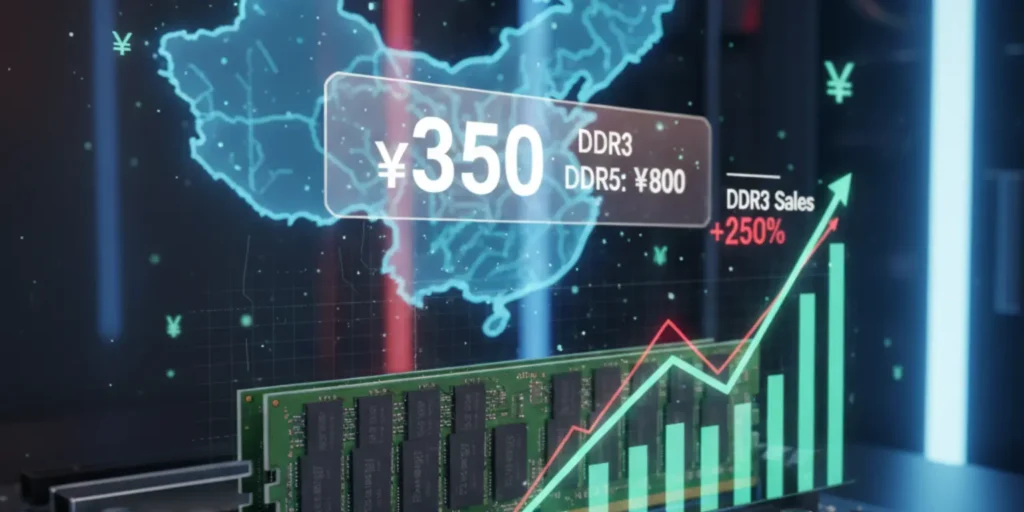
DDR3 memory makes an unexpected comeback in China, offering budget PC builders a cost-effective alternative to expensive DDR5 modules.
In a surprising turn of events, DDR3 memory is seeing strong demand again in China. Once considered outdated, this older RAM standard is now back in favor among budget PC builders. The reason is simple. Prices for newer DDR5 memory have climbed so high that many users can no longer afford it.
As a result, people are looking for cheaper ways to build or upgrade their computers, and DDR3 has become a practical option once again. This shift is especially visible in China’s DIY PC market, where affordability often matters more than having the latest technology.
Rising DDR5 Prices Push Users Back
The biggest reason behind this revival is the ongoing memory shortage, which has pushed DDR5 prices to extreme levels. Entry-level DDR5 kits now cost several times more than they did just a year ago. For many buyers, the cost of memory alone can exceed the rest of the PC build.
In comparison, DDR3 offers much better value. A 32GB DDR5 kit can cost more than £350, while the same capacity in DDR3 is available for less than half that price. On second-hand platforms, prices drop even further. Some users are finding 32GB DDR3 kits for under £75, making it hard to ignore for anyone building a low-cost system. With this kind of price gap, it is not surprising that budget-focused users are turning away from DDR5.
Strong Growth in DDR3 Motherboard Sales
Reports from Board Channels show that demand for DDR3-compatible motherboards has increased sharply. In some cases, sales have grown by two to three times compared to earlier periods. Local motherboard brands in China have confirmed this trend, noting a steady rise in orders.
Most of these sales involve bundle deals. These packages usually include DDR3 motherboards paired with Intel 6th to 9th generation processors. While these CPUs are not new, they still offer enough performance for everyday tasks such as office work, browsing, and light gaming. For many users, this combination strikes the right balance between cost and usability.
Memory Capacity Matters More Than Speed
One limitation of DDR3 is its lower per-module capacity. Standard consumer DDR3 sticks usually top out at 8GB, while DDR4 supports up to 32GB per module, and DDR5 goes even higher. However, clever platform choices help offset this drawback.
Older high-end desktop platforms like X79 support quad-channel memory and multiple DIMM slots. By filling all slots, users can reach 64GB of RAM using DDR3. That is more than enough for many workloads, including content creation and virtual machines.
Some builders are even using dual-socket server boards that support up to 24 memory slots. These setups allow massive memory capacity at a fraction of the cost of modern platforms. While CPU performance may lag behind newer systems, the trade-off makes sense for users who need large amounts of RAM more than raw processing power.
Disappearing Budget Workarounds
Before DDR3’s return, many users relied on other tricks to avoid high memory costs. DDR4 was once seen as a safer option since its prices remained relatively stable for a time. Others experimented with laptop DDR5 memory using SODIMM to DIMM adapters as a cheaper alternative.
Now those options are becoming harder to find. Stock levels of affordable DDR4 and SODIMM DDR5 solutions are shrinking due to increased demand. As these workarounds disappear, users are left with fewer affordable choices. In this environment, DDR3 has emerged as the most reliable low-cost option still widely available.
An Unusual Market Situation
The current memory market feels unusual. Technology normally moves forward, but rising prices have pushed some users backward instead. DDR3, first released in 2007, is now filling a gap created by supply shortages and high costs.
For many Chinese PC builders, the goal is not to chase the latest standards. It is to build a system that works well without breaking the budget. DDR3 meets that need better than anything else right now.
DDR3 Finds New Purpose in 2026
As 2026 unfolds, DDR3 is no longer just legacy hardware. It has become a practical solution for cost-conscious builders who need plenty of memory at a reasonable price. While it may not offer the speeds or features of modern RAM, its affordability gives it new relevance.
This revival shows how market pressures can reshape technology trends. In times of scarcity and high prices, even old standards can find a new role.
About The Author