
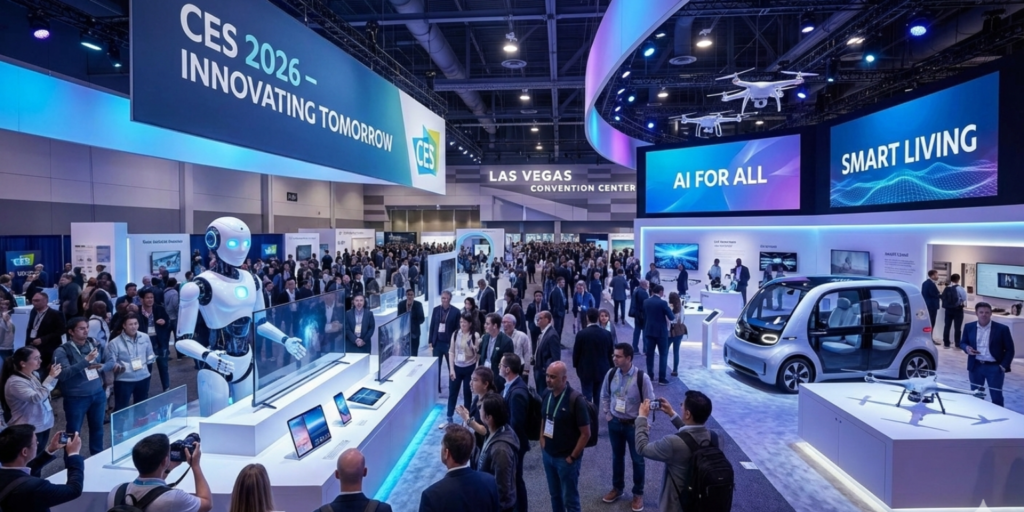
Artificial intelligence takes center stage at CES 2026, highlighting practical consumer technologies and real-world applications.
As the Consumer Electronics Show returns to Las Vegas, artificial intelligence once again takes center stage. CES has always been a place where bold ideas meet real products, and in 2026, that contrast feels clearer than ever. Big promises about AI are everywhere, but so are the limits of what the technology can actually deliver today.
This year’s show highlights a growing gap between what people imagine AI can do and what they experience when using it. While artificial intelligence continues to improve, it is still mostly focused on narrow tasks rather than broad, human-like thinking.
The Difference Between AI Dreams and Reality
Popular culture often shows AI as a powerful force that can think, learn, and act better than humans. Movies and novels describe machines that work independently and make complex decisions on their own. CES 2026 paints a more realistic picture.
Most AI on display is designed to help with specific jobs. These include translating languages during conversations, tracking health signs, or showing useful information through smart glasses. These tools can be helpful, but they do not think on their own or replace human judgment.
Even humanoid robots, which often draw large crowds, are still under close human supervision. Many are controlled remotely by operators who guide their movements and actions. While they look impressive, they are far from being fully independent workers.
Analysts Warn of Rising Expectations
Industry experts believe that excitement around AI is growing faster than real-world results. Thomas Husson, a senior analyst at Forrester, expects the gap between hype and user experience to widen at CES 2026.
Software and data models can improve quickly, but hardware follows physical limits. Energy use, heat control, and materials all slow down progress. These factors make it hard to turn advanced ideas into affordable and reliable products.
Still, companies continue to promote AI as a key selling point. Visitors to CES will see the term used across many product categories, sometimes with a limited explanation of what the technology actually does.
AI in Everyday Consumer Devices
Despite the challenges, artificial intelligence is becoming part of many everyday products. CES 2026 features televisions that adjust picture quality automatically, home appliances that learn user habits, and personal computers with built-in smart tools.
Wearable devices are another major focus. Rings and watches that track sleep, heart rate, and activity levels are gaining attention. These products use data analysis to provide insights that were once only available through medical tests.
Cars also remain a key area for AI use. Driver assistance systems are becoming more advanced, helping with parking, lane control, and safety alerts. While fully self-driving cars are still a long way off, smaller improvements continue to make driving safer.
Smart Glasses and the Wearable Race
Smart glasses are expected to be one of the most talked-about products at CES 2026. Brands working with fashion partners aim to make these devices look normal while offering useful features.
Some models can take photos, play audio, and display information without forcing users to stare at a screen. Analysts believe more consumers will try smart glasses this year as designs improve and prices slowly come down.
This category could become a major part of the wearable market, especially as people look for hands-free ways to access information during daily activities.
Personal Computers Under the Spotlight
Personal computers are another key focus at CES 2026. Chip makers such as Intel, AMD, and Qualcomm are competing to design processors that can handle smart features while using less power.
The goal is to make laptops faster and more efficient, especially for tasks like image editing, voice recognition, and data organization. Longer battery life remains a major selling point.
However, the PC market faces serious problems. The cost of chips and memory has risen sharply. Many manufacturers are prioritizing large data centers that support advanced computing systems, which has reduced the supply of parts for consumer devices.
As a result, prices for laptops and gaming systems continue to rise. While AI features add value, they also increase costs for both manufacturers and buyers.
AI Hype Versus Useful Innovation
Not all AI claims at CES will be meaningful. Analyst Avi Greengart warns that some companies will exaggerate the role of artificial intelligence in their products. Using the term as a marketing tool can confuse buyers and create unrealistic expectations.
At the same time, real progress is happening. Phones are better at organizing photos and messages. TVs adjust sound and brightness more accurately. Health devices detect changes earlier than before. Cars respond faster to potential dangers.
These improvements may feel small, but they make a difference in daily use. The most successful products are often those that quietly improve convenience rather than promise dramatic change.
Trade Tensions Affecting the Show
CES 2026 is also shaped by global politics. Large Chinese brands such as Lenovo, Hisense, and TCL are still present, but many smaller manufacturers from China are missing.
Trade tensions between the United States and China have made it harder for some companies to attend. Changing tariffs and unclear policies have created uncertainty across the electronics industry.
Gary Shapiro, president of the Consumer Technology Association, says frequent changes in trade rules have made planning difficult. Companies must now manage political risks alongside product development.
Why CES Still Matters
Despite these challenges, CES remains an important event. It is a place where deals are made, partnerships are formed, and trends become visible. Face-to-face meetings still play a key role in building trust and cooperation.
CES is not always about finding the next big invention. Instead, it offers a clear look at where companies are investing and which technologies are gaining support. It helps industry leaders understand the direction of the market.
AI may not deliver instant transformation, but its steady growth across many sectors shows that it is becoming part of everyday life.
Conclusion
CES 2026 presents a balanced view of artificial intelligence. The show highlights useful tools that improve daily products, while also exposing the limits of current technology. Rising costs, hardware constraints, and global trade issues all shape what companies can deliver.
Rather than showcasing science fiction ideas, CES focuses on practical progress. Artificial intelligence is finding its place through small but meaningful improvements. The real value of CES lies in understanding these shifts and setting realistic expectations for the future of technology.
About The Author