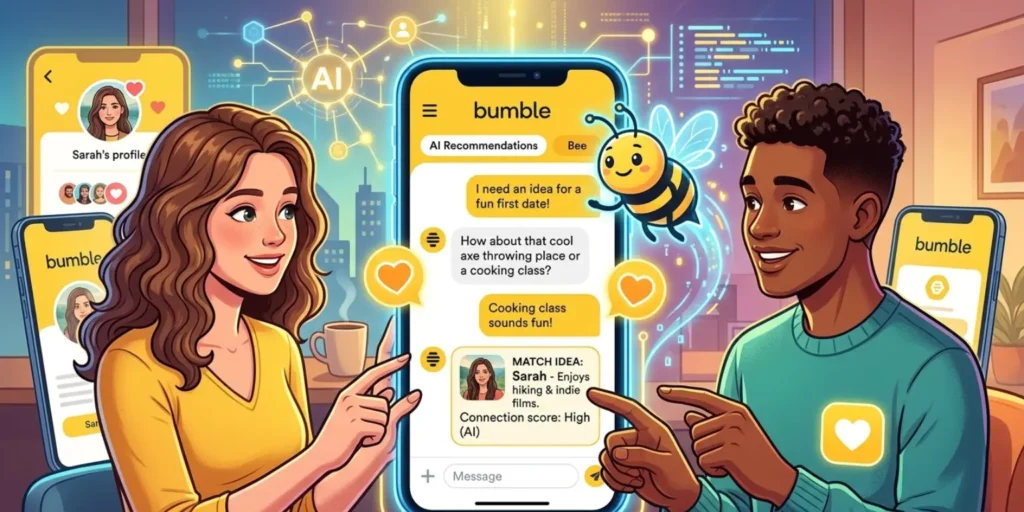
Bumble introduces “Bee,” an AI-powered dating assistant that offers personalized matchmaking, date ideas, and safety insights.
Bumble is taking a major step into generative AI with the launch of “Bee,” an AI-powered dating assistant. The tool is designed to act as a personal matchmaker, learning about users’ values, relationship goals, communication styles, and lifestyle preferences through private conversations. Bee then uses these insights to suggest more meaningful matches.
Founder and CEO Whitney Wolfe Herd revealed that Bee is currently in an internal pilot phase, but the company plans to release it in beta soon. The AI aims to understand users more deeply than traditional algorithms, potentially giving Bumble an edge over competitors in an evolving dating app market.
By leveraging AI, Bumble hopes to differentiate itself from apps like Tinder, which recently underwent its own redesign. Bee represents a broader effort to combine machine learning with personalized matchmaking, allowing users to connect in ways that align more closely with their preferences, intentions, and overall dating goals.
How Bee Works
Bee interacts with users much like other AI chatbots. People can type or speak conversationally, allowing the assistant to gather information about their lifestyle and relationship intentions. This interaction is private, giving the AI insight into each user’s personality while respecting confidentiality. Over time, Bee can refine its matchmaking recommendations based on these conversations.
The AI is initially powering a feature called “Dates,” which focuses on matching users based on shared goals and values. Bee starts by onboarding a user through a private conversation, gathering information that is then used to identify potential matches with compatible intentions. Both users receive a notification explaining why they might be a good fit.
In the future, Bee will expand its role beyond matchmaking. Bumble envisions features like offering date suggestions or requesting anonymous feedback from past matches. This will allow the AI to improve its recommendations while enhancing user engagement, potentially creating a more dynamic and personalized dating experience.
AI Enhances Bumble’s User Experience
The addition of Bee is part of a broader technological overhaul at Bumble. Historically, the app has marketed itself as more focused on women’s needs, pioneering features such as “women message first,” banning body-shaming, and reducing unsolicited explicit images. AI integration continues this user-centric focus while modernizing the platform for a younger demographic.
Bee allows Bumble to gather more nuanced information about its users. Understanding a person’s story, communication style, and preferences creates richer profiles that go beyond simple swipe mechanics. This deeper insight can help the app match people in a more thoughtful way, creating higher-quality interactions and improving overall engagement.
By analyzing user behavior through AI, Bumble aims to enhance not only matching but also the overall app experience. Personalized recommendations, insights on compatibility, and AI-driven conversation starters could make interactions more meaningful, addressing the dissatisfaction some Gen Z users have expressed with conventional swipe-based apps.
Rethinking the Swipe
Bumble is experimenting with changes to the long-standing swipe mechanic, particularly for younger users. Instead of simply swiping yes or no, the company is exploring new ways to express interest, such as “chapter-based” profiles. These profiles allow users to share different aspects of their life story, giving others more context before connecting.
These chapter-based profiles also provide more data for Bee, allowing the AI to learn about users in depth. By understanding multiple facets of a person’s life, values, and interests, the AI can identify better matches while encouraging richer conversation. This moves the app away from binary choices toward more meaningful engagement.
The goal of these innovations is to reduce the prevalence of dead-end chats while boosting engagement. Wolfe Herd noted that more dynamic ways of showing interest should spark conversations that are more likely to lead to real-life connections. Bumble is attempting to make online interactions a stepping stone to offline relationships rather than a stagnant messaging platform.
Catering to Gen Z Preferences
Bumble recognizes that Gen Z users often prefer group socializing and shared experiences over one-on-one dates. To appeal to this cohort, the company is designing features that allow users to connect in different social contexts. This may include group-based activities, events, or prompts that encourage collective engagement.
Bee is expected to play a role in these interactions by recommending matches and experiences aligned with group-oriented social behaviors. By leveraging AI, Bumble can identify compatible users within shared social contexts, improving the likelihood of meaningful connections. This approach aligns with broader social trends and preferences among younger dating app users.
By understanding these generational shifts, Bumble can remain competitive in a market where engagement has been declining. Gen Z’s dissatisfaction with traditional swipe-based platforms creates an opportunity for AI-powered personalization and alternative social connection methods that better fit their expectations.
AI Infrastructure and Back-End Upgrades
Bumble has been integrating AI across its platform for years, not just in matching. The company has introduced AI-driven tools such as photo selection guidance, feedback features, and safety enhancements. These improvements allow the app to automate routine decisions and better protect its user base.
The company overhauled its back-end infrastructure to handle AI features more effectively. By investing in scalable systems, Bumble ensures that AI features like Bee can operate efficiently, even as the user base grows. This technological foundation is crucial for delivering reliable, responsive experiences without lag or data inconsistencies.
AI integration also positions Bumble for future innovations. A robust back-end allows new features, such as dynamic dating recommendations or automated feedback, to be introduced with minimal disruption. This ensures that the app can evolve as AI capabilities expand, keeping users engaged and maintaining a competitive edge.
Business Impact of AI and Bee
Bumble reported strong fourth-quarter earnings alongside the announcement of Bee. Revenue reached $224.2 million, and average revenue per paying user increased 7.9% to $22.20. The stock jumped roughly 40% on the news, reflecting investor optimism about AI-driven growth and the potential of the Bee assistant.
The company sees Bee and other AI features as a way to differentiate itself in a crowded dating app market. Personalized matchmaking, dynamic engagement, and subscription-based features create opportunities for additional monetization. By collecting richer user data through AI, Bumble can offer premium services and experiences tailored to individual needs.
Long-term, AI may transform Bumble’s revenue streams. Subscription services, personalized recommendations, and advanced engagement features could generate recurring income, similar to software monetization strategies seen in other industries. Investors appear confident that AI could drive both growth and profitability in the years ahead.
Enhancing User Safety and Experience
AI tools like Bee also have the potential to improve user safety. Bumble has historically focused on creating a safer platform, banning harassment, and reducing unwanted content. AI can support these goals by identifying problematic behavior and flagging suspicious activity more efficiently.
By analyzing conversational patterns, AI can detect signs of abuse or manipulation. It can provide timely warnings to users or moderators, helping prevent negative experiences before they escalate. This proactive approach enhances trust and encourages longer-term engagement on the platform.
Enhanced safety measures combined with personalized matchmaking create a more compelling user experience. Users are more likely to invest time in the app if they feel understood and protected. Bee’s ability to tailor interactions could therefore increase retention and overall satisfaction while maintaining Bumble’s core mission of empowering women.
AI-Driven Date Recommendations
Bee will initially power the “Dates” feature, which focuses on suggesting matches based on compatibility. After onboarding a user through a private conversation, Bee analyzes their goals, values, and lifestyle to identify other users with aligned preferences. Both matches are notified with an explanation of why they are compatible.
Future iterations of Bee may provide additional assistance beyond matching. The AI could suggest creative date ideas, activities, or locations, helping users plan experiences that increase engagement and connection. This could make Bumble more than just a messaging platform, transforming it into an active social companion.
By combining insights from user interactions with predictive AI algorithms, Bumble can continuously refine match recommendations. This ongoing learning process ensures that Bee becomes increasingly effective over time, offering more accurate, meaningful, and enjoyable experiences for users seeking long-term or casual connections.
The Future of Bumble and AI
Bumble is positioning itself at the forefront of AI integration in dating. Bee represents the next stage of innovation, where machine learning meets human connection. By understanding users deeply and offering personalized recommendations, Bumble hopes to redefine digital dating experiences for a younger, tech-savvy audience.
The company is testing ways to remove traditional swipe mechanics in some markets, replacing them with AI-powered features that foster richer connections. This evolution aligns with broader trends in dating apps, which are moving toward story-driven, context-rich interactions rather than simple binary choices.
If successful, Bee could serve as a model for AI in social applications more broadly. Bumble’s emphasis on personalization, safety, and engagement shows how AI can enhance digital experiences while supporting meaningful connections, potentially setting a new standard for dating platforms worldwide.
About The Author