
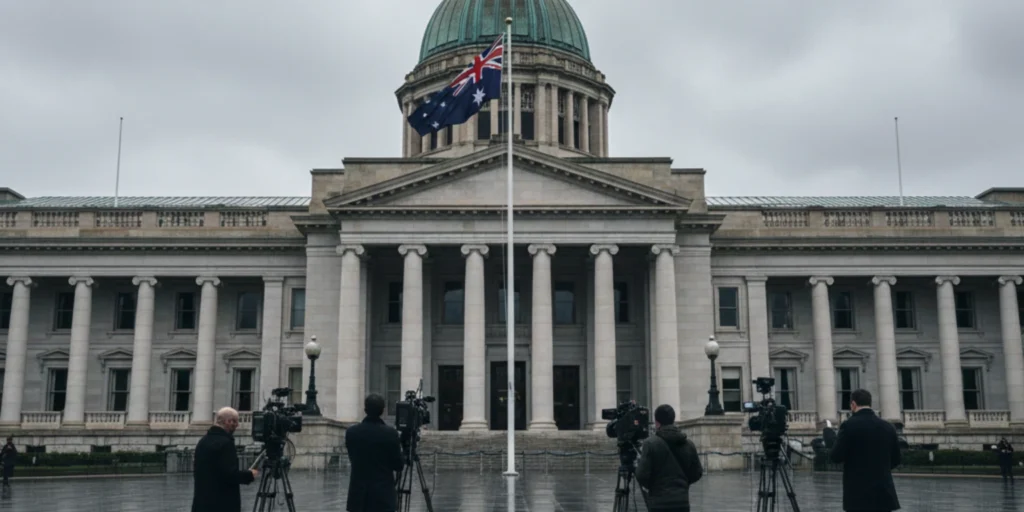
Australia has announced a royal commission to investigate the Bondi shooting.
Australian Prime Minister Anthony Albanese has announced a royal commission into the deadly shooting at Bondi Beach that shocked the nation last month. The attack, which took place during a Jewish festival, left 15 people dead and injured many others. It was one of the worst mass killings in Australia’s recent history.
A royal commission is the strongest form of public inquiry in Australia Announces. It can also provide legal protection for people who come forward with information.
The prime minister said the decision came after weeks of public pressure and deep reflection. He also held meetings with leaders from the Jewish community before making the announcement.
A shift in the government’s response
In the days following the attack, Albanese initially argued that faster action could be taken through changes to gun laws, hate speech rules, and a review of intelligence agencies. At the time, he suggested these steps would deliver results more quickly than a royal commission. After listening to those concerns, Albanese said a royal commission was now the best path forward. He told reporters in Canberra that Australia Announces
needed time to heal and come together. He said unity and social cohesion must be the country’s priority. According to the prime minister, a royal commission would allow the nation to learn from what happened and help prevent similar attacks in the future.
What the royal commission will examine
First, it will investigate the nature and spread of antisemitism in Australia and examine what is driving it. This includes looking at how hatred develops and how it has changed in recent years.
Second, the commission will make recommendations to law enforcement, border control, immigration, and security agencies. These recommendations will aim to improve how authorities respond to antisemitism and related threats. Third, the inquiry will closely examine the circumstances surrounding the Bondi shooting. This includes how the attacker was able to carry out the attack and whether warning signs were missed.
Finally, the commission will explore broader ways to strengthen social cohesion and counter extremist ideas motivated by ideology or religion.
Intelligence review folded into the inquiry

The prime minister said the work already underway by Dennis Richardson, a former intelligence chief, will now become part of the royal commission. Richardson has been leading a review into intelligence and law enforcement agencies. An interim report from that review is expected in April, and its findings will be included in the commission’s work.
Leadership of the commission
Former High Court justice Virginia Bell has been appointed to lead the royal commission. Australia Announces said he has asked her to deliver a final report by December 2026 and stressed that the inquiry would not drag on for years. Australia Announces described Bell as highly qualified and experienced, particularly in criminal law Some members of the Jewish community had earlier raised concerns about her appointment, although specific objections were not publicly detailed.
Former treasurer Josh Frydenberg said Jewish leaders had expressed serious concerns to the prime minister before the announcement.
Balancing justice and criminal proceedings
One concern raised was whether a royal commission could interfere with criminal proceedings against the alleged gunman, who survived the attack and is facing charges.
Albanese said this issue was carefully considered when selecting the commissioner. He explained that Bell’s background in senior courts makes her well suited to manage this balance. The prime minister also clarified that the commission would not attempt to address international conflicts, such as the situation in Gaza or the Middle East.
He said it was unfair that some Jewish Australians had been blamed or targeted for actions and views that had nothing to do with them.
Immediate policy actions after the attack
In the days following the shooting, state and federal leaders agreed to tighten gun control laws. Proposed changes include limits on how many firearms an individual can own and restrictions on certain types of weapons.
The government also promised reforms to hate speech laws. These include penalties for religious leaders or public figures who promote violence and the creation of a new federal offence known as aggravated hate speech.
Antisemitism report and free speech debate
Before the royal commission was announced, Albanese said his government would adopt recommendations from a report by antisemitism commissioner Jillian Segal. That report was released in July and focused on tackling rising antisemitism.
Some critics argued that parts of the report could threaten free speech. Concerns were raised about proposals to monitor universities and arts organisations and potentially withdraw funding if they failed to address antisemitism. Despite the criticism, Segal welcomed the decision to launch a royal commission. Speaking alongside the prime minister, she said the inquiry reflected the seriousness of the issue. She added that the rise in antisemitism has had a damaging effect on Australian society and democracy.
Public reaction and national impact
The announcement of the royal commission was met with relief by many families of the victims and community leaders who had been calling for it. They see the inquiry as a chance to uncover failures, address gaps in policy, and rebuild trust. Others have urged the government to ensure the commission delivers clear and practical recommendations rather than becoming a symbolic gesture. Albanese said the inquiry would help Australia learn from a painful tragedy and move forward together.
Conclusion
The decision to launch a royal commission into the Bondi Beach shooting marks a significant moment for Australia. After weeks of public pressure and national debate, the government has chosen its strongest investigative tool to examine one of the darkest events in recent memory.
The inquiry will look not only at the attack itself but also at the wider issues of antisemitism, extremism, and social division. With broad powers and a clear deadline, the commission is expected to play a key role in shaping future policy and public understanding. As Australia continues to mourn the victims, many hope the royal commission will bring answers, accountability, and a path toward greater unity and safety for all.
About The Author