
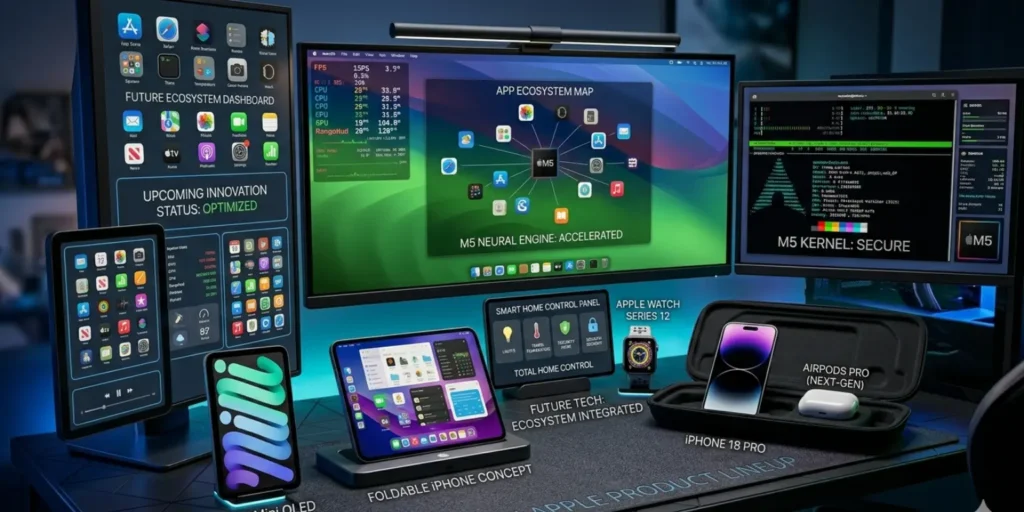
Apple’s 2026 roadmap highlights foldable iPhones, M5 Macs, OLED iPad Mini, Apple Watch Series 12, AirPods Pro with cameras, and smart home devices.
Apple is off to a busy start in 2026, with several product announcements already behind it and several highly anticipated releases still expected later in the year. From budget-friendly devices to cutting-edge innovations, Apple’s roadmap reflects its strategy of balancing incremental upgrades with bold new hardware ventures, particularly in the areas of AI, wearables, and the smart home.
Early Apple’s 2026 Releases
Apple kicked off the year with a series of announcements in March, refreshing key product lines while introducing new devices aimed at both casual users and professionals.
iPhone 17e
The iPhone 17e, released on March 2, serves as Apple’s budget-friendly option for 2026. The phone finally adds MagSafe support, a feature missing from its predecessor, while incorporating the A19 chip for improved performance. Its new Ceramic Shield 2 enhances durability, making it more resistant to drops and scratches. The 17e is aimed at users looking for a capable iPhone at a lower price point without sacrificing core features like display quality or camera performance.
iPad Air with M4 Chip
On the same day, Apple refreshed its iPad Air lineup with the M4 chip. Available in both 11-inch and 13-inch versions, the updated iPad Air supports Apple’s new C1X modem and Wi-Fi 7, delivering faster connectivity and smoother performance for productivity and entertainment tasks. These updates position the iPad Air as a strong option for both students and creative professionals seeking a mid-range tablet.
MacBook Neo and M5 Laptop Updates
Apple surprised the market with the introduction of the MacBook Neo on March 3 and 4. This low-cost laptop, priced at $599, targets students and budget-conscious consumers, providing a gateway into Apple’s macOS ecosystem. At the same time, Apple upgraded its MacBook Air and MacBook Pro lines with M5 chips, completing the rollout of its latest generation of processors across laptops.
Studio Displays and AirTag 2
Apple also refreshed its display lineup, introducing new versions of the Studio Display and Studio Display XDR. Meanwhile, the long-awaited AirTag 2 launched in January, four years after the original, offering improvements in tracking, battery life, and integration with Apple’s Find My network.
Upcoming Hardware: iPhones and Foldables
Apple’s fall events typically feature the most anticipated hardware, and 2026 is expected to follow this pattern.
iPhone 18 Pro and Pro Max
Reports suggest Apple will release the iPhone 18 Pro and iPhone 18 Pro Max in September. Unlike previous cycles, the standard iPhone 18 may be delayed until early 2027, reflecting a staggered approach to its flagship lineup. These new models are expected to include incremental upgrades in processing power, camera capabilities, and battery efficiency, maintaining Apple’s focus on performance and user experience.
iPhone Fold
Perhaps the most exciting rumored release is Apple’s first foldable smartphone, often called the iPhone Fold. The device is expected to feature a book-style design with both an outer display and a larger inner screen, opening new possibilities for multitasking, media consumption, and gaming on iOS. While pricing and final specifications remain unconfirmed, this model could redefine Apple’s approach to mobile hardware in the coming years.
Macs: Studio, Mini, iMac, and Touchscreen MacBook
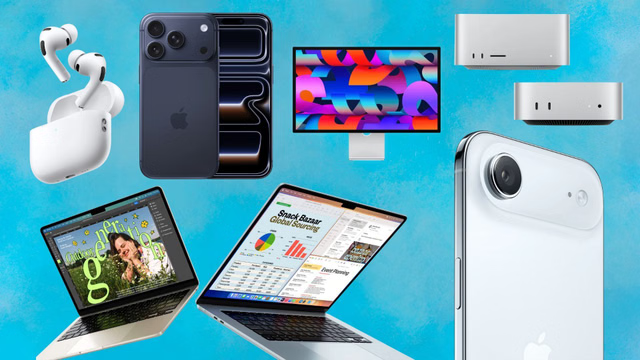
While Apple has refreshed several laptops and desktops already, additional updates are expected later in the year.
- Mac Studio: Likely to arrive mid-year with upgraded M5 Max and M5 Ultra chips, focusing on professional users who need high performance for tasks such as video editing, 3D rendering, and software development.
- Mac Mini: Expected to receive M5 and M5 Pro chips, though with few design changes, the update will primarily enhance performance for compact desktop users.
- iMac: The colorful all-in-one iMac may also be upgraded with the M5 chip, focusing on internal performance rather than a major redesign.
- Touchscreen MacBook: Apple may introduce its first OLED touchscreen MacBook toward the end of the year, representing a potential step toward more interactive laptops and better integration with iPadOS-like features.
iPads: Affordable and Mini
Apple continues to diversify its iPad offerings with a focus on affordability and innovation.
- Entry-Level iPad: A new low-cost model, possibly the 12th-generation iPad, could include the A18 or A19 chip and support AI-based features, making it accessible for students and casual users.
- iPad Mini: Rumors suggest a refresh that switches from an LCD to an OLED display, offering superior contrast, brightness, and color accuracy compared to the current model.
These updates reinforce Apple’s commitment to maintaining its tablet market dominance while appealing to a range of users from casual consumers to professionals.
Apple Watch Series 12
The Apple Watch Series 12 is expected in September alongside the new iPhones. While design changes may be minimal, the device is likely to include internal improvements and better integration with iOS and watchOS features. Advanced health capabilities, such as non-invasive blood glucose monitoring, are still several years away, but Apple is expected to continue refining its health sensors and tracking features with each generation.
AirPods Pro with Cameras
Apple is reportedly exploring AirPods Pro equipped with tiny infrared cameras, designed to interact with Apple Intelligence. This technology could enable in-air gestures, enhance augmented reality interactions, and integrate with the Vision Pro headset. While release timing is unclear, September or October are likely windows based on Apple’s past product launches.
Smart Home Devices
Apple is planning a major push in the smart home segment, with several new devices expected this year.
- HomePad Hub: A new smart home hub with a 7-inch display may launch in two variants: one for wall mounting and another with a speaker base similar to the HomePod mini.
- Apple TV 4K and HomePod mini: Both devices are expected to receive updates, leveraging a revamped Siri and expanded integration with Apple’s smart home ecosystem.
These products demonstrate Apple’s strategy of expanding its ecosystem, connecting users through seamless integration between devices, software, and smart home technology.
Software Updates
Before most hardware arrives, Apple is set to preview its next generation of software at the Worldwide Developers Conference (WWDC) in June. Expected updates include:
- iOS 27
- macOS 27
- iPadOS 27
- watchOS 27
- tvOS 27
- visionOS 27
These updates will likely debut publicly in September alongside the new iPhones, offering improved features, enhanced AI integration, and greater system-wide performance optimizations.
Products Likely Not Arriving in 2026
Some devices won’t see updates this year, including the iPad Pro and the standard iPhone 18. Apple appears to be spacing out its high-end releases to ensure 2027 has a strong product lineup. Additionally, there are no major updates expected for the Apple Watch SE or Ultra models, as Apple continues to focus on developing non-invasive blood glucose monitoring and other health innovations for future iterations.
Conclusion: Apple’s 2026 Roadmap
Apple’s 2026 roadmap is shaping up to be one of the company’s most diverse and ambitious yet. From the iPhone 17e and MacBook Neo to potential foldable iPhones and touchscreen laptops, Apple is balancing incremental improvements with new product categories. Tablets, smart home devices, and wearables are also expected to receive meaningful updates, while software enhancements across iOS, macOS, and watchOS promise to unify and enhance the ecosystem.
This year reflects Apple’s strategy of maintaining leadership in core markets while innovating in emerging categories such as foldable devices, advanced wearables, and AI-driven smart home technology. For consumers and investors alike, 2026 could be a pivotal year that sets the stage for the next generation of Apple products.
About The Author