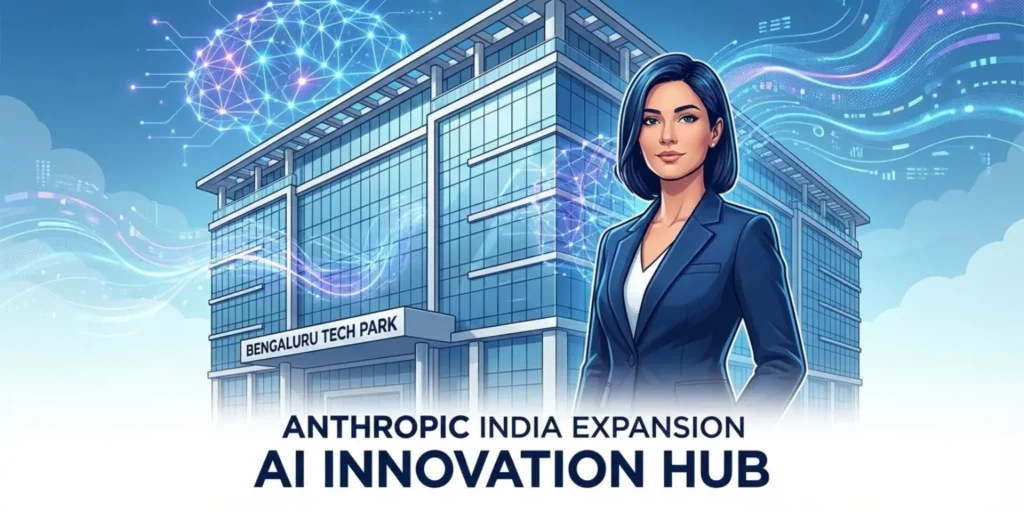
Irina Ghose, former Microsoft India managing director, will guide Anthropic’s expansion and enterprise AI efforts in India.
Anthropic has appointed Irina Ghose, the former managing director of Microsoft India, to lead its business in India. The move comes as the US-based AI company prepares to open a new office in Bengaluru. This decision highlights the growing importance of India as global AI companies look beyond the United States for long-term growth.
With this appointment, Anthropic signals that India is no longer just a user base but a strategic market where local leadership and strong relationships matter.
A Veteran Leader With Deep Local Experience
Irina Ghose brings more than two decades of experience in the technology sector. She spent 24 years at Microsoft, where she held several senior roles before stepping down in December 2025. As managing director of Microsoft India, she worked closely with large enterprises, government bodies, and startup partners across the country.
Her background gives Anthropic an experienced leader who understands how to operate in India’s complex business environment. Local knowledge, regulatory awareness, and established relationships are seen as key advantages as Anthropic builds its presence on the ground.
India Emerges as a Key AI Market
India has quickly become one of Anthropic’s most important markets. The country is already the second-largest user base for Claude, Anthropic’s AI assistant. Much of this usage comes from technical and work-related tasks, including software development, coding support, and professional research. This pattern shows that Indian users are not only experimenting with AI tools but also using them in practical, job-focused ways.
That trend makes the market especially attractive for companies offering enterprise-focused AI products. Anthropic is not alone in this push. OpenAI has also increased its focus on India and plans to open an office in New Delhi. The growing presence of major AI firms shows that India is becoming a competitive space in the global race to build and sell generative AI services.
Scale Is Huge, Revenue Is the Challenge
India offers massive scale. The country has more than one billion internet users and over 700 million smartphone users. However, turning that reach into steady revenue remains difficult. AI companies have had to experiment with low-cost plans and aggressive promotions to attract paying users. OpenAI introduced a low-priced ChatGPT Go plan aimed at Indian customers and later made it free for a year to drive adoption.
Anthropic faces similar challenges. Data from Appfigures shows that downloads of the Claude app in India rose by 48 percent year over year in September, reaching around 767,000 installs. Consumer spending also jumped sharply to $195,000 for the month. While this growth is strong, it remains small compared to the US market, where spending reached $2.5 million in the same period.
High-Level Engagement and Strategic Talks
Anthropic has been increasing its engagement in India at the highest levels. Chief executive Dario Amodei visited the country in October and met with business leaders and lawmakers. He also held discussions with Prime Minister Narendra Modi, focusing on the company’s expansion plans and the broader use of AI tools.
The company had earlier explored a possible partnership with Reliance Industries to expand access to Claude. Reliance, led by billionaire Mukesh Ambani, ultimately chose a different path and partnered with Google to offer its Gemini AI Pro plan for free to Jio subscribers. At the same time, Bharti Airtel teamed up with Perplexity to bundle its premium AI services. These moves show how powerful telecom companies in India have become key distribution partners for consumer AI services.
Focus on Enterprises and Local Use Cases
In a LinkedIn post announcing her new role, Ghose said her focus would be on working with Indian enterprises, developers, and startups using Claude for critical business needs. She pointed to the growing demand for reliable, enterprise-grade AI systems that companies can trust.
Ghose also highlighted the importance of AI that supports local languages. She said tools designed for India’s linguistic diversity could have a strong impact in areas such as education and healthcare. This signals Anthropic’s intention to expand beyond early tech adopters and reach larger institutions and public sector users.
India’s AI Ecosystem Still Developing
Despite strong demand and a large talent pool, India’s homegrown generative AI ecosystem is still at an early stage. The country has many skilled software engineers and a fast-growing base of AI users, but it has produced few startups building large foundation models.
Most investor funding in India has gone to application-focused startups rather than companies training large-scale AI systems. Building such models requires massive investment, which has limited the number of local players competing at the highest level. This gap creates both challenges and opportunities for global AI companies entering the market.
Looking Ahead to AI Impact Summit 2026
Ghose’s appointment also comes ahead of the AI Impact Summit 2026, scheduled for February. The Indian government is expected to bring together startups, global CEOs, and industry experts to discuss the next phase of AI deployment in the country. The summit is part of India’s broader effort to position itself as a serious player in the global AI landscape and to show support for domestic innovation as competition intensifies worldwide.
Building a Strong Local Team
Anthropic is also expanding its team in India. Job listings show openings for enterprise and startup account executives, as well as a partner sales manager. These hires point to a push to strengthen sales, partnerships, and customer engagement across the country.
For Anthropic, bringing in senior local leadership is a key step toward turning India’s fast-growing usage into a stable business. Success will depend on pricing, partnerships, and enterprise adoption in a market that is large, competitive, and still evolving.
About The Author