
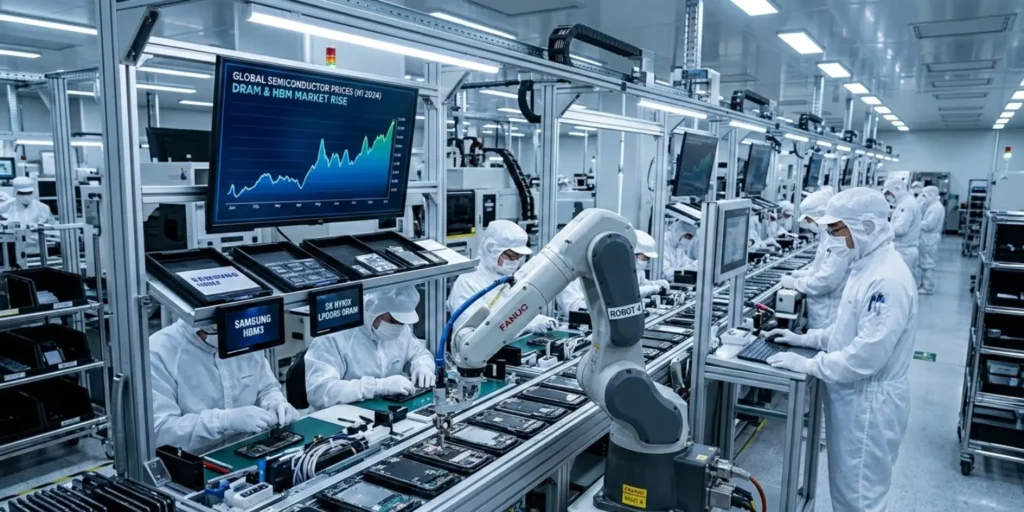
Rising memory chip demand for AI is driving smartphone prices to record levels in 2026.
Smartphones are becoming more expensive in 2026 as the global technology industry faces a serious shortage of memory chips. The rapid growth of artificial intelligence has created a huge demand for advanced memory, leaving fewer supplies available for consumer devices like phones, laptops, and gaming consoles. According to a new report from the International Data Corporation (IDC), the average global smartphone price is expected to rise 14 percent this year to a record $523. This marks the highest average selling price ever recorded for smartphones.
At the same time, shipments of budget smartphones are declining sharply. Devices priced under $100 are becoming harder to produce due to higher component costs and limited supply. IDC expects total smartphone shipments to fall to about 1.12 billion units in 2026, the lowest level seen in more than ten years. This shift reflects a major change in how smartphones are manufactured, sold, and priced.
AI Boom Is Driving Massive Memory Demand
The main reason behind the shortage is the explosive growth of artificial intelligence. AI systems require enormous computing power, and memory chips play a critical role in processing and storing data. Data centers that train and run AI models rely heavily on DRAM and high-bandwidth memory, also known as HBM. These advanced memory types allow AI systems to operate faster and handle larger workloads.
Companies building AI infrastructure are buying as much memory as possible, reducing availability for other industries. Major chip manufacturers are prioritizing AI-related orders because they offer higher profit margins and long-term growth opportunities. As a result, smartphone manufacturers are finding it harder and more expensive to secure the memory chips they need.
Jensen Huang, the head of Nvidia, emphasized earlier this year that memory will be one of the most important components shaping the future of AI. His comments reflect the broader industry view that memory supply will remain tight as AI adoption continues to expand across industries.
Memory Prices Have Already Doubled
The impact of AI demand can be seen clearly in memory chip prices. According to industry analysts, prices for DRAM and HBM increased dramatically in early 2026. Some reports indicate prices doubled compared with late 2025 levels, reaching record highs.
This price surge affects every company that depends on memory chips. Smartphone makers must now pay significantly more for key components, increasing production costs. In many cases, these higher costs are passed directly to consumers through higher retail prices.
Memory is one of the most expensive parts inside a modern smartphone. As phones become more advanced and include more AI features, they require more memory, which further increases costs. Even small increases in memory prices can significantly affect the final price of a device.
Major Chipmakers Are Focusing on AI
Global memory production is dominated by a small number of companies, including Samsung Electronics, SK Hynix, and Micron Technology. Together, these firms produce more than 90 percent of the world’s DRAM.
These companies are rapidly shifting their manufacturing capacity toward high-bandwidth memory because it is essential for AI servers and data centers. HBM offers higher performance than traditional memory and is especially useful for AI processors. However, this shift reduces the amount of standard memory available for consumer electronics like smartphones.
Other manufacturers, including smaller firms in Taiwan, are trying to increase production. However, expanding semiconductor manufacturing takes time and requires massive investments. New factories can take years to build and begin full production, meaning the shortage is unlikely to end quickly.
Budget Smartphones Are Hit the Hardest
Low-cost smartphones are especially vulnerable to memory shortages. These devices operate on thin profit margins, leaving little room to absorb rising component costs. As memory prices increase, manufacturers must either raise prices or reduce production.
IDC expects shipments of budget smartphones to fall significantly this year. This trend could limit access to affordable devices in many developing markets, where low-cost smartphones are essential for internet access and communication.
Manufacturers may respond by offering fewer low-end models and focusing more on mid-range and premium devices. Some companies may also reduce the amount of memory included in cheaper phones to control costs, although this could affect performance.
Large Brands Have an Advantage
Major smartphone companies like Apple and Samsung Electronics are better positioned to handle the shortage. These companies have long-term supply agreements with chipmakers and stronger financial resources. This allows them to secure memory supplies even during shortages.
Smaller Android manufacturers do not have the same level of bargaining power. They may struggle to obtain enough memory chips or face higher prices. As a result, some smaller brands could lose market share or even exit certain markets. This situation could strengthen the dominance of major global brands. Consumers may see fewer choices, especially in the lower-price segments.
Other Devices Are Also Affected
Smartphones are not the only products facing higher costs. Laptops, gaming consoles, and other electronic devices also rely on memory chips. Manufacturers in these industries are facing similar challenges.
Some companies may release devices with less memory to reduce costs. Others may increase prices or delay product launches. In certain cases, manufacturers could temporarily reduce production if they cannot obtain enough components. The shortage is affecting the entire consumer electronics ecosystem, showing how interconnected the technology supply chain has become.
Shortage Could Continue Until 2027
Industry analysts believe the memory shortage may continue into 2027. The rapid expansion of AI infrastructure is expected to keep demand high for several years. Even as new factories are built, demand may continue to outpace supply.
Technology companies across many industries are preparing for ongoing supply constraints. Some are redesigning products to use memory more efficiently. Others are signing long-term supply agreements to secure components. The shift toward AI is creating lasting changes in the semiconductor industry. Memory production priorities are now heavily influenced by AI needs rather than traditional consumer electronics demand.
AI Is Reshaping the Smartphone Market
Artificial intelligence is not only increasing smartphone prices but also changing how phones are designed and sold. New smartphones include AI features such as advanced photography, voice assistants, and on-device machine learning. These features require more memory and processing power.
As AI becomes more important, smartphones may continue to become more powerful but also more expensive. Consumers may keep their devices longer instead of upgrading frequently. This could slow overall smartphone sales growth. At the same time, manufacturers may focus on premium models that offer higher profits. Budget devices could become less common or offer fewer advanced features.
What This Means for Consumers
For consumers, the most immediate impact is higher smartphone prices. Buyers may need to spend more to purchase new devices, especially models with higher performance and AI capabilities. Budget options may become limited or less powerful. However, higher prices may also bring more advanced features. Smartphones will continue to improve in areas such as camera quality, AI tools, and performance.
In the long term, memory production is expected to increase, which could stabilize prices. Until then, the influence of artificial intelligence on the semiconductor industry will continue to shape the cost and availability of smartphones.
Conclusion
The global memory chip shortage, driven largely by the rapid expansion of artificial intelligence, is pushing smartphone prices to record levels in 2026. With average prices reaching $523 and budget phone shipments falling sharply, the smartphone market is entering a new phase. Major chipmakers are focusing on AI-related memory, leaving fewer resources for consumer devices.
Large brands are better equipped to handle the shortage, while smaller manufacturers face serious challenges. As AI continues to grow, memory supply will remain a critical factor influencing smartphone prices, availability, and innovation in the years ahead.
About The Author