
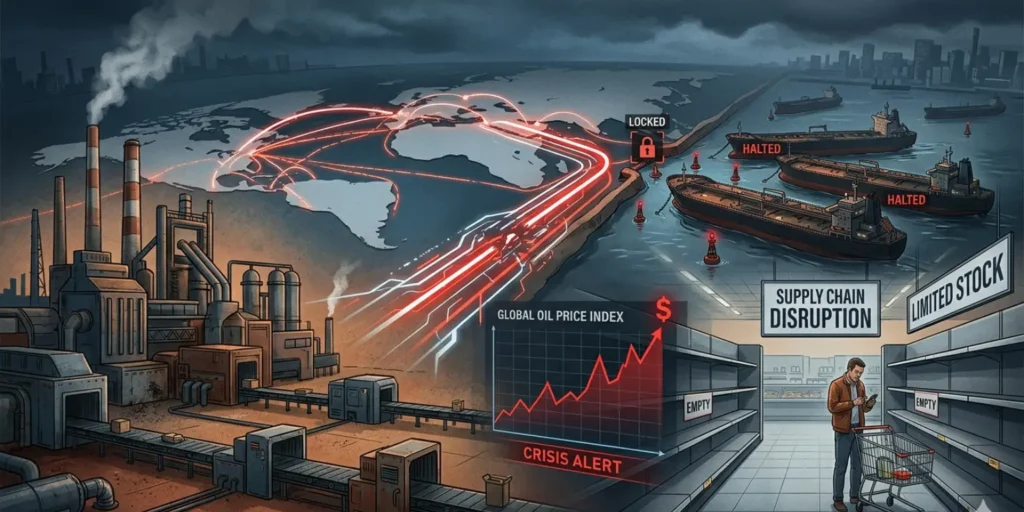
Oil shortages ripple across industries, disrupting global supply chains and driving up the cost of everyday goods.
The ongoing conflict involving Iran is no longer just an energy issue. What began as a disruption in oil supply is quickly spreading into a much broader economic problem. Within a month, the situation has started affecting not only fuel prices but also the availability of everyday goods. The crisis is expanding into multiple sectors, creating pressure on global supply chains and consumer markets.
At the center of this disruption is the Strait of Hormuz, a key passage for global oil and gas shipments. With reduced flows through this route, the world has lost access to a significant portion of its energy supply. This has caused a ripple effect, pushing up prices and creating shortages that extend far beyond fuel.
Global Oil Shortage Triggers a Chain Reaction
Oil is not just used for fuel. It is also a key ingredient in many industrial materials. As supply drops, the effects are being felt across industries that rely on petroleum-based products. This includes plastics, chemicals, and synthetic materials used in manufacturing.
The shortage has made it harder for companies to access essential raw materials. Products like plastic containers, packaging, and even textiles depend on oil-based inputs. As these materials become scarce, production slows down, and costs begin to rise. This creates a chain reaction that moves quickly from factories to store shelves.
Everyday Products Are Becoming Harder to Make
The impact of the crisis is now visible in everyday items. Many products people use daily rely on petrochemicals in some form. Items such as shoes, clothing, packaging, and household goods are all affected.
Manufacturers are struggling to secure enough materials to maintain production. Plastic, rubber, and polyester are becoming more expensive and harder to source. This is forcing companies to either raise prices or reduce output. In some cases, both are happening at the same time.
Asia Feels the Pressure First
Countries in Asia are experiencing the earliest and most intense effects of the shortage. This is because the region is heavily dependent on imported oil and is responsible for a large share of global manufacturing.
In places like South Korea, panic buying has already started. Consumers have been stockpiling items such as trash bags, which rely on plastic. The government has even encouraged people to reduce the use of disposable products to ease pressure on supply.
Meanwhile, Taiwan has taken steps to support manufacturers facing shortages. Authorities have set up hotlines to help businesses find alternative materials. Farmers in the region are also considering raising prices because they cannot access packaging needed for their goods.
Essential Services Are at Risk
The crisis is not limited to consumer goods. It is also affecting critical sectors such as healthcare. In Japan, there are growing concerns about shortages of medical supplies. Some treatments depend on plastic components, which are now harder to obtain.
For example, patients who require dialysis may face difficulties if supplies of medical tubing run low. These tubes are made from petroleum-based materials. A shortage could disrupt life-saving treatments, highlighting how deeply this crisis is affecting essential services.
Manufacturing Faces Rising Costs
As raw materials become scarce, manufacturers are facing higher production costs. Energy prices have increased, and so have the costs of key inputs like plastic and chemicals. This is putting pressure on profit margins across industries.
Companies are now forced to make difficult decisions. Some are raising prices for their products, while others are cutting production. In many cases, both actions are happening together. This combination leads to higher prices for consumers and fewer goods available in the market.
Inflation and Economic Growth Under Threat
The growing supply crisis is contributing to rising inflation worldwide. As production costs increase, businesses pass those costs on to consumers. This leads to higher prices across a wide range of products, from food to electronics.
At the same time, economic growth is slowing down. When companies produce less and consumers spend more on basic goods, overall economic activity weakens. This creates a difficult situation for governments and central banks trying to maintain stability.
The Role of Naphtha in the Crisis
One of the key issues behind the shortages is a lack of naphtha. This petroleum byproduct is essential for producing many synthetic materials. Unlike crude oil, there are fewer reserves of naphtha, and alternatives are limited.
Asia relies heavily on imports of naphtha from the Middle East. With supply disrupted, many petrochemical companies are reducing output. Some have even declared force majeure, meaning they cannot fulfill their contracts due to circumstances beyond their control.
Governments Take Emergency Measures
To manage the situation, governments are taking urgent steps. Some countries are releasing oil from emergency reserves to stabilize supply. Others are adjusting trade policies to secure critical materials.
For example, South Korea has started importing naphtha from Russia after a pause in sanctions. It has also restricted exports of the material to protect domestic supply. These measures show how serious the shortage has become.
Prices of Plastic and Packaging Surge
One of the most visible effects of the crisis is the sharp rise in plastic prices. In Asia, the cost of plastic resins has surged significantly in recent weeks. This is affecting industries that rely heavily on packaging.
Businesses that produce items like food packaging and takeaway containers are increasing their prices. In India, even bottled water has become more expensive due to higher costs for plastic components. These changes are quickly reaching consumers.
Supply Shortages Spread Across Industries
The shortage of materials is not limited to plastics. Other important resources from the Middle East are also affected. These include fertilizers, helium, and chemicals used in manufacturing.
Fertilizer shortages are already impacting agriculture. Farmers are paying more for inputs, which could lead to higher food prices. Helium shortages may affect industries like electronics and healthcare. This shows how wide-reaching the crisis has become.
A Crisis Moving Across Regions
The effects of the shortage are spreading from east to west. Asia is experiencing the first wave, but other regions are likely to follow. As supply disruptions continue, more countries will face similar challenges.
Experts describe this as a rolling crisis. Instead of hitting all regions at once, the impact moves gradually across the world. This makes it harder to manage and predict, as each region experiences the effects at different times.
Businesses Struggle to Adapt
Companies are trying to adjust to the changing situation. Some are delaying purchases in hopes that prices will fall. Others are looking for alternative materials to replace plastics.
However, these solutions come with challenges. Switching to materials like paper, glass, or metal requires changes in production processes. It can also take months to secure new suppliers and meet safety standards. This limits how quickly companies can adapt.
The High Cost of Alternatives
Even when alternatives are available, they are often more expensive. Recycled plastics, for example, cost much more than traditional materials. Supply is also limited, making it difficult for companies to rely on them fully.
This means businesses cannot easily replace petroleum-based products. As a result, they remain exposed to the ongoing supply crisis. This adds another layer of uncertainty to an already difficult situation.
Uncertainty Across Global Industries
Manufacturers and business owners are facing a high level of uncertainty. Many are unsure how long the crisis will last or how severe it will become. This makes planning and investment decisions more difficult.
Some companies are continuing operations only to fulfill existing orders. Others are cutting back production to avoid losses. This cautious approach reflects the uncertainty that has spread across industries worldwide.
A Long Road to Recovery
Even if the conflict ends soon, recovery will take time. Supply chains cannot be restored overnight. It may take months for production and distribution to return to normal levels.
The shortage of key materials like naphtha means that industries will continue to feel the impact even after oil flows improve. This suggests that the crisis will have lasting effects on the global economy.
Conclusion
The current situation shows how closely connected the global economy is. A disruption in one area can quickly spread across multiple industries and regions. What started as an oil shortage is now affecting everything from manufacturing to healthcare.
As the crisis continues, businesses and governments will need to adapt to new challenges. The coming months will be critical in determining how the situation evolves. For now, the world is facing not just an oil crisis, but a broader economic disruption that touches nearly every part of daily life.
About The Author