
Alphabet, Nvidia, and IonQ stand out as key quantum computing stocks as investor hype cools and focus shifts to long-term fundamentals.
Quantum computing stocks have been much quieter over the past three months. Interest in the sector peaked around October, when excitement reached high levels, and valuations climbed quickly. Since then, many quantum-related stocks have pulled back, and investor confidence has weakened. This cooling period has created doubt, but it has also created opportunity.
When hype fades, investors have a better chance to evaluate companies based on fundamentals rather than headlines. Quantum computing remains a risky space, and not every company connected to the technology will succeed. Careful research is essential, especially since only a small number of businesses are likely to turn quantum research into long-term profits. Among the many names associated with quantum computing, three companies stand out for different reasons. These are Alphabet, Nvidia, and IonQ.
Alphabet Offers Stability With Long-Term Potential
Alphabet provides one of the safest ways to gain exposure to quantum computing. The company has the financial strength and research depth needed to work in an industry that requires patience and long-term investment. One of Alphabet’s key achievements in this area is its Willow quantum chip. Unlike many experimental systems, Willow has shown real-world progress that goes beyond theory. This makes Alphabet unusual in a field where many companies are still far from practical use cases.
What separates Alphabet from most competitors is that quantum computing is only one part of its business. The company generates massive revenue from Google Search advertising, cloud services, and other established products. This allows Alphabet to fund advanced research without placing pressure on immediate results.
Investors also gain exposure to other fast-growing technologies. Alphabet’s work on generative artificial intelligence through Gemini adds another layer of long-term growth potential. For investors, this creates balance. They can participate in cutting-edge research while still relying on a strong core business that produces steady cash flow. Alphabet is not a high-risk quantum bet, but it offers steady exposure with less downside than most pure-play companies.
NVIDIA Positions Itself for a Hybrid Quantum Future
NVIDIA may not be the first company that comes to mind when thinking about quantum computing, but its role in the space is becoming increasingly important. NVIDIA’s main business is built around graphics processing units that power modern computing, artificial intelligence, and data centers.
Rather than viewing quantum computing as a threat, Nvidia has chosen to work alongside it. Many experts believe the future of computing will rely on hybrid systems. In this model, quantum computers handle specific complex tasks while traditional accelerated systems manage the rest. NVIDIA’s NVQLink technology is designed to connect quantum computers directly with existing computing infrastructure. This ensures that Nvidia’s hardware remains relevant even as quantum systems improve.
This strategy allows Nvidia to benefit from quantum progress without depending on it entirely. If quantum computing takes longer than expected to mature, Nvidia continues to profit from its dominant position in AI and high-performance computing. If quantum systems advance more quickly, Nvidia is already positioned as a key partner. For investors, this makes Nvidia a smart hedge. It offers exposure to quantum development while maintaining strong earnings from its current businesses.
IonQ Stocks Represent a High-Risk, High-Reward Play
IonQ is the most speculative option among the three. Unlike Alphabet and Nvidia, IonQ focuses almost entirely on quantum computing. This single focus increases risk, but it also increases potential reward if the company succeeds. IonQ uses a trapped-ion approach to quantum computing. This method emphasizes accuracy rather than speed. The company claims its systems deliver much higher precision than competing technologies, which can be crucial in scientific research and advanced simulations.
In quantum computing, small improvements in accuracy can lead to breakthroughs. This makes IonQ’s technical focus especially relevant for fields like chemistry, materials science, and drug discovery. However, IonQ does not have the financial resources of larger tech companies. It depends heavily on funding, partnerships, and commercial adoption to move forward. Success will require continued collaboration with governments, research institutions, and private companies. IonQ’s stock offers significant upside, but it also carries the risk that the technology may take longer to commercialize or may be overtaken by alternative approaches.
Why Timing Matters in Quantum Investing
Quantum computing is no longer dominating headlines, and that is not a bad thing. When enthusiasm fades, valuations become more reasonable, and long-term investors can build positions without chasing momentum.
This stage of the market rewards patience and diversification. Investors should avoid betting everything on a single company or unproven technology. Spreading investments across different business models reduces risk while maintaining exposure to future breakthroughs.
A Balanced Approach to Quantum Exposure
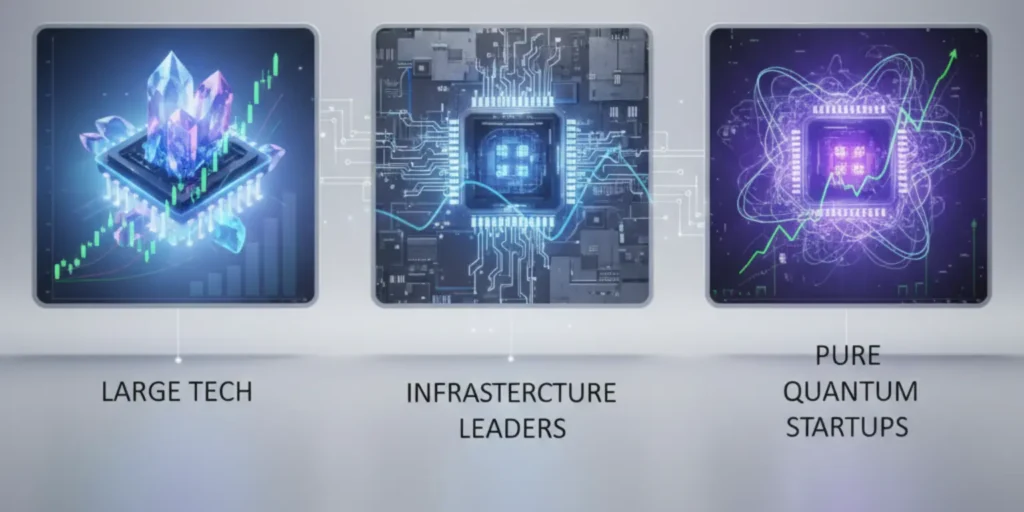
One practical strategy is to divide investment capital across these three companies. For example, investing equal amounts in Alphabet, Nvidia, and IonQ allows investors to cover multiple angles of the quantum space. Alphabet provides financial strength and steady revenue. NVIDIA offers infrastructure and hybrid computing exposure. IonQ delivers direct access to pure quantum innovation.
Together, this approach balances stability, relevance, and future growth potential. Quantum computing remains uncertain, but careful positioning during quieter periods can offer long-term rewards for investors willing to stay patient. The current slowdown may not last forever, and those who prepare now could benefit when interest returns.
About The Author